Introduction
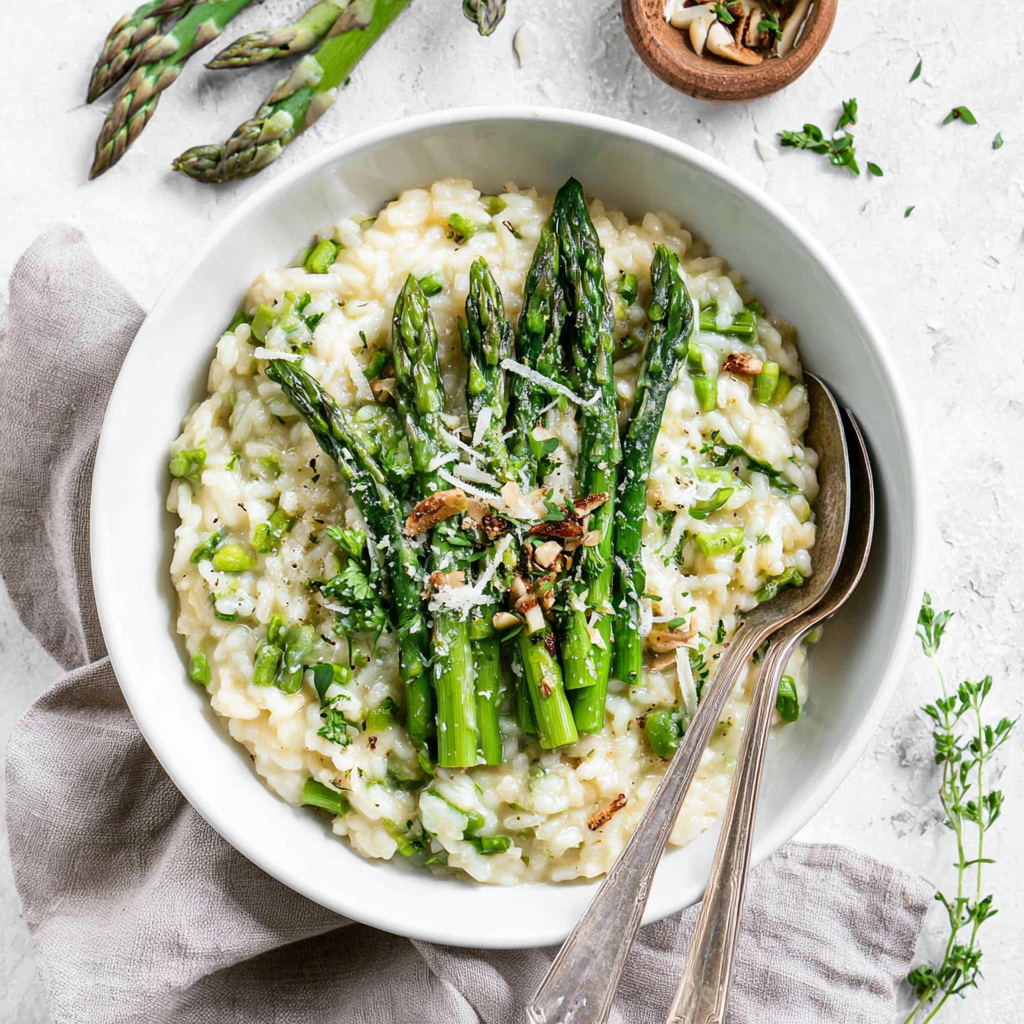
Vegan asparagus risotto is a creamy, satisfying dish that brings the essence of spring to your dining table. This plant-based approach to a classic Italian favorite celebrates the vibrant flavors of fresh asparagus, making it an ideal choice for any occasion.
The process of making risotto can seem daunting at first, but with a little patience and attention, you'll master the technique in no time. The key lies in the slow addition of broth, which allows the rice to absorb liquid gradually, creating a luscious texture and deep flavor.
Perfect for a cozy dinner for two or an elegant gathering, this vegan variation sacrifices none of the richness. By using simple, wholesome ingredients, you can create a dish that is both indulgent and nourishing.
Ingredients
- 1 cup Arborio rice
Arborio rice is a short-grain rice known for its high starch content, which gives risotto its creamy texture. Its ability to slowly absorb liquid makes it perfect for this dish. - 4 cups vegetable broth
Using a well-seasoned vegetable broth enhances the overall flavor of the risotto. Homemade broth can deepen the taste, while store-bought options provide convenience. - 1 tablespoon olive oil
Olive oil adds richness and a hint of fruitiness to the dish, essential for a perfectly balanced risotto. It's also a healthier fat choice when compared to butter. - 1 medium onion, finely chopped
Onions provide a foundational sweetness and depth to the risotto. They caramelize gently, imparting flavor without overwhelming the dish. - 3 cloves garlic, minced
Garlic contributes a robust, aromatic quality that elevates the dish. It complements the asparagus well, creating a harmonious blend of flavors. - 1 pound asparagus, trimmed and cut into 1-inch pieces
Asparagus adds a fresh, vibrant element to the risotto. Its bright color and delicate flavor enhance the visual appeal and taste of the dish. - 1/2 cup nutritional yeast
Nutritional yeast serves as a vegan substitute for cheese, imparting a cheesy flavor without any dairy. It also adds B vitamins, enriching the dish. - Salt and pepper, to taste
Proper seasoning with salt and pepper is crucial for balancing flavors. Adding it throughout cooking helps build complexity in the dish. - 1 tablespoon lemon juice
Lemon juice brightens the flavors and adds acidity to the risotto, helping to cut through the creaminess and enhancing freshness. - Fresh herbs, like parsley or basil, for garnish
Fresh herbs provide a pop of color and a burst of flavor, making your risotto visually appealing and even more delicious.
Directions & Preparation
Step 1: Prepare the broth and keep it warm on low heat.
Starting with warm broth is crucial; adding cold broth can shock the rice, slowing down the cooking process. Keeping it warm allows the rice to cook evenly and absorb flavors as it simmers.
Step 2: Heat the olive oil in a large pan over medium heat, then add the chopped onion.
Sautéing the onion in olive oil creates a flavorful base for your risotto. Start with medium heat to soften the onions without browning them, which preserves their sweetness.
Step 3: Add the minced garlic and asparagus pieces, cooking for another 3-4 minutes.
This step allows the garlic to infuse the oil with its flavor while the asparagus begins to soften. The color and aroma will indicate that they are just right for the next step.
Step 4: Stir in the Arborio rice, coating it well with the oil and vegetables.
Coating the rice with the oil and vegetables helps each grain become infused with flavor. Toasting the rice slightly also enhances its nuttiness, creating a wonderful foundation.
Step 5: Begin adding the warm vegetable broth one ladle at a time, stirring continuously until absorbed.
This step is vital; the slow addition of broth allows the rice to release its starch, which gives risotto its characteristic creaminess. Stirring keeps the rice from sticking and ensures even cooking.
Step 6: Once the rice is creamy and al dente, stir in nutritional yeast and lemon juice.
Incorporating nutritional yeast and lemon juice at the end allows their flavors to shine through. The nutritional yeast adds a cheesy element while lemon brightens the dish, creating a well-rounded taste.
Step 7: Season with salt and pepper to taste, then remove from heat.
Adjusting the seasoning at this point is essential as it enhances the overall flavor profile. Remember that the broth contains salt, so be mindful when adding it.
Step 8: Serve immediately, garnished with fresh herbs.
Risotto is best enjoyed fresh, as it can thicken as it sits. Garnishing with herbs not only enhances the dish's appearance but also adds a fresh flavor that complements the creamy risotto.

The Role of Seasonal Asparagus
Using fresh, seasonal asparagus not only elevates your risotto but also supports local farming. Asparagus is typically at its best in spring, bringing a crisp texture and vibrant green color to the dish. When selecting asparagus, look for firm, bright stalks with tightly closed tips for the best flavor and nutritional value.
Mastering the Creamy Texture
Getting the perfect creamy texture is the hallmark of a good risotto. The gradual stirring and addition of broth enables the rice to release its starch, which thickens the cooking liquid and creates a rich sauce. Remember, patience is key in this process—skipping steps can lead to a less-than-ideal consistency.
Garnishing to Elevate Presentation
Finishing your risotto with fresh herbs or a drizzle of high-quality olive oil can make a significant difference in both flavor and appearance. Herbs add not only color but also a layer of freshness that contrasts beautifully with the creamy texture of the risotto. A little extra attention to plating can transform a simple dish into a visually stunning experience.
FAQs
What if my risotto turns out too thick?
If your risotto is too thick, simply stir in a little more warm broth until you reach your desired consistency. Avoid cold broth as it can hinder the cooking process.
How can I enhance the flavor if the risotto is bland?
If your risotto lacks flavor, try adding more salt, a touch of lemon juice, or additional nutritional yeast. Tasting throughout the process helps adjust flavors appropriately.
Is there a way to incorporate other vegetables?
Absolutely! You can add peas, spinach, or even mushrooms alongside the asparagus for varying flavors and textures. Just be sure to adjust cooking times accordingly.
Can I make this risotto spicier?
To spice up your risotto, you can add red pepper flakes or fresh chili when sautéing the onions. Adjust the amount based on your heat preference.
What can I use instead of nutritional yeast?
If you don’t have nutritional yeast on hand, try using vegan cheese or tahini for a different yet tasty flavor. Adjust the quantity based on the product's strength.
Why did my asparagus become mushy in the risotto?
If your asparagus is mushy, it may have been overcooked. Add it in a little later in the cooking process to ensure it retains its crispness.
Conclusion
Vegan asparagus risotto captures the essence of spring with its simple yet elegant flavors. It's an ideal dish for impressing guests or enjoying a quiet evening at home, with the creamy texture and fresh asparagus stealing the show.
With just a few ingredients and a bit of technique, you can create a rich, satisfying meal that fits a plant-based lifestyle. Embrace the beauty of seasonal ingredients and enjoy this delightful dish on any occasion.
Recipe Card
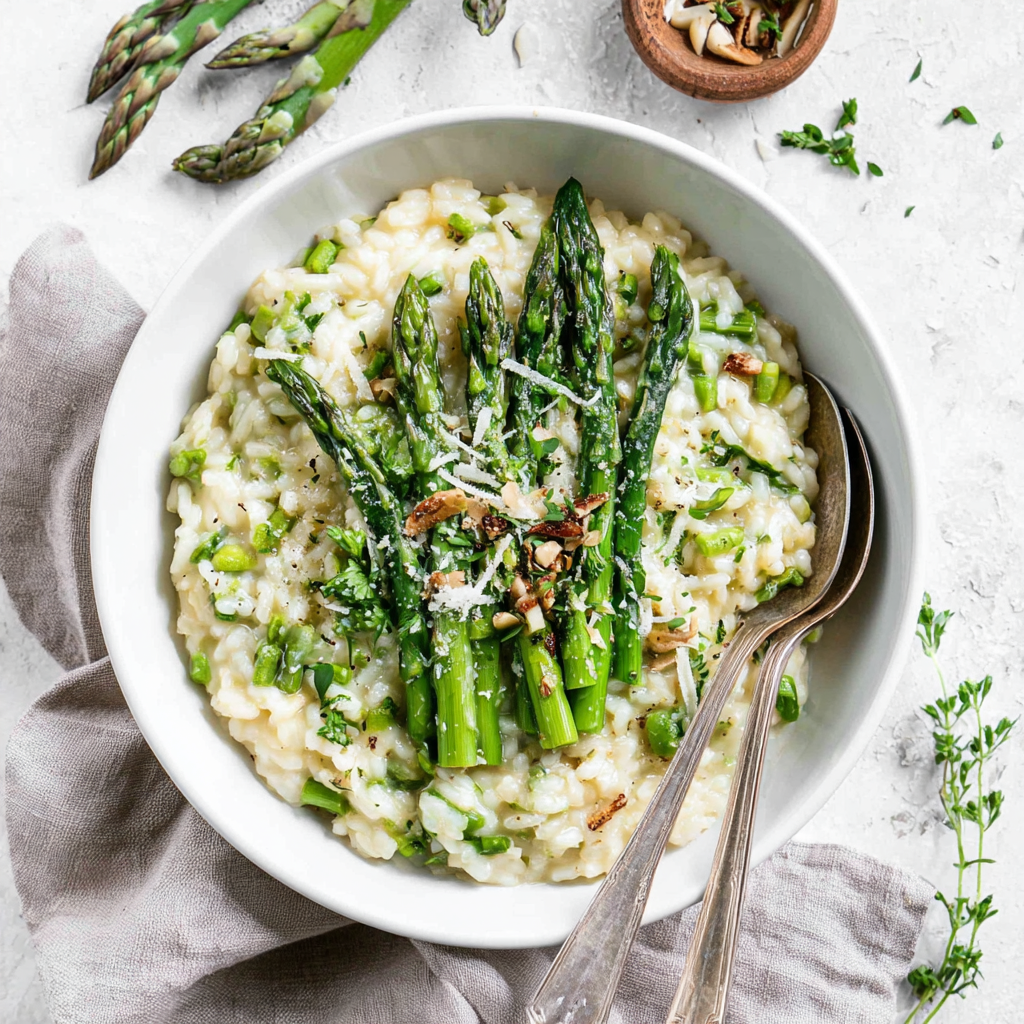
Vegan Asparagus Risotto for Elegant Home Dining
Ingredients
Method
- Prepare the broth and keep it warm on low heat.
- Heat the olive oil in a large pan over medium heat, then add the chopped onion.
- Add the minced garlic and asparagus pieces, cooking for another 3-4 minutes.
- Stir in the Arborio rice, coating it well with the oil and vegetables.
- Begin adding the warm vegetable broth one ladle at a time, stirring continuously until absorbed.
- Once the rice is creamy and al dente, stir in nutritional yeast and lemon juice.
- Season with salt and pepper to taste, then remove from heat.
- Serve immediately, garnished with fresh herbs.
Notes
Additional serving suggestions: pair with a crisp salad, garlic bread, or roasted seasonal vegetables for balance.
For make-ahead, prep components separately and assemble just before heating to preserve texture.
Taste and adjust with acid (lemon/vinegar) and salt right at the end to wake up flavors.