Introduction
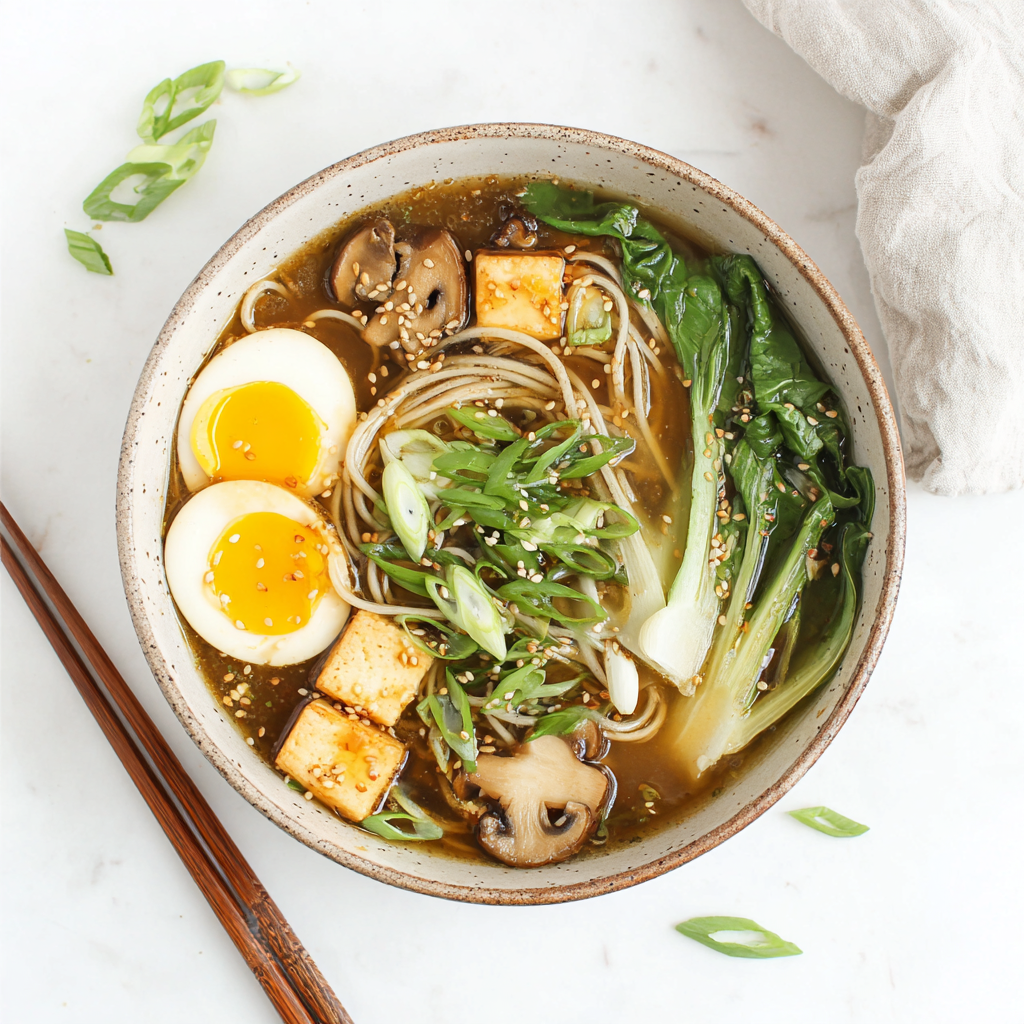
Vegan ramen offers a delightful twist on a classic dish, bringing together plant-based ingredients for a satisfying culinary experience. With its rich broth and fresh toppings, it's a comforting meal that stands out regardless of dietary preference.
Crafting your own vegan ramen allows you to control the flavors and textures, giving you the freedom to experiment. This recipe embraces umami-rich ingredients and seasonal vegetables, ensuring every bowl is bursting with flavor.
Ingredients
- 4 cups vegetable broth
This serves as the base of the ramen, providing depth and richness. Choosing a good-quality vegetable broth can significantly enhance the flavor profile of the dish. - 2 tablespoons soy sauce
Soy sauce contributes salty, umami notes that deepen the broth's flavor. It also aids in balancing the overall taste of the ramen, creating a savory backdrop for the other ingredients. - 1 tablespoon miso paste
Miso introduces a fermented element that adds complexity and depth. It’s packed with probiotics, making your ramen not only delicious but also gut-friendly. - 200 grams ramen noodles
These noodles are integral to the dish, providing the ideal chewy texture that complements the broth. Opt for fresh noodles for the best results, as they absorb the flavors beautifully. - 1 cup sliced shiitake mushrooms
Shiitake mushrooms give a meaty texture and earthy flavor, contributing significantly to the umami aspect of the broth. They also add a rich mouthfeel that enhances the overall eating experience. - 1 medium carrot, julienned
Carrots not only provide sweetness and color but also add crunch to the dish. They balance the savory elements with their natural sugars, creating a well-rounded flavor. - 1 cup baby spinach
Spinach brings freshness and a nutritional boost, brightening the dish visually and flavor-wise. Its tender leaves wilt perfectly in the hot broth without losing their bright green color. - 1 tablespoon sesame oil
Sesame oil adds a nutty flavor and aroma to the ramen, enriching the broth. It also helps to enhance the mouthfeel, making each slurp satisfying. - 2 green onions, sliced
Green onions add a fresh, sharp bite that contrasts beautifully with the richness of the broth. They serve as a garnish, contributing both flavor and visual appeal. - Sesame seeds for garnish
These seeds provide a subtle crunch and nutty flavor that elevates the dish. They're the finishing touch, adding a gourmet feel to the homemade ramen.
Directions & Preparation
Step 1: Prepare the broth by combining vegetable broth, soy sauce, and miso paste in a large pot.
Starting with a robust broth is crucial as it forms the foundation of your ramen. Whisking in the miso paste helps dissolve it evenly, ensuring the flavors meld seamlessly. Bring the mixture to a gentle simmer, allowing the ingredients to infuse for a hearty base.
Step 2: Sauté the mushrooms and carrots in sesame oil until tender.
Sautéing unlocks the natural flavors in the mushrooms and carrots, adding a layer of complexity to the broth. This step develops a caramelization that enhances the overall taste. Keep an eye on the vegetables to avoid overcooking; they should be soft yet retain some bite.
Step 3: Add the sautéed vegetables to the broth and simmer for 10 minutes.
Simmering allows the flavors to marry, infusing the broth with the savory essence from the mushrooms and the sweetness from the carrots. This step is essential to develop a deep, layered flavor that defines a great ramen.
Step 4: Cook the ramen noodles separately according to the package instructions, then drain.
Cooking the noodles separately ensures they are al dente and prevents them from becoming mushy in the broth. Drain well to remove excess starch, which keeps the soup clear and prevents it from becoming too thick.
Step 5: Stir in the baby spinach just before serving, allowing it to wilt.
Adding spinach at the end preserves its vibrant color and nutrients. The residual heat from the broth is sufficient to wilt the spinach without losing its fresh flavor, incorporating a healthy element into your dish.
Step 6: Assemble the bowls by placing noodles in each and ladling broth and vegetables on top.
Layering the ingredients in the bowl enhances the visual appeal and presentation. This method also ensures that each bite contains a balanced mix of noodles, broth, and vegetables, maximizing flavor with every slurp.
Step 7: Top each bowl with sliced green onions and a sprinkle of sesame seeds.
Finishing your ramen with green onions and sesame seeds adds a fresh crunch and a nutty flavor, elevating the dish’s aesthetic and taste. These garnishes are not just for looks; they enhance each bite’s experience, making your ramen feel like a gourmet meal.

Exploring Miso Varieties for Depth
Miso paste comes in various types, each lending a unique flavor profile to your ramen. White miso offers a lighter, sweeter taste, while red miso is more robust and salty. Experimenting with different miso types can elevate your broth, providing a new depth of flavor that aligns with your palate.
Seasonal Vegetables for a Fresh Twist
Incorporating seasonal vegetables into your vegan ramen not only enhances flavor but also adds nutritional value. Try adding bok choy in spring, corn in summer, or pumpkin in fall. Rotating vegetables keeps the dish exciting and ensures you’re using the freshest produce available.
Crafting the Perfect Vegan Broth
Achieving a rich broth doesn’t solely rely on miso or soy sauce; consider adding kombu or dried shiitake mushrooms during simmering for an umami punch. These ingredients are often overlooked but can transform your vegan ramen into a deeply flavorful experience, capturing the essence of traditional broths without animal products.
FAQs
What if my ramen broth is too salty?
If your broth turns out too salty, consider adding more water or vegetable broth while simmering to dilute the flavor. Additionally, adding a splash of unsweetened plant milk can help balance the saltiness.
Why is my broth lacking flavor?
If your broth seems bland, try enhancing it with additional miso paste, soy sauce, or a splash of rice vinegar for depth. Letting the broth simmer longer can also help flavors develop.
Can I use other types of noodles for this recipe?
Yes, you can substitute traditional ramen noodles with udon, rice noodles, or even soba, although cooking times may vary. Adjust the cooking process based on the noodle type for optimal texture.
How do I fix overcooked noodles in my ramen?
If your noodles are overcooked, you may try highlighting other ingredients in your bowl to balance the texture, such as crunchy vegetables or garnishes. However, always aim for perfect noodle timing for best results.
What can I add to enhance the heat level of my ramen?
For a spicy kick, consider adding chili oil, sriracha, or miso with chili incorporated into your broth. Adjust to your heat preference for an exciting flavor dimension.
How can I adjust the recipe for a larger serving?
Scaling this recipe is straightforward; simply multiply each ingredient quantity by the desired serving number. Ensure to maintain the broth's flavor balance by proportionately adjusting seasonings.
Conclusion
Creating vegan ramen at home provides an opportunity to not only enjoy a classic dish but also to infuse it with personal touches. By experimenting with various ingredients, your bowl can become a reflection of your culinary creativity.
This vibrant, nourishing meal is not just for special occasions but can easily be a weeknight staple in your kitchen. Embrace the versatility and flavor of vegan ramen, and enjoy the journey of bringing warmth to your family’s table.
Recipe Card
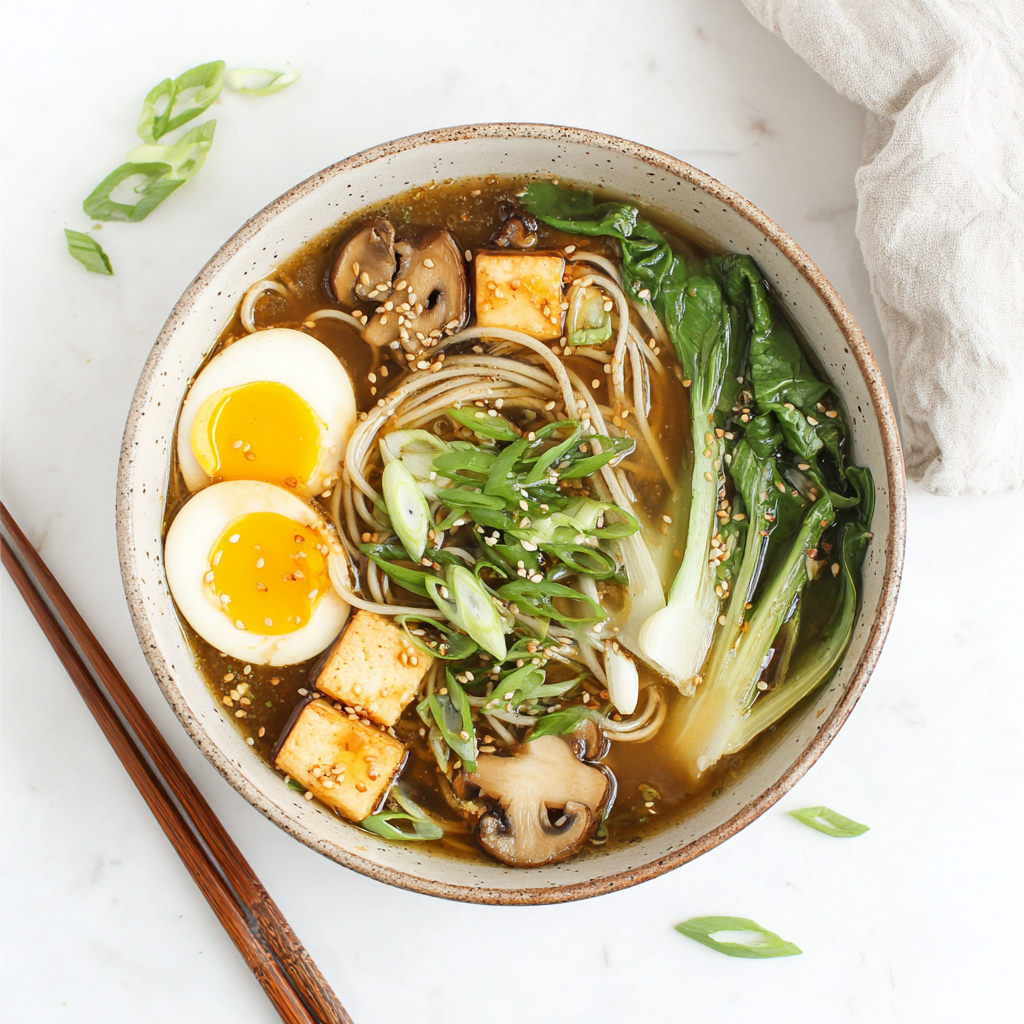
Savor the Richness of Vegan Ramen at Home
Ingredients
Method
- Prepare the broth by combining vegetable broth, soy sauce, and miso paste in a large pot.
- Sauté the mushrooms and carrots in sesame oil until tender.
- Add the sautéed vegetables to the broth and simmer for 10 minutes.
- Cook the ramen noodles separately according to the package instructions, then drain.
- Stir in the baby spinach just before serving, allowing it to wilt.
- Assemble the bowls by placing noodles in each and ladling broth and vegetables on top.
- Top each bowl with sliced green onions and a sprinkle of sesame seeds.
Notes
Additional serving suggestions: pair with a crisp salad, garlic bread, or roasted seasonal vegetables for balance.
For make-ahead, prep components separately and assemble just before heating to preserve texture.
Taste and adjust with acid (lemon/vinegar) and salt right at the end to wake up flavors.