Introduction
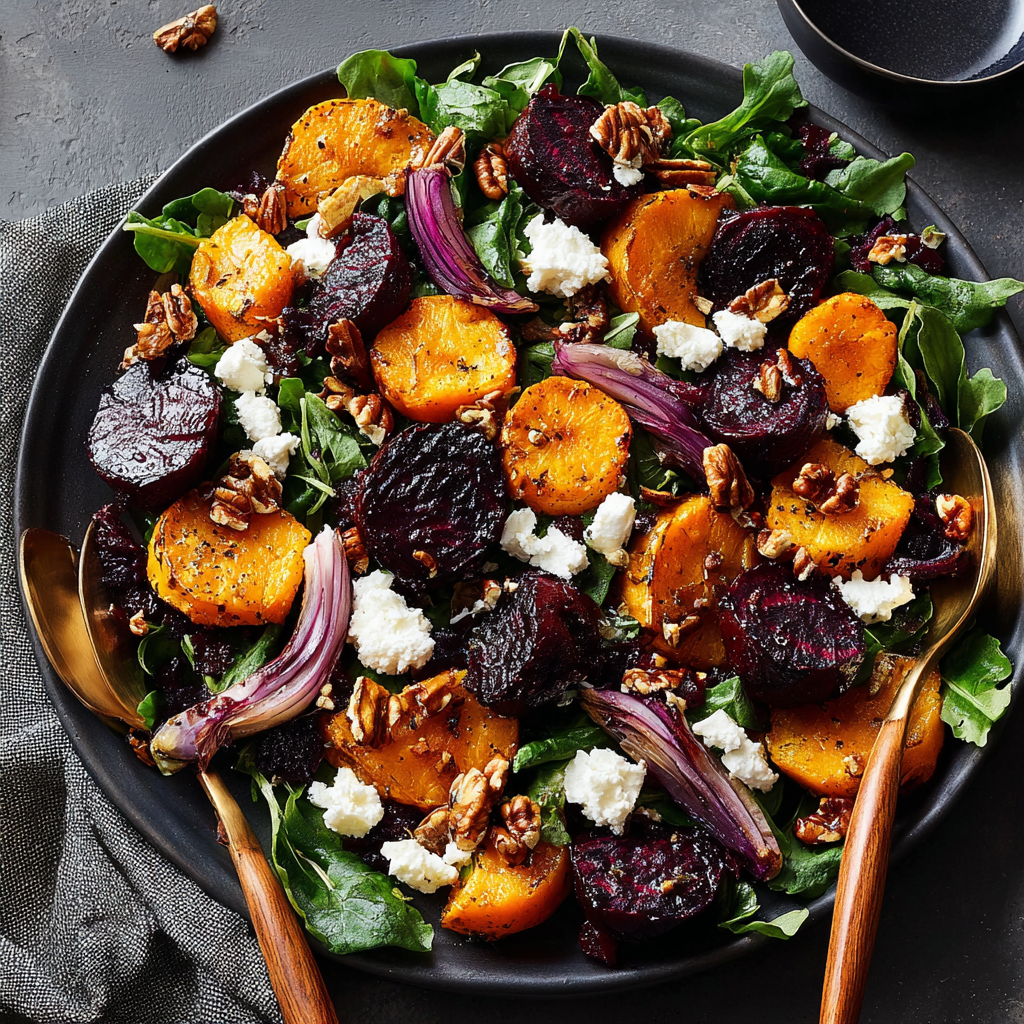
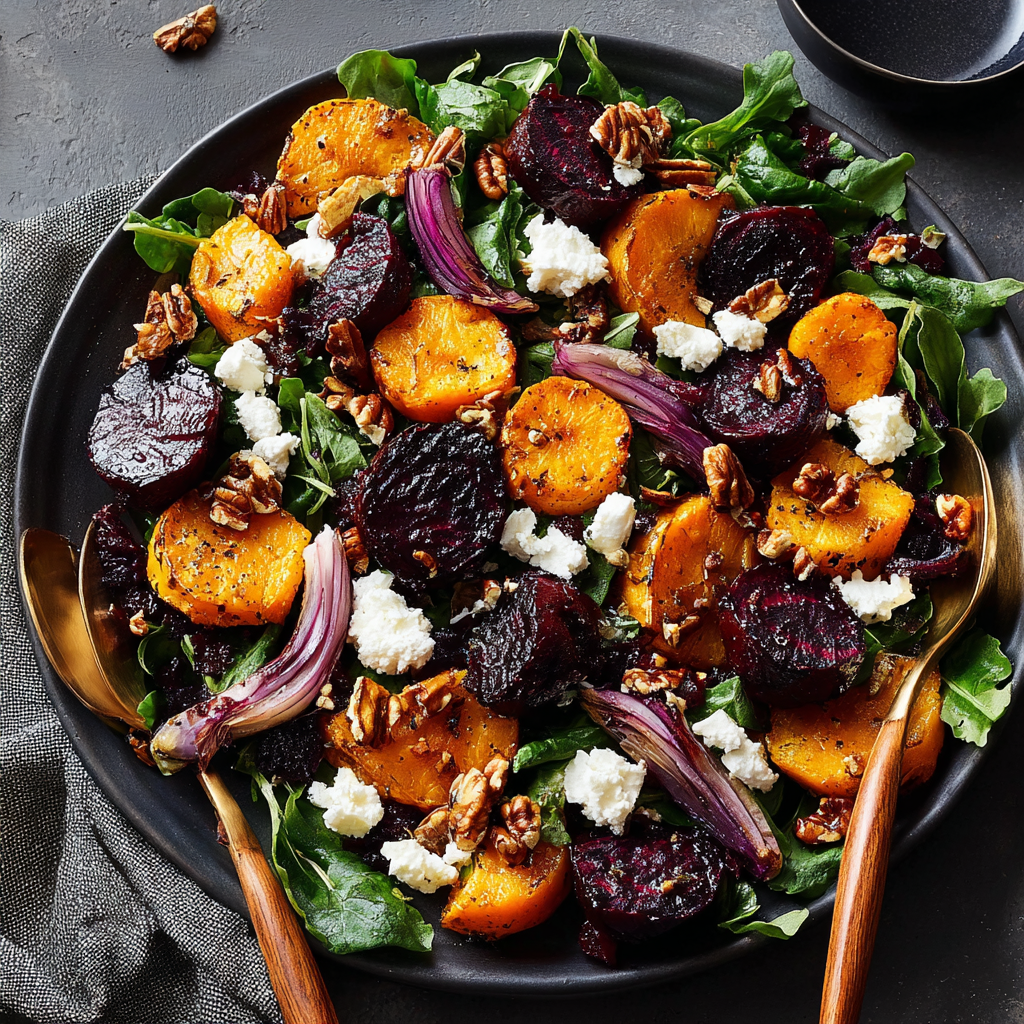
As the seasons shift and the air turns crisp, our plates should reflect the bounty of the harvest. A harvest salad with roasted vegetables embodies this essence, offering a comforting yet vibrant dish that’s perfect for any table. Loaded with seasonal produce, this salad not only nourishes the body but also delights the senses.
Roasting vegetables brings out their natural sweetness while adding a depth of flavor that complements fresh greens. This recipe allows home cooks to incorporate whatever vegetables are in season, making it versatile and adaptable. The combination of textures and flavors makes each bite a satisfying experience.
Ingredients
- 2 cups kale, chopped
Kale serves as a robust base for the salad, providing a nutrient-rich source of vitamins A, C, and K. Its hearty texture stands up to the roasted vegetables, ensuring that it remains crisp and lively in the final dish. - 1 cup roasted sweet potatoes, cubed
Sweet potatoes add a natural sweetness and creaminess to the salad. Rich in fiber and antioxidants, they not only enhance flavor but also contribute to the dish's overall heartiness. - 1 cup Brussels sprouts, halved and roasted
Brussels sprouts offer a slightly nutty flavor when roasted, balancing the sweetness of the sweet potatoes. They are high in vitamins and minerals, making them a nutritious addition to the meal. - 1 cup red bell pepper, diced
Red bell peppers provide a vibrant pop of color and a sweet crunch. They are rich in vitamin C and add freshness to the dish, complementing the earthy roasted vegetables. - 1/2 cup quinoa, cooked
Quinoa serves as a protein-packed grain that adds a subtle nuttiness and good texture to the salad. It rounds out the meal, making it more satisfying and filling. - 1/4 cup crumbled feta cheese (optional)
Feta cheese adds a creamy, tangy element that enhances the flavors of the vegetables and greens. It also adds richness, making the salad more indulgent. - 1/4 cup walnuts, toasted
Toasted walnuts bring a delightful crunch and rich, earthy flavor. They also contribute healthy fats, making the dish more balanced and nutritiously dense. - 1/4 cup olive oil
Olive oil acts as a dressing base, providing healthy fats that enhance absorption of fat-soluble vitamins from the vegetables. A good quality olive oil also provides flavor, enriching the overall dish. - 2 tablespoons apple cider vinegar
Apple cider vinegar adds a tangy brightness that balances the richness of the roasted vegetables and feta. It also aids digestion and can elevate the overall flavor profile. - Salt and pepper to taste
Salt and pepper are essential for bringing out the flavors of the ingredients. Proper seasoning is crucial to ensure each component shines in the final salad.
Directions & Preparation
Step 1: Preheat the oven to 425°F (220°C).
Preheating the oven is essential for achieving perfectly roasted vegetables. The high temperature ensures that the vegetables caramelize and develop a rich flavor, so it's important to start with a hot oven.
Step 2: Prepare the vegetables by chopping the sweet potatoes, Brussels sprouts, and red bell pepper.
Chopping the vegetables into uniform sizes allows them to roast evenly. This step is crucial because unevenly sized pieces can lead to some overcooking while others remain underdone, affecting the dish's overall texture.
Step 3: Toss the chopped vegetables with olive oil, salt, and pepper in a mixing bowl.
Coating the vegetables with olive oil helps them roast beautifully, preventing dryness and enhancing flavor. Salt and pepper should be used generously to draw out the natural flavors of each vegetable.
Step 4: Spread the vegetables in a single layer on a baking sheet and roast for 25-30 minutes, until tender and golden brown.
Roasting in a single layer is key to achieving optimal caramelization. Stirring halfway through cooking ensures even browning and prevents sticking, resulting in vegetables with a delightful texture and taste.
Step 5: While the vegetables are roasting, cook quinoa according to package instructions and set aside to cool.
Quinoa absorbs water during cooking, so following the package instructions ensures it is fluffy and not gummy. This step is crucial as it adds a nutritious base that balances the roasted vegetables.
Step 6: In a small bowl, whisk together olive oil and apple cider vinegar to form a dressing.
Whisking the dressing combines the oil and vinegar, creating an emulsion that coats the salad evenly. Adjusting the ratio can help achieve the desired tanginess or richness, making it customizable.
Step 7: In a large bowl, combine the chopped kale, cooked quinoa, roasted vegetables, walnuts, and feta cheese if using.
Starting with the greens as a base ensures they mix well with other ingredients. Combining the salad in a large bowl allows for easier mixing and ensures that dressing will coat every element.
Step 8: Drizzle the dressing over the salad and toss gently to combine.
Gentle tossing ensures that the delicate greens aren't bruised while allowing the dressing to envelop every component evenly. This step is vital for achieving a well-flavored salad.
Step 9: Serve immediately or let it marinate for 10-15 minutes for enhanced flavors.
Allowing the salad to sit gives the flavors time to meld, resulting in a more cohesive taste. However, serving immediately preserves the kale's crunch, making this step open to personal preference.

The Magic of Roasting
Roasting is a transformative technique that elevates the natural flavors of vegetables. The high heat caramelizes their sugars, resulting in a rich, sweet profile that contrasts beautifully with the freshness of greens. This step not only enhances taste but also increases the nutritional value as the cooking process softens them, making it easier for the body to absorb their nutrients.
Choosing Seasonal Ingredients
One of the joys of creating a harvest salad is the opportunity to use seasonal produce. Ingredients such as sweet potatoes and Brussels sprouts shine in the fall, while other vegetables may be preferred in different seasons. Using seasonal vegetables not only enhances flavor and freshness but also supports local farmers and reduces your environmental impact.
Balancing Textures for a Perfect Bite
Texture plays a crucial role in the enjoyment of any dish, and a harvest salad with roasted vegetables is no exception. The crisp kale, tender roasted vegetables, crunchy walnuts, and creamy feta create a delightful medley. Striving for contrast in textures enhances each forkful, making every bite a satisfying experience that encourages you to linger longer at the table.
FAQs
What if my vegetables are soggy after roasting?
If your vegetables are soggy, it might be due to overcrowding on the baking sheet or insufficient roasting time. Ensure they are in a single layer, and you might consider increasing the cooking time for extra crispness.
Can I use different vegetables in the salad?
Absolutely! Feel free to substitute seasonal vegetables of your choice, like zucchini or carrots. Just make sure to adjust the roasting time depending on their density.
What if I want to add protein to my salad?
To boost protein content, consider adding grilled chicken, chickpeas, or diced tofu. These additions blend well with the existing flavors while making the salad more filling.
How can I prevent the kale from being tough?
Massaging the kale with a little olive oil before adding the other ingredients can help soften it. This process breaks down its fibers and enhances the overall texture.
What dressing variations work well with this salad?
For a zesty twist, try adding Dijon mustard to the dressing or incorporating fresh herbs like basil or parsley for added flavor complexity.
Can I serve this salad warm?
Yes! If you prefer warm salads, you can serve it right after adding the roasted vegetables while they are still hot. This adds an inviting warmth to the dish.
Conclusion
A harvest salad with roasted vegetables is not just a meal; it’s a celebration of the season's bounty. With its vibrant colors and flavors, this dish not only looks impressive but also nourishes and satisfies the body.
By experimenting with seasonal ingredients and textures, you can create a unique version that meets your personal taste. So gather your favorite vegetables and embark on a culinary journey that connects you to the changing seasons.
Recipe Card
Celebrating Fresh Flavors: Harvest Salad with Roasted Vegetables
Ingredients
Method
- Preheat the oven to 425°F (220°C).
- Prepare the vegetables by chopping the sweet potatoes, Brussels sprouts, and red bell pepper.
- Toss the chopped vegetables with olive oil, salt, and pepper in a mixing bowl.
- Spread the vegetables in a single layer on a baking sheet and roast for 25-30 minutes, until tender and golden brown.
- While the vegetables are roasting, cook quinoa according to package instructions and set aside to cool.
- In a small bowl, whisk together olive oil and apple cider vinegar to form a dressing.
- In a large bowl, combine the chopped kale, cooked quinoa, roasted vegetables, walnuts, and feta cheese if using.
- Drizzle the dressing over the salad and toss gently to combine.
- Serve immediately or let it marinate for 10-15 minutes for enhanced flavors.
Notes
Additional serving suggestions: pair with a crisp salad, garlic bread, or roasted seasonal vegetables for balance.
For make-ahead, prep components separately and assemble just before heating to preserve texture.
Taste and adjust with acid (lemon/vinegar) and salt right at the end to wake up flavors.