Introduction
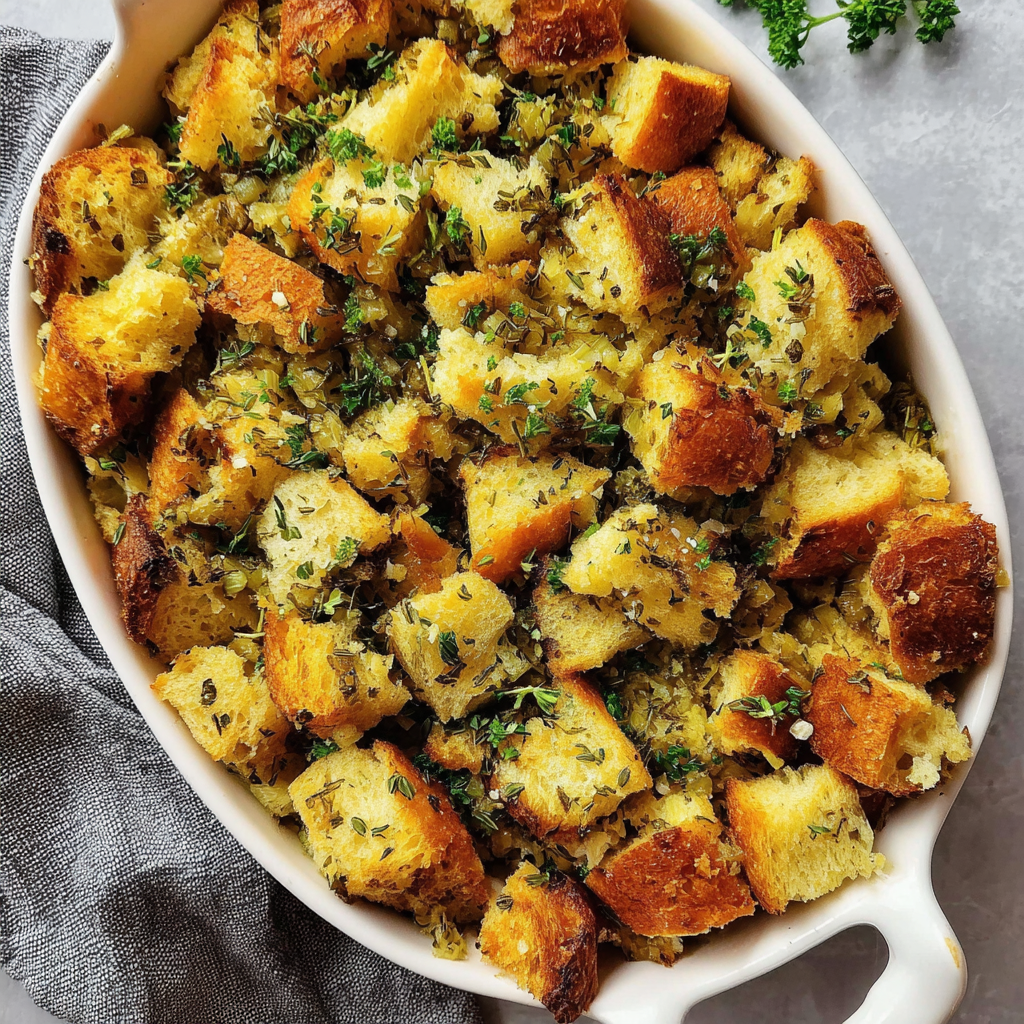
As the aroma of roasted turkey fills the home, nothing complements the feast quite like a well-crafted buttery herb stuffing. With its comforting blend of layers, textures, and flavors, it can take center stage on the table, elevating any holiday meal into a memorable experience.
This stuffing is more than just a side; it’s a warm embrace on a plate. Each bite delivers a delightful mix of buttery bread, fragrant herbs, and savory broth, making it a comforting classic for family gatherings. Whether you're hosting Thanksgiving or a casual dinner, this luscious stuffing is sure to impress.
Ingredients
- 1 loaf of day-old bread, preferably ciabatta or sourdough
Using stale bread allows it to absorb moisture from the broth without becoming mushy. The crusty exterior of ciabatta or sourdough adds delightful texture to the stuffing. - 1 cup unsalted butter
Butter is the foundation of flavor in this recipe, enriching the stuffing with its creamy texture. Unsalted butter allows you to control the saltiness of the dish, keeping flavors balanced. - 1 large onion, diced
Onions provide a base of sweetness and depth to the stuffing. As they sauté, they caramelize slightly, enhancing the overall flavor profile and adding aromatic qualities. - 4 celery stalks, diced
Celery contributes a nice crunch and fresh flavor. Its subtle earthiness balances the richness of the butter and complements other herbs used in the stuffing. - 4 cloves garlic, minced
Garlic adds an aromatic punch that elevates the stuffing’s flavor. When sautéed, it becomes fragrant and melds perfectly with the buttery mixture. - 1 tablespoon fresh sage, finely chopped
Sage is a traditional herb in stuffing that offers a warm, earthy taste. Fresh sage is preferred for its vibrant flavor, which brings the dish to life. - 1 tablespoon fresh thyme, finely chopped
Thyme provides subtle herbal notes that enhance the savory character of the stuffing. Like sage, its fresh version is more aromatic and robust. - 1 tablespoon fresh rosemary, finely chopped
Rosemary brings a distinctive pine-like flavor that pairs beautifully with the other herbs. Its sharpness cuts through richness, creating balance. - 2–3 cups low-sodium chicken or vegetable broth
Broth is essential for hydrating the bread and infusing flavor. Low-sodium broth allows for customizing the saltiness while ensuring a rich, savory base. - Salt and pepper to taste
These are the essential seasonings that enhance all the other flavors. Adjusting salt and pepper at the end helps to personalize how it suits your palate. - 1 cup chopped fresh parsley
Parsley adds a burst of color and freshness, brightening up the stuffing. It also contributes a mild, herbaceous flavor that complements the more intense herbs.
Directions & Preparation
Step 1: Preheat your oven to 350°F (175°C).
Preheating is crucial for achieving an even bake. A hot oven helps toast the bread and meld the flavors while creating a crispy top, which adds delightful texture.
Step 2: Cut the bread into 1-inch cubes and spread them on a baking sheet.
Cubing the bread allows it to toast evenly and makes it easier to absorb the broth later. Spreading the cubes out on a baking sheet maximizes exposure to heat for uniform drying.
Step 3: Toast the bread cubes in the preheated oven for 10–15 minutes, or until golden brown.
Toasting the bread enhances its flavor and ensures it won’t turn to mush when mixed with the broth. Watch closely to avoid burning, as different ovens may vary in heat distribution.
Step 4: In a large skillet, melt the butter over medium heat. Add the onion and celery, cooking until softened, about 5–7 minutes.
Sautéing the onion and celery in butter infuses the mixture with flavor and moisture. The goal is to soften them, allowing their natural sugars to develop for a sweeter taste.
Step 5: Stir in the garlic, sage, thyme, and rosemary, cooking for an additional 2–3 minutes until fragrant.
Adding garlic and herbs after the onion and celery prevents burning, ensuring that their flavors remain bright and aromatic. You'll know it's done when you can smell the combination throughout the kitchen.
Step 6: In a large bowl, combine the toasted bread cubes, sautéed vegetables, broth, parsley, salt, and pepper.
Mixing the ingredients in a bowl before transferring them to a baking dish helps ensure that everything is evenly distributed. Take the time to thoroughly combine, as this is where the flavor gets developed.
Step 7: Transfer the mixture to a greased baking dish, pressing it down gently. Cover with aluminum foil.
Pressing down the stuffing ensures a cohesive texture while it bakes. Covering it with foil keeps moisture in, allowing flavors to meld and prevents drying out.
Step 8: Bake for 30 minutes, then remove the foil and bake for an additional 15–20 minutes until golden and crispy on top.
Baking covered for the first half helps steam the stuffing, while uncovering allows it to brown on top. This contrast between textures enhances the dish's appeal.
Step 9: Let it cool for a few minutes before serving.
Allowing the stuffing to rest helps it set, making it easier to serve while retaining moisture. Serving immediately enhances the flavors, allowing diners to enjoy the aromatic experience.

Perfecting the Bread Choice
The type of bread you choose plays a significant role in the final outcome of buttery herb stuffing. Opting for artisanal breads like ciabatta or sourdough provides a rustic texture that holds up well during baking. The slightly tangy flavor of sourdough can elevate the dish, while soft white bread creates a more delicate stuffing. Consider mixing different breads for increased depth, varying the dryness levels for that perfect balance.
Embracing Fresh Herbs
Fresh herbs are pivotal in enhancing the flavor of your stuffing. While dried herbs can substitute in a pinch, fresh varieties introduce bright flavors that dry herbs cannot replicate. When using fresh herbs, ensure you chop them finely to maximize their aromatic potential. Additionally, a combination of herbs like thyme, rosemary, and sage offers a sophisticated flavor profile, creating a more vibrant dish.
Customizing Your Stuffing
One of the best aspects of buttery herb stuffing is its versatility. Feel free to add additional ingredients like dried fruits for sweetness, nuts for crunch, or mushrooms for earthy depth. Each of these elements can offer unique flavor contrasts and textures. By adjusting ingredients based on personal preference or dietary needs, you can create your own signature stuffing recipe while still maintaining its classic essence.
FAQs
What should I do if my stuffing is too dry?
If your stuffing turns out dry, consider drizzling in additional broth, a little at a time, while mixing it gently until it reaches your desired moistness.
What if I find the stuffing too bland?
If the stuffing lacks flavor, try enhancing it with more salt, freshly cracked black pepper, or even a splash of lemon juice or vinegar to brighten the dish.
Can I add sausage to this stuffing?
Absolutely! Cooked sausage can add a savory depth. Just crumble it into the mixture before baking to allow its flavors to marry with the bread.
Is there a way to incorporate fruit in the stuffing?
Yes, adding dried fruits like cranberries or apples introduces a sweet contrast. Just ensure they are chopped and mixed in to distribute evenly.
How can I adapt this for a lower-fat version?
For a lower-fat option, substitute part of the butter with olive oil or use less butter altogether while still adding flavor through herbs and broth.
What can I substitute if I don't have fresh herbs?
If fresh herbs aren't available, use dried herbs in smaller quantities; about one-third the amount is typically a good rule of thumb since dried herbs are more concentrated.
Conclusion
Crafting buttery herb stuffing is a labor of love that pays off with each aromatic bite. The combination of textures and flavors invokes comfort and nostalgia, making it a cherished part of any meal.
Whether you stick to the classic recipe or customize it with additional elements, this stuffing will surely become a staple around your dining table. So, gather your loved ones and savor every moment.
Recipe Card
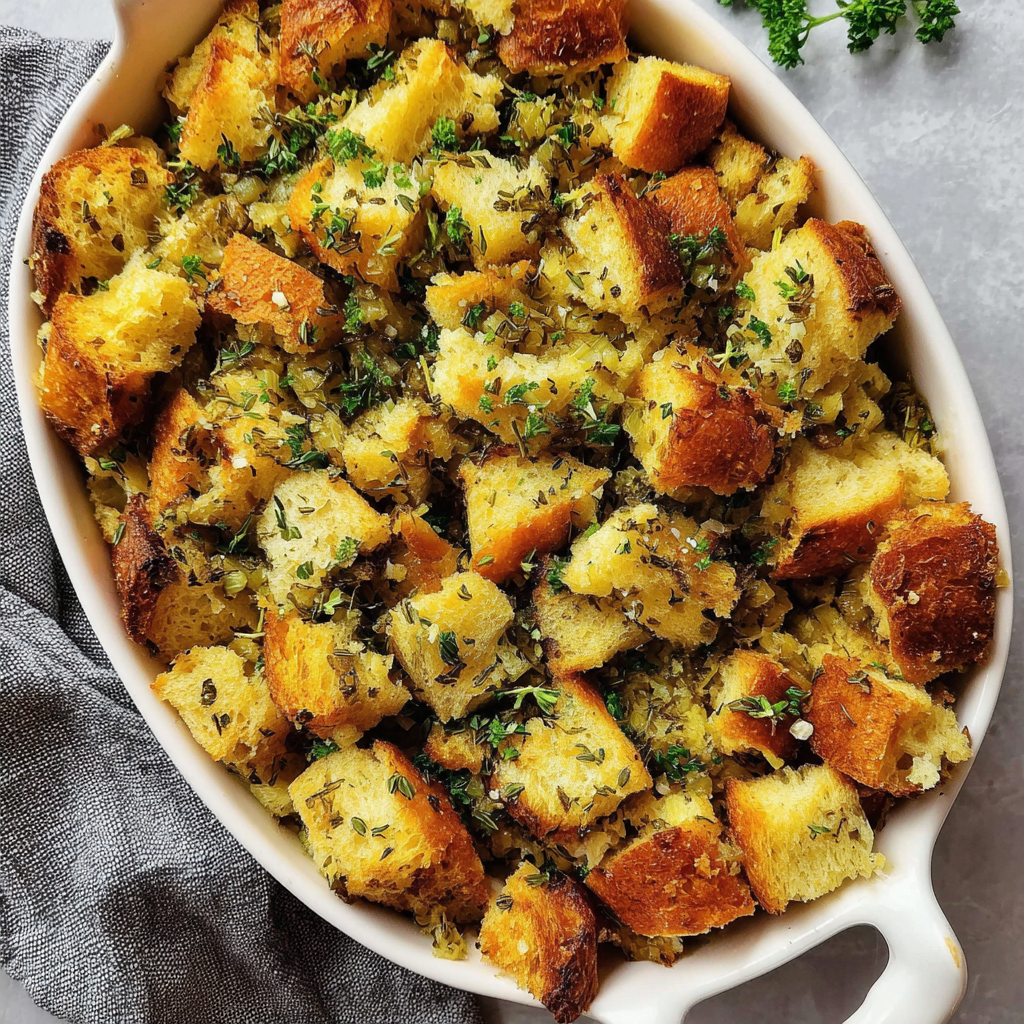
Rich and Flavorful Buttery Herb Stuffing Recipe
Ingredients
Method
- Preheat your oven to 350°F (175°C).
- Cut the bread into 1-inch cubes and spread them on a baking sheet.
- Toast the bread cubes in the preheated oven for 10–15 minutes, or until golden brown.
- In a large skillet, melt the butter over medium heat. Add the onion and celery, cooking until softened, about 5–7 minutes.
- Stir in the garlic, sage, thyme, and rosemary, cooking for an additional 2–3 minutes until fragrant.
- In a large bowl, combine the toasted bread cubes, sautéed vegetables, broth, parsley, salt, and pepper.
- Transfer the mixture to a greased baking dish, pressing it down gently. Cover with aluminum foil.
- Bake for 30 minutes, then remove the foil and bake for an additional 15–20 minutes until golden and crispy on top.
- Let it cool for a few minutes before serving.
Notes
Additional serving suggestions: pair with a crisp salad, garlic bread, or roasted seasonal vegetables for balance.
For make-ahead, prep components separately and assemble just before heating to preserve texture.
Taste and adjust with acid (lemon/vinegar) and salt right at the end to wake up flavors.