Introduction
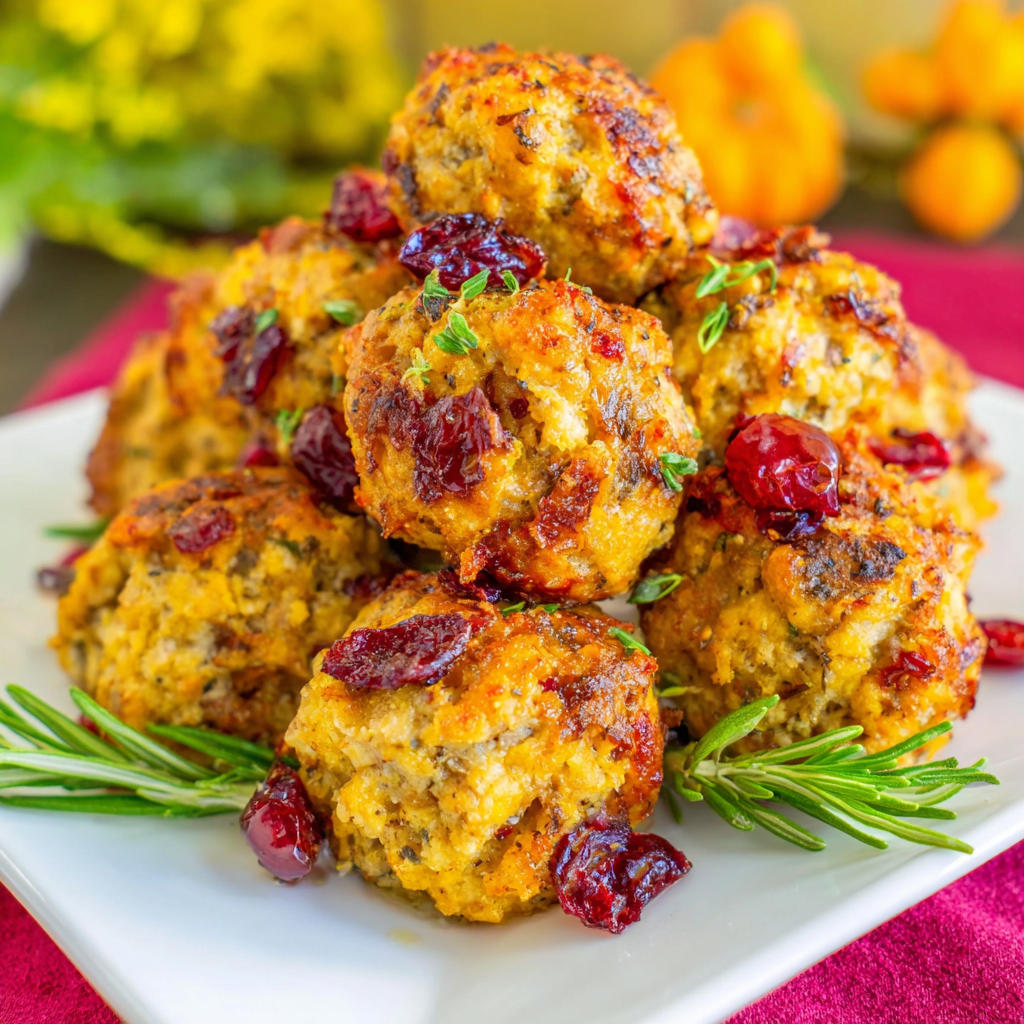
When preparing a holiday feast, turkey stuffing is often the star. Yet it can be presented in a refreshing and delightful form: Turkey Stuffing Balls. These savory bites are a reinvented classic, combining the warmth of traditional stuffing with a fun, appetizer-like shape that guests will love.
Turkey Stuffing Balls offer versatility, whether served as a side dish or a finger food during a gathering. They provide a comforting burst of flavor with every bite, blending seasoned breadcrumbs, herbs, and juicy turkey into a delightful ball format. The ease of preparation makes them a perfect addition to your dinner table.
Ingredients
- 1 pound ground turkey
Ground turkey provides the protein base for the stuffing balls, ensuring each bite is hearty and satisfying. It absorbs flavors from the seasonings and helps bind the ingredients together. - 2 cups stale bread, cubed
Stale bread is crucial for the structure of the stuffing balls, absorbing moisture while maintaining their shape. It creates a wonderful texture that captures the savory flavors. - 1/2 cup onion, finely chopped
Onions add a sweet and savory depth to the mixture. When sautéed, they soften and infuse the stuffing balls with aromatic flavor. - 1/2 cup celery, finely chopped
Celery contributes a refreshing crunch and subtle earthiness to the turkey stuffing balls, enhancing the overall flavor profile. - 1/4 cup fresh parsley, chopped
Fresh parsley introduces a hint of brightness and color, balancing the richer flavors of the meat and bread. It also adds a healthy touch. - 1 tsp dried sage
Dried sage brings a warm and slightly peppery flavor that is synonymous with traditional stuffing. It ties all the ingredients together with its comforting aroma. - 1 tsp dried thyme
Thyme adds complexity and depth, complementing the turkey and bread. It enhances the savory notes that are desired in stuffing. - 1/2 tsp salt
Salt is essential for enhancing all the other flavors in the stuffing balls. It draws out moisture and deepens the taste of each ingredient. - 1/4 tsp black pepper
Black pepper provides a mild heat to the mixture, balancing the sweetness from the onions and the richness from the turkey. - 1/2 cup chicken broth
Chicken broth moistens the mixture, ensuring the stuffing balls remain tender and flavorful while baking. It also adds an extra layer of richness. - 1 large egg
The egg acts as a binding agent, helping to hold the stuffing balls together while adding moisture and richness to the final product.
Directions & Preparation
Step 1: Preheat your oven to 375°F (190°C).
Preheating the oven ensures that your Turkey Stuffing Balls cook evenly and thoroughly. Baking at the right temperature is crucial for achieving that perfect golden-brown exterior while keeping the inside tender and moist.
Step 2: In a skillet, sauté the onion and celery until softened.
This step is essential as it releases the natural sugars in the onion and celery, which enhances their flavor and texture. Sautéing also mitigates the raw tastes, resulting in a more cohesive flavor in the stuffing balls.
Step 3: In a large bowl, combine the ground turkey, sautéed vegetables, and dry ingredients.
Mixing the ground turkey with the sautéed mixture ensures even distribution of flavors and ingredients. It's important to handle the mixture gently to avoid overworking the meat, which can lead to tough stuffing balls.
Step 4: Add in the chicken broth and egg, mixing until just combined.
Incorporating the broth and egg moisten the mixture and help bind everything together. Stirring gently ensures each element is evenly coated without overmixing, which can create a dense texture.
Step 5: Form the mixture into balls, approximately 1 to 1.5 inches in diameter.
Shaping the mixture into uniform balls guarantees even cooking and makes for a visually appealing presentation. Keeping them consistent in size allows for uniform cooking, ensuring that each ball is perfectly done.
Step 6: Place the balls on a baking sheet lined with parchment paper.
Using parchment paper prevents the stuffing balls from sticking to the baking sheet and makes cleanup easier. Spacing them out allows for even heat distribution during cooking.
Step 7: Bake for 25-30 minutes or until golden brown and cooked through.
Baking allows the flavors to meld together and the exterior to become crisp. Checking for doneness ensures that the stuffing balls are thoroughly cooked without becoming dry; the internal temperature should reach 165°F (74°C).
Step 8: Let the stuffing balls cool slightly before serving.
Resting the turkey stuffing balls for a few minutes post-baking helps them firm up, making them easier to handle. This also allows the flavors to settle, enhancing the overall taste.

Herbs: The Flavor Foundation of Your Stuffing Balls
Herbs play a crucial role in defining the flavor profile of turkey stuffing balls. Fresh herbs like parsley provide bright, aromatic notes, while dried herbs like sage and thyme introduce depth and warmth. Each herb complements the turkey and bread, transforming simple ingredients into a savory delight. The right blend can elevate your stuffing balls and make them memorable.
Finding the Right Balance: Moisture and Texture
Achieving the perfect texture and moisture balance in turkey stuffing balls can be challenging. Too much moisture can lead to sogginess, while too little results in a dry product. The combination of chicken broth and egg assists in binding the ingredients while maintaining the desired consistency. Adjusting these elements will ensure your stuffing balls are neither too dense nor fall apart.
Serving Suggestions: Elevate Beyond the Holiday Table
Turkey stuffing balls are versatile and can shine in numerous settings beyond the traditional holiday feast. Serve them as an appetizer with a dipping sauce, or pair them with a flavorful gravy for a main dish. They can also be included in a festive platter alongside roasted vegetables, making them perfect for any gathering or potluck.
FAQs
What can I do if my stuffing balls are too dry?
If your stuffing balls come out dry, consider adding a bit more chicken broth during mixing. Alternatively, serve them with a drizzle of gravy to enhance moisture.
Can I use different types of ground meat for this recipe?
Absolutely! Ground chicken, pork, or beef can be used as substitutes for ground turkey to change the flavor profile of your stuffing balls.
Why are my stuffing balls falling apart during baking?
If your stuffing balls are crumbling, it might be due to insufficient binding agents. Adding an extra egg can help hold the mixture together better.
Can I add additional vegetables to the mix?
Yes, carrots, bell peppers, or mushrooms can be integrated for added flavor and texture, just be sure to chop them finely for even cooking.
What should I do if my stuffing mixture is too thick?
If the mixture is too thick to form into balls, gradually add more chicken broth until you reach a workable consistency without making it too wet.
How do I know when they are fully cooked?
Stuffing balls are done when their internal temperature reaches 165°F (74°C). A meat thermometer is a reliable way to check doneness.
Conclusion
Turkey stuffing balls are a delightful twist on traditional holiday stuffing. They encapsulate savory flavors in a fun, shareable format, making them ideal for gatherings.
Incorporating these into your next meal will not only impress your guests but also offer them a taste of comforting nostalgia with a modern touch. Enjoy creating this memorable dish!
Recipe Card
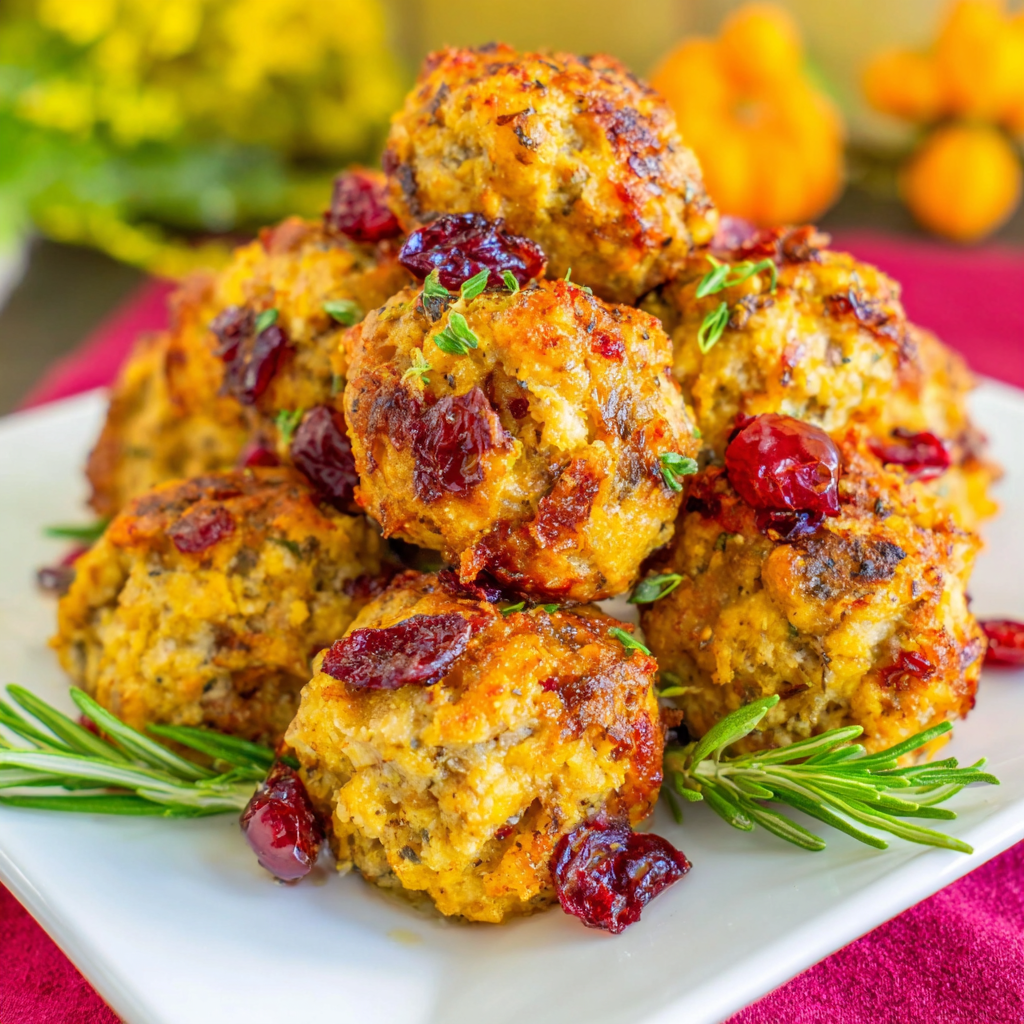
Savory Turkey Stuffing Balls for Festive Meals
Ingredients
Method
- Preheat your oven to 375°F (190°C).
- In a skillet, sauté the onion and celery until softened.
- In a large bowl, combine the ground turkey, sautéed vegetables, and dry ingredients.
- Add in the chicken broth and egg, mixing until just combined.
- Form the mixture into balls, approximately 1 to 1.5 inches in diameter.
- Place the balls on a baking sheet lined with parchment paper.
- Bake for 25-30 minutes or until golden brown and cooked through.
- Let the stuffing balls cool slightly before serving.
Notes
Additional serving suggestions: pair with a crisp salad, garlic bread, or roasted seasonal vegetables for balance.
For make-ahead, prep components separately and assemble just before heating to preserve texture.
Taste and adjust with acid (lemon/vinegar) and salt right at the end to wake up flavors.