Introduction
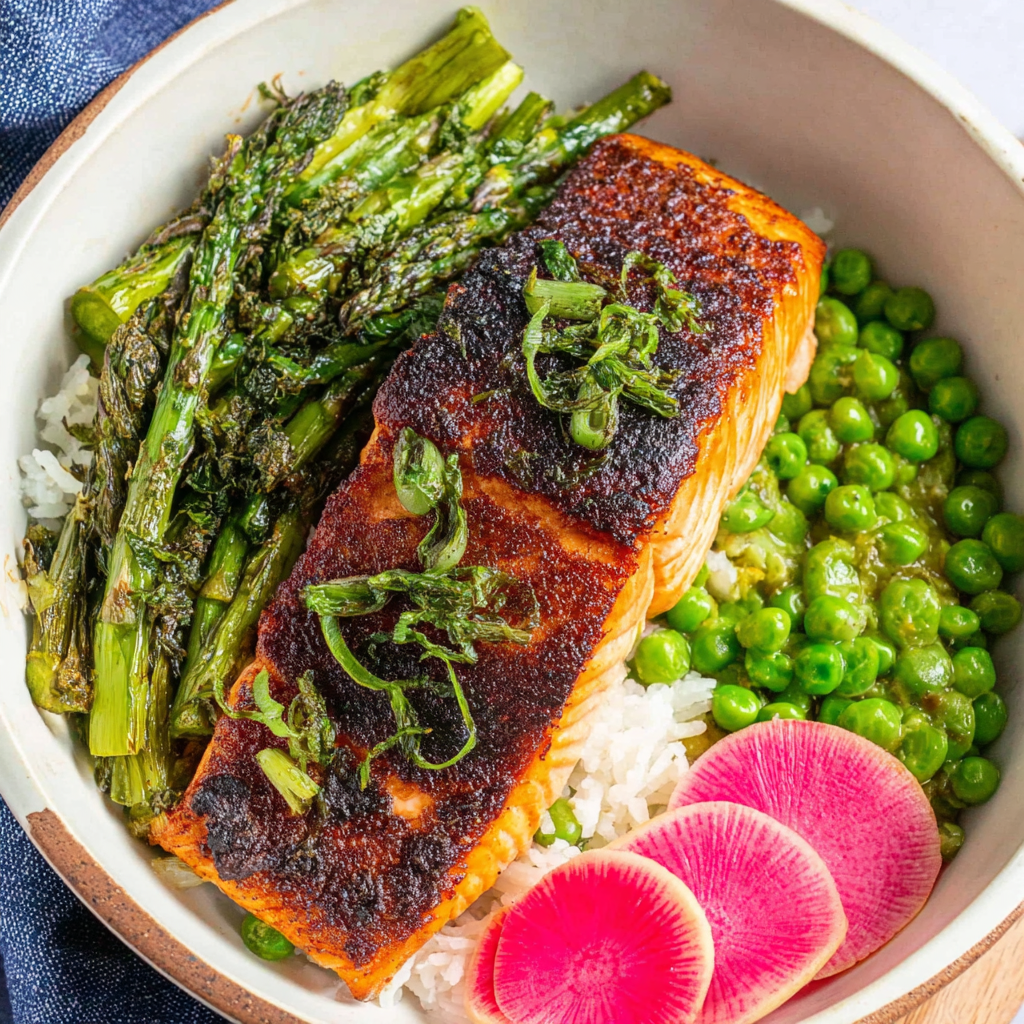
As spring unfolds, vibrant ingredients come into season, making it the perfect time to elevate your culinary creations. One such delightful dish is the Spring Salmon Bowl, a nourishing combination that celebrates the essence of the season.
Packed with fresh asparagus and sweet peas, these bowls not only offer an explosion of flavors but also provide a wholesome meal option. Let’s explore how to bring texture, nutrition, and taste together in this lively dish.
Ingredients
- 2 6-ounce salmon fillets
Salmon is the star of the dish, rich in omega-3 fatty acids, providing a buttery texture and a delicious flavor that perfectly complements the freshness of spring vegetables. - 1 bunch asparagus, trimmed and cut into 2-inch pieces
Asparagus brings a crisp texture and a vibrant green color, while its mildly earthy flavor balances the richness of the salmon. It's also packed with vitamins A, C, and K. - 1 cup fresh green peas (or frozen)
Sweet green peas add a pop of color and a saccharine burst that enhances the overall flavor of the bowl, along with being a great source of plant-based protein and fiber. - 1 cup cooked quinoa
Quinoa serves as a nutritious base for the bowl, contributing a nutty flavor and a satisfying texture, while also being gluten-free and high in protein. - 2 tablespoons olive oil
Olive oil is used for sautéing vegetables, imparting a rich flavor and healthy fats that enhance the dish’s overall health benefits. - 1 lemon, juiced and zested
Lemon adds a zesty brightness to the dish, creating a refreshing contrast to the rich salmon and tender vegetables. - Salt and pepper to taste
Simple seasoning with salt and pepper allows the natural flavors of the salmon and vegetables to shine, ensuring a well-rounded taste in every bite.
Directions & Preparation
Step 1: Prepare the quinoa according to package instructions.
Cooking quinoa as the base is crucial for creating a foundation for the bowl. Once cooked, fluff the quinoa with a fork to ensure it maintains a light, airy texture, allowing it to absorb the flavors of other ingredients effectively.
Step 2: Heat olive oil in a pan over medium heat.
Heating the olive oil properly is key to achieving a nice sear on the salmon while allowing the vegetables to sauté evenly. Make sure the oil glistens but is not smoking, indicating it’s ready for cooking.
Step 3: Season the salmon fillets with salt and pepper, then place them skin-side down in the pan.
Seasoning the salmon enhances its flavor while cooking. Placing the fillets skin-side down first will result in a crispy skin, adding texture to your dish. Cook for about 4-5 minutes until the salmon is golden brown.
Step 4: Turn the salmon and cook for an additional 3-4 minutes until done.
Turning the salmon ensures even cooking; this step is crucial for achieving perfectly tender salmon. A safe indicator of doneness is the flesh turning opaque and flaking easily with a fork.
Step 5: Remove the salmon from the pan and set aside.
Setting the salmon aside allows it to rest, preserving its juiciness and flavor. This step also means the pan can be used to sauté the vegetables without overcooking the fish.
Step 6: Add asparagus to the pan and sauté for about 3-4 minutes until slightly tender.
Sautéing asparagus can highlight its natural sweetness while keeping a little crunch. Timing is essential; you want it tender but not mushy to retain its vibrant color and nutrients.
Step 7: Add the peas and cook for another 2-3 minutes.
Incorporating the peas toward the end of cooking retains their bright color and sweetness, ensuring they add a delightful contrast to the dish. Stir occasionally for even cooking.
Step 8: Add lemon juice and zest to the vegetables and stir well.
The lemon juice and zest are vital for brightening the flavors in the dish. Mixing it in during cooking allows the lemon to infuse the vegetables, enhancing their taste with a refreshing kick.
Step 9: Serve the quinoa in bowls, topped with salmon and sautéed asparagus and peas.
Arranging the dish aesthetically can elevate the dining experience. Layering the cooked quinoa as a base topped with the salmon and vegetables not only looks appealing but encourages a mix of flavors in each bite.
Step 10: Finish with additional lemon zest if desired.
A final touch of lemon zest enriches the dish, giving an extra burst of fragrance and bright flavor. This step is often overlooked, yet it can make a significant difference in taste.

The Harmony of Flavors
In Spring Salmon Bowls, every ingredient works in harmony to create a well-balanced dish. The rich, fatty salmon contrasts beautifully with the crisp asparagus and the sweet burst of peas. This balance not only pleases the palate but also presents a visually stunning platter, making the meal enjoyable both in taste and appearance.
Nutritional Powerhouse
This recipe is not only a feast for the senses but also a nutritional powerhouse. The omega-3 fatty acids in salmon promote heart health, while quinoa provides complete protein. Asparagus and peas contribute essential vitamins and minerals, making these bowls a fantastic option for anyone seeking a wholesome meal filled with beneficial nutrients.
Customizing Your Bowl
One of the beautiful aspects of the Spring Salmon Bowl is its versatility. Feel free to mix and match seasonal vegetables or grains based on what you have on hand. Whether you swap quinoa for brown rice or toss in some baby spinach, this dish encourages creativity and adaptation to fit your pantry, taste preferences, and nutritional needs.
FAQs
What can I do if the salmon turns out overcooked?
If you overcook the salmon, it may become dry. To remedy this, try serving it with a flavorful sauce or a squeeze of lemon juice to add moisture and enhance the taste.
Can I use frozen asparagus in this recipe?
Yes, you can use frozen asparagus if fresh is unavailable. Just cook it slightly longer to ensure it's heated through and has the right texture.
What can I substitute for quinoa?
If you prefer, you can substitute quinoa with farro, brown rice, or cauliflower rice. Choose a grain based on your dietary preferences and desired texture.
How do I know if the asparagus is cooked properly?
Properly cooked asparagus should be tender yet still slightly crisp, retaining its bright green color. A quick taste test can help you determine if it has the right texture.
Is there a way to make the bowls more filling?
To make the bowls more filling, consider adding additional grains or legumes, such as chickpeas or black beans, which enhance protein and fiber content.
What if the bowls taste bland?
If the bowls taste bland, it may be due to insufficient seasoning. Always taste before serving, and consider adding more salt, pepper, or spices, along with the lemon, to boost flavor.
Conclusion
Spring Salmon Bowls with Asparagus and Peas provide a vibrant, nutritious, and visually enticing dish that fills the table with the essence of the season. Every bite offers a refreshing taste of spring, celebrating the bounty of fresh ingredients and wholesome flavors.
These bowls invite creativity in the kitchen while reminding you to embrace the joy of cooking with seasonal produce. Enjoy the harmony of flavors and the satisfaction of preparing a meal that is as delightful to make as it is to eat.
Recipe Card
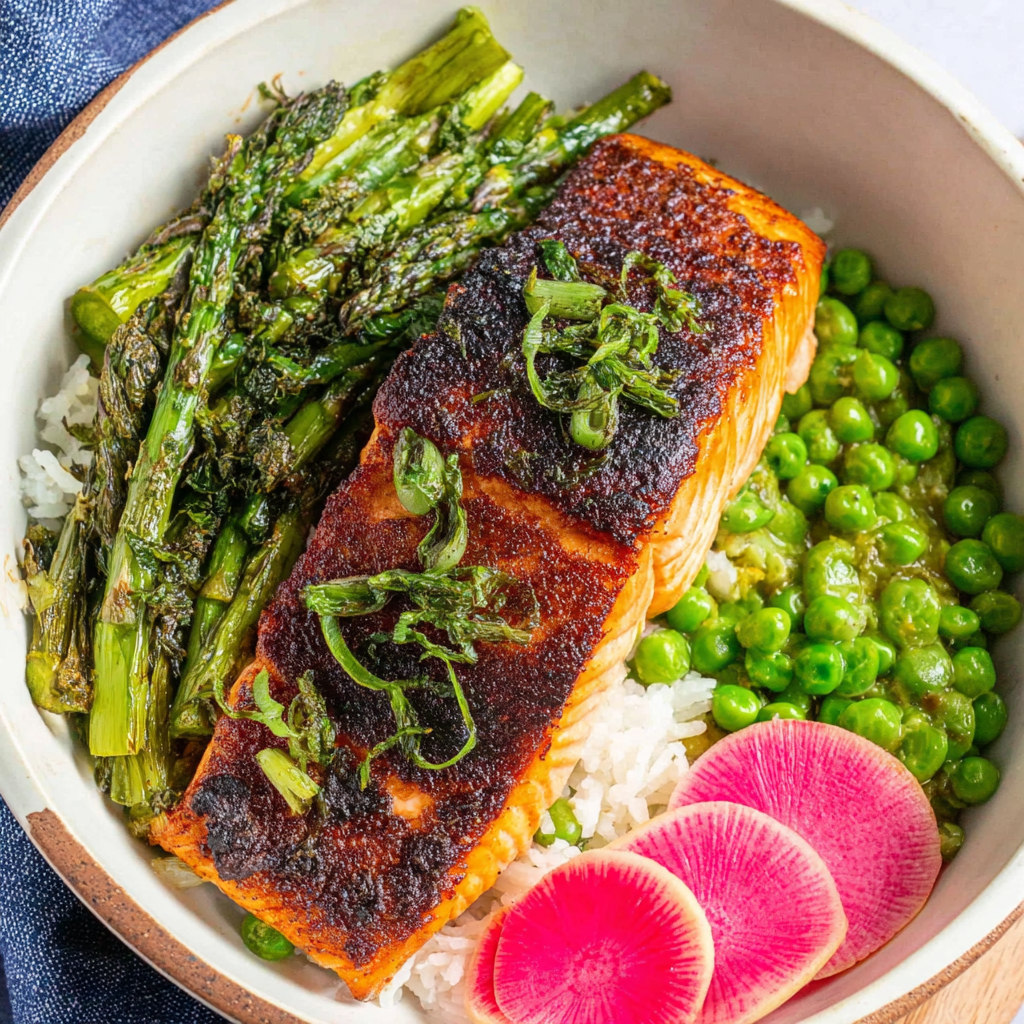
Delightful Spring Salmon Bowls with Asparagus and Peas
Ingredients
Method
- Prepare the quinoa according to package instructions.
- Heat olive oil in a pan over medium heat.
- Season the salmon fillets with salt and pepper, then place them skin-side down in the pan.
- Turn the salmon and cook for an additional 3-4 minutes until done.
- Remove the salmon from the pan and set aside.
- Add asparagus to the pan and sauté for about 3-4 minutes until slightly tender.
- Add the peas and cook for another 2-3 minutes.
- Add lemon juice and zest to the vegetables and stir well.
- Serve the quinoa in bowls, topped with salmon and sautéed asparagus and peas.
- Finish with additional lemon zest if desired.
Notes
Additional serving suggestions: pair with a crisp salad, garlic bread, or roasted seasonal vegetables for balance.
For make-ahead, prep components separately and assemble just before heating to preserve texture.
Taste and adjust with acid (lemon/vinegar) and salt right at the end to wake up flavors.