Introduction
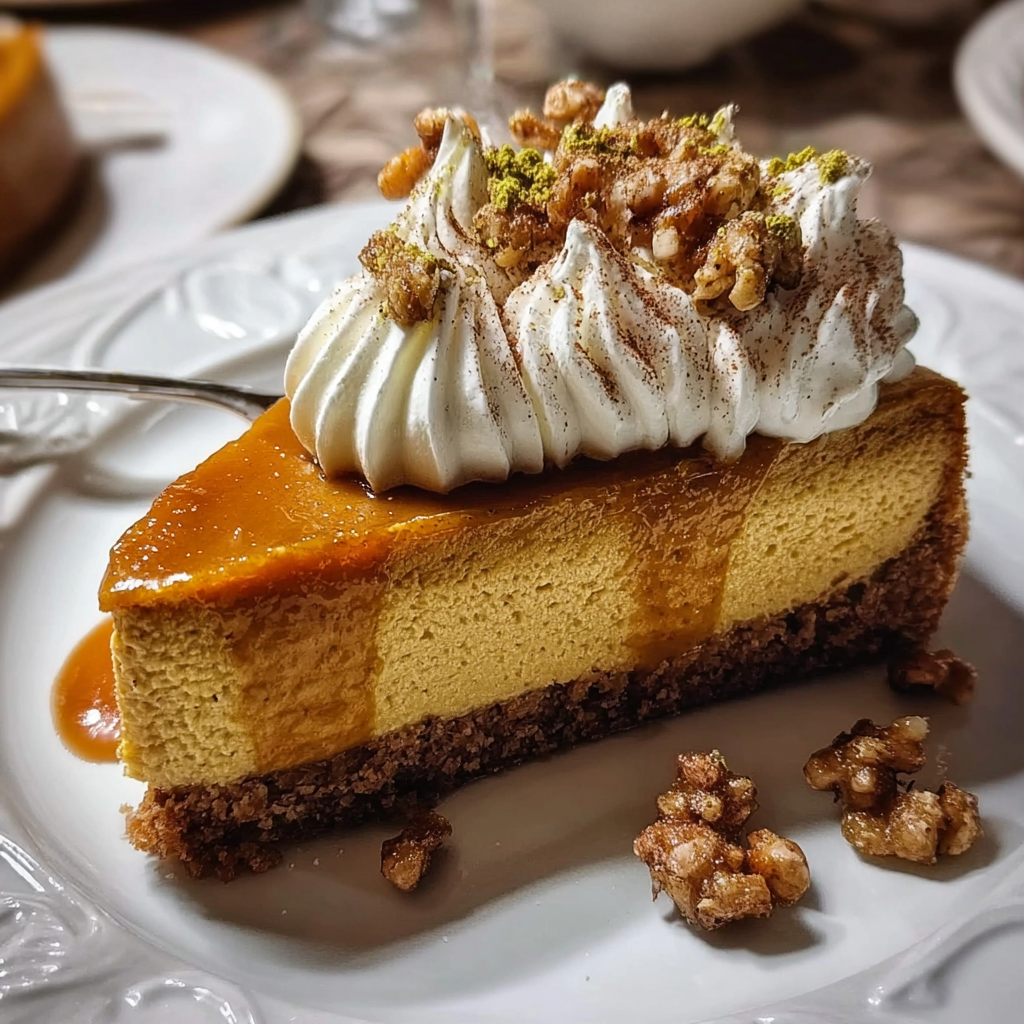
As the leaves begin to turn and a crispness fills the air, many home cooks find an irresistible urge to create comforting desserts that reflect the season. One such dessert is the rich and creamy spiced pumpkin cheesecake, a delightful blend of seasonal flavors and textures that bring warmth to any gathering.
This cheesecake captures the essence of fall with its velvety texture and spiced pumpkin flavor, offering a tantalizing approach to the traditional cheesecake. The combination of cream cheese and pumpkin creates a luscious filling that pairs beautifully with a spiced graham cracker crust, making it a perfect centerpiece for your autumn celebrations.
Ingredients
- 1 ½ cups graham cracker crumbs
These crumbs form the base of your cheesecake crust, providing a slightly crunchy texture that contrasts with the creamy filling. They also give a hint of sweetness, which enhances the overall flavor profile. - ½ cup unsalted butter, melted
Melted butter binds the graham cracker crumbs together, creating a cohesive crust that holds its shape when baked. It adds richness to the crust, contributing to a more decadent texture. - 1 teaspoon ground cinnamon
Cinnamon is a warm spice that adds depth and richness to the cheesecake's flavor. It complements the pumpkin beautifully, evoking the essence of holiday baking. - ¼ teaspoon ground nutmeg
Nutmeg adds a warm, slightly sweet flavor that pairs well with pumpkin. Just a pinch enhances the overall spice blend without overwhelming the palate. - 1 (15 oz) can pure pumpkin puree
Pumpkin puree is the key ingredient that gives this cheesecake its signature flavor and rich color. It introduces natural sweetness and moisture, balancing the richness of the cream cheese. - 3 (8 oz) packages cream cheese, softened
Cream cheese is essential for creating the dense, creamy filling characteristic of cheesecakes. It provides a smooth texture and tangy flavor that complements the sweetness of the pumpkin. - 1 cup granulated sugar
Sugar enhances the sweetness of the cheesecake and helps balance the flavors. It also contributes to the overall texture, helping to create a smooth finish. - 3 large eggs
Eggs are crucial for binding the ingredients together and providing structure to the filling. They also add richness and a silkiness that elevates the cheesecake's mouthfeel. - 1 teaspoon vanilla extract
Vanilla extract deepens the overall flavor of the cheesecake by adding a subtle, sweet aroma. It complements the spices and pumpkin, creating a harmonious blend. - ½ teaspoon salt
Salt balances the sweetness of the cheesecake, enhancing the flavors of the other ingredients. It helps to prevent the dessert from tasting flat.
Directions & Preparation
Step 1: Preheat your oven to 325°F (163°C).
Preheating the oven is crucial for ensuring that your cheesecake bakes evenly and achieves the desired texture. A properly heated oven allows the filling to set correctly and helps develop a creamy consistency without overcooking.
Step 2: Prepare the crust by mixing graham cracker crumbs, melted butter, cinnamon, nutmeg, and a pinch of salt.
Combining these ingredients creates a flavorful base for your cheesecake. The spices will infuse the crumbs, enhancing the crust’s flavor. Mix until the crumbs are evenly moistened and the mixture resembles wet sand, ensuring proper binding when pressed into the pan.
Step 3: Press the mixture into the bottom of a 9-inch springform pan and bake for 10 minutes.
Baking the crust for a short time before adding the filling sets its structure, preventing it from becoming soggy. Press the mixture firmly and evenly into the bottom, creating a solid foundation that will support your rich cheesecake.
Step 4: In a large mixing bowl, beat softened cream cheese until smooth and creamy.
Achieving a smooth consistency is key when making cheesecake. Beating the cream cheese helps eliminate lumps, ensuring a velvety filling. Use a mixer on medium speed to achieve the desired texture without overmixing.
Step 5: Add sugar, pumpkin puree, cinnamon, nutmeg, vanilla extract, and salt to the cream cheese, mixing until well combined.
Incorporating these ingredients will create a harmonious mixture that defines the cheesecake's flavor profile. Ensure that each addition is well blended before adding the next to achieve an even texture with no lumps, enhancing the final product.
Step 6: Add eggs one at a time, mixing on low speed just until incorporated.
Adding eggs individually is vital for preventing overmixing, which can cause cracks in your cheesecake. Mixing on low speed helps retain air, but be careful not to overbeat, as this can lead to a dry texture. Just blend until you see no streaks.
Step 7: Pour the filling over the baked crust and spread it evenly.
This step allows the filling to settle naturally into the crust. Spreading the mixture evenly with a spatula helps minimize air bubbles, ensuring a smooth top and consistent texture as it bakes.
Step 8: Bake in the preheated oven for about 50-60 minutes.
Baking your cheesecake at a steady temperature is essential for achieving the right texture. The cheesecake should be set around the edges but slightly jiggly in the center. This residual heat will finish cooking it as it cools.
Step 9: Once baked, turn off the oven, crack the door open, and let the cheesecake cool slowly for about one hour.
Allowing the cheesecake to cool gradually in the oven helps prevent cracks and gives it time to settle. The cool air envelops the cake, slowly reducing the temperature, which helps maintain its creamy texture.
Step 10: Refrigerate the cheesecake for at least 4 hours, preferably overnight.
Chilling the cheesecake enhances its flavor and allows it to firm up, resulting in a slice that holds its shape. The flavors meld together during this time, making each bite richer and more delicious.
Step 11: Serve chilled, optionally topped with whipped cream or a drizzle of caramel.
Serving your cheesecake chilled highlights its creamy texture and flavor complexity. Topping it with whipped cream or caramel adds a lovely finish, incorporating additional layers of sweetness and richness that complement the spices.

Achieving the Perfect Texture
The texture of this spiced pumpkin cheesecake is vital to its overall enjoyment. Ensuring your cream cheese is adequately softened before mixing, along with adding eggs gradually, will help prevent lumps. Additionally, the baking and cooling process is crucial; aim for a gentle bake to achieve a creamy filling without being overly dense or dry.
The Art of Spice Balance
Crafting the perfect blend of spices is essential to the character of this cheesecake. While cinnamon and nutmeg are traditional favorites, be playful with additional spices such as ginger or clove for a deeper flavor profile. Start with small amounts and adjust to your preference, creating a signature taste that reflects your love for pumpkin desserts.
Customizing Your Cheesecake
While this recipe offers a wonderful foundation, there’s ample room for customization. Consider adding a layer of chocolate ganache, a fruit compote, or even a sprinkle of crushed pecans for extra texture. Each adjustment allows you to explore new flavors and textures, ensuring this cheesecake becomes your go-to for seasonal gatherings.
FAQs
What should I do if my cheesecake cracks while baking?
If your cheesecake cracks, it may have baked too long or at too high a temperature. To prevent this, ensure you follow the baking time closely and allow for a gradual cooling in the oven.
Can I scale this cheesecake recipe up for a larger gathering?
Absolutely! To scale up the recipe, increase the quantities proportionally. Just be aware that bake times may vary, and larger cheesecakes may need extra time to set.
What if my crust is too crumbly or too thick?
If your crust is too crumbly, you may need to add more melted butter. If it’s too thick or hard, try decreasing the crumb amount slightly or pressing it less firmly into the pan.
How can I enhance the pumpkin flavor in my cheesecake?
To amplify the pumpkin flavor, consider using a high-quality pumpkin puree or adding additional spices like ginger. You can also experiment with more pumpkin in the mixture, but be cautious with the balance of wet ingredients.
Is there a way to make the cheesecake lighter?
For a lighter version of this cheesecake, you may substitute a portion of the cream cheese with Greek yogurt. This will add creaminess while reducing calories and fat content.
How can I tell if the cheesecake is done baking?
The cheesecake is done when the edges appear set and the center is slightly jiggly. It will continue to set as it cools, so avoid overbaking for a creamy texture.
Can I incorporate other flavors into the filling?
Yes! Consider adding crushed ginger cookies to the crust or mixing in a swirl of caramel or chocolate into the filling for a unique flavor twist.
Conclusion
This rich and creamy spiced pumpkin cheesecake will undoubtedly become a treasured recipe in your fall baking repertoire. Its combination of flavors and textures not only captures the spirit of the season but also evokes fond memories with each bite.
Embrace your inner home cook and share this delectable dessert with friends and family, creating moments that will be savored long after the last slice has been enjoyed.
Recipe Card
Notes
Additional serving suggestions: pair with a crisp salad, garlic bread, or roasted seasonal vegetables for balance.
For make-ahead, prep components separately and assemble just before heating to preserve texture.
Taste and adjust with acid (lemon/vinegar) and salt right at the end to wake up flavors.