Introduction
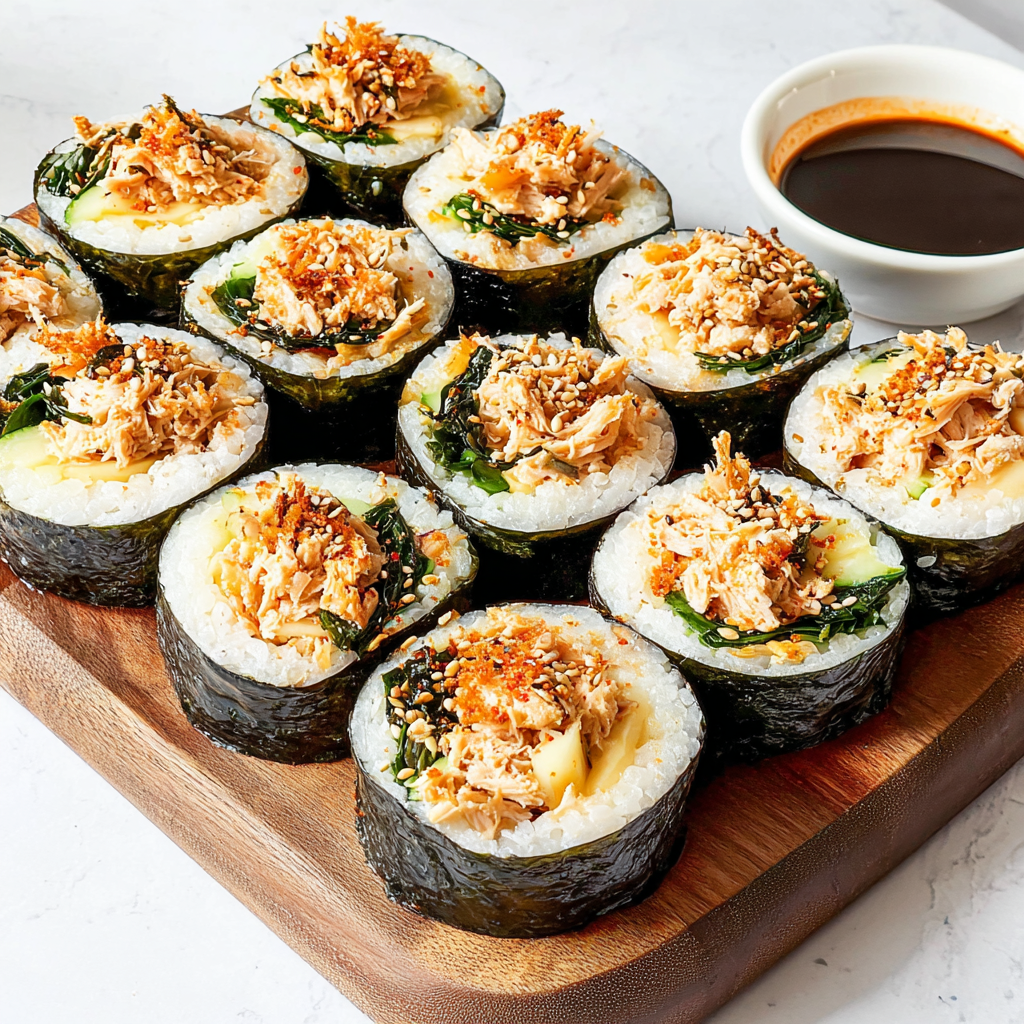
Spicy Tuna Kimbap Rolls are a vibrant and delicious twist on traditional Korean kimbap, offering a delightful mix of textures and flavors. Unlike sushi, kimbap uses seasoned rice and a variety of fillings rolled in seaweed, making it a versatile dish perfect for lunch, picnics, or a snack.
The star of this recipe is the spicy tuna filling, which brings heat and depth to each bite. This dish not only pleases the palate but also provides a colorful presentation, making it ideal for impressing friends and family. Whether you’re a beginner or a seasoned cook, these rolls are sure to be a hit.
Ingredients
- 2 cups sushi rice
Sushi rice is sticky and helps hold the kimbap together. It absorbs the flavors of the seasoning, adding a subtle sweetness and enhancing the overall taste. - 3 cups water
Water is essential for cooking the rice; it hydrates the grains and ensures they achieve the perfect texture. - 1 tablespoon rice vinegar
Rice vinegar adds acidity and brightness to the rice, balancing the flavors and helping to enhance the umami taste. - 1 tablespoon sugar
Sugar helps to balance the vinegar's acidity, creating a harmonious flavor in the rice. - 1 teaspoon salt
Salt enhances the overall flavor of the rice and the filling, ensuring every bite is flavorful. - 1 can (5 oz) tuna, drained
Tuna is the main protein source in the kimbap and provides a savory base, which pairs excellently with the spicy elements. - 2 tablespoons gochujang (Korean chili paste)
Gochujang brings a spicy, slightly sweet flavor, making the tuna filling vibrant and appealing. - 1 tablespoon sesame oil
Sesame oil adds a nutty aroma and flavor, enriching the filling and providing depth to every bite. - 4 sheets of seaweed (nori)
Nori holds everything together and adds a distinct ocean flavor, contributing to the overall kimbap experience. - 1 medium cucumber, julienned
Cucumber adds a refreshing crunch, balancing the spiciness of the tuna and providing a cool contrast. - 1 medium carrot, julienned
Carrots lend sweetness and color to the rolls, making them visually appealing and adding a slight crunch. - Sesame seeds for garnish (optional)
Sesame seeds add a delightful crunch and nutty flavor, enhancing the aesthetic and the taste of the kimbap.
Directions & Preparation
Step 1: Rinse sushi rice under cold water until the water runs clear.
Rinsing the rice removes excess starch, which can make it gummy when cooked. This step is crucial for achieving the right texture. You want each grain to remain distinct, allowing for a better bite in your kimbap.
Step 2: Combine rinsed rice and water in a rice cooker and cook according to your rice cooker instructions.
Using a rice cooker ensures that the rice is cooked evenly and to the right consistency. Properly cooked rice is the foundation of great kimbap, so taking care of this step is imperative.
Step 3: Once cooked, transfer rice to a large bowl, add rice vinegar, sugar, and salt, then mix gently.
Mixing the seasoning into the warm rice allows the flavors to penetrate well. Be gentle to avoid mashing the rice; you want to maintain its fluffy texture while ensuring every grain is flavorful.
Step 4: In a bowl, combine drained tuna, gochujang, and sesame oil; mix well.
This step creates the spicy filling that will define your kimbap. Adjust the amount of gochujang according to your spice preference. The creamy texture of tuna combines beautifully with the heat of the gochujang, creating a sumptuous filling.
Step 5: Prepare your vegetables by julienning cucumber and carrot.
Properly prepping the vegetables ensures they fit snugly inside the rolls and provide consistent crunch. The thin slices help create a balanced texture and flavor profile across every bite.
Step 6: Place a sheet of nori on a bamboo mat or flat surface, shiny side down.
Placing the nori shiny side down ensures that the rough side grips the rice better, aiding in rolling. This is a small detail, but it can make a big difference in the overall integrity of your kimbap.
Step 7: Spread a thin layer of rice onto the nori, leaving about an inch at the top edge free.
Evenly spreading the rice creates a solid base for your fillings. Leaving space at the top allows for a good seal, preventing any ingredients from spilling out as you roll.
Step 8: Add a line of spicy tuna, followed by cucumber and carrot sticks along the center of the rice.
Layering your fillings ensures an even distribution in every slice. The color contrast between the tuna, cucumber, and carrots makes the kimbap visually appealing, as well as flavorful.
Step 9: Using the bamboo mat, carefully roll the kimbap away from you, applying gentle pressure.
Rolling tightly but not overly so is key to achieving a well-formed roll. The pressure helps compress the roll, ensuring that ingredients stay together while keeping it light enough to prevent breakage.
Step 10: Seal the roll with a little water along the edge of the nori.
Sealing is crucial in keeping your kimbap intact during slicing. A bit of water acts as a glue to hold the creased edge together, allowing for neat, clean cuts.
Step 11: Use a sharp knife to slice the kimbap into bite-sized pieces, wiping the knife with a damp cloth as needed.
Using a sharp knife ensures clean cuts, which are essential for the presentation of the kimbap. Wiping the knife removes excess rice and prevents tearing, helping maintain the integrity of each piece.
Step 12: Sprinkle with sesame seeds and serve with soy sauce or pickled radish on the side if desired.
The garnish not only adds flavor but also enhances the visual appeal of your dish. Serving with soy sauce or pickled radish provides a contrasting dip that complements the spiciness of the kimbap.

Choosing the Right Rice for Kimbap
For kimbap, sushi rice or short-grain rice is ideal due to its stickiness. This stickiness helps bind the rice together, making rolling easier and keeping the fillings intact. Other rice varieties may not hold together as well, leading to a less satisfying roll.
Enhancing Flavor with Fillings
Feel free to get creative with your fillings! Ingredients like pickled vegetables, scrambled eggs, or even cooked meats can add different textures and flavors. Just ensure the ratios balance well with the spicy tuna to maintain its integrity as the star of the dish.
The Art of Rolling Kimbap
Perfecting the roll of kimbap takes practice, but it’s an essential part of making this dish. A tight roll prevents the ingredients from falling out while slicing, and allows for a more satisfying bite. Don't rush; take your time to master this simple technique.
FAQs
Can I use canned salmon instead of tuna?
Yes, canned salmon can be a delicious alternative, providing a unique flavor profile while still retaining the essence of kimbap.
What if my rice mixture is too dry?
If your rice feels too dry, try adding a teaspoon of water while mixing the vinegar and sugar to help moisten it. You want it sticky but not mushy.
How can I make my kimbap less spicy?
To reduce the spice, use less gochujang in the tuna mixture or replace it with a milder chili paste or mayonnaise for a creamier, less spicy taste.
Can I incorporate other vegetables into the rolls?
Absolutely! Vegetables such as bell peppers, avocado, or even radish can be used. Just remember to cut them into thin strips so they fit well in the roll.
Why did my kimbap fall apart during cutting?
This can happen if the roll wasn't tight enough or if the rice was too dry. Make sure to roll firmly and maintain moisture in the rice.
What is the best way to present kimbap at a gathering?
Cut the kimbap into even pieces and arrange them on a platter. Add some dipping sauces on the side for an attractive and inviting presentation.
Conclusion
Spicy Tuna Kimbap Rolls are not only a fantastic dish to enjoy, but they also offer a canvas for creativity in the kitchen. With a few simple ingredients and steps, you can create a meal that impresses with both flavor and appearance.
Whether you’re making these rolls for yourself or to share, they are a joyous culinary adventure. Enjoy experimenting with different fillings and share your creations with friends and family for a slice of Korean cuisine at home.
Recipe Card

Mastering the Art of Spicy Tuna Kimbap Rolls
Ingredients
Method
- Rinse sushi rice under cold water until the water runs clear.
- Combine rinsed rice and water in a rice cooker and cook according to your rice cooker instructions.
- Once cooked, transfer rice to a large bowl, add rice vinegar, sugar, and salt, then mix gently.
- In a bowl, combine drained tuna, gochujang, and sesame oil; mix well.
- Prepare your vegetables by julienning cucumber and carrot.
- Place a sheet of nori on a bamboo mat or flat surface, shiny side down.
- Spread a thin layer of rice onto the nori, leaving about an inch at the top edge free.
- Add a line of spicy tuna, followed by cucumber and carrot sticks along the center of the rice.
- Using the bamboo mat, carefully roll the kimbap away from you, applying gentle pressure.
- Seal the roll with a little water along the edge of the nori.
- Use a sharp knife to slice the kimbap into bite-sized pieces, wiping the knife with a damp cloth as needed.
- Sprinkle with sesame seeds and serve with soy sauce or pickled radish on the side if desired.
Notes
Additional serving suggestions: pair with a crisp salad, garlic bread, or roasted seasonal vegetables for balance.
For make-ahead, prep components separately and assemble just before heating to preserve texture.
Taste and adjust with acid (lemon/vinegar) and salt right at the end to wake up flavors.