Introduction
Braised short ribs are a cherished dish that elevates any dining experience, combining rich flavors with tender meat. Their melt-in-your-mouth texture makes them a favorite for both family dinners and special occasions. When slow-cooked in aromatic liquids, these meats are transformed into a succulent, flavorful masterpiece.
The beauty of braised short ribs lies in their ability to develop deep flavors and succulent tenderness during the cooking process. Infused with herbs and spices, they turn an ordinary meal into something truly extraordinary. With a few carefully chosen ingredients and time, anyone can create this wonderful dish in the comfort of their own kitchen.
Ingredients
- 3 pounds bone-in short ribs
The primary ingredient, bone-in short ribs offer rich marbling and flavor. The bones contribute to a deeper broth during the braising process, adding complexity. - 2 tablespoons olive oil
Used for searing the meat, olive oil provides a flavorful base. It helps in browning the short ribs, creating a rich crust that enhances overall taste. - 1 onion, chopped
Onion adds natural sweetness and depth to the dish. When sautéed, it becomes tender and releases its flavor, contributing to the braising liquid. - 2 carrots, diced
Carrots introduce a subtle sweetness and earthiness. They help balance the richness of the meat, adding complexity to the overall flavor profile. - 2 celery stalks, diced
Celery provides a fresh, aromatic quality to the braising liquid. It enhances the vegetable flavor base, contributing to the dish's overall depth. - 4 cloves garlic, minced
Garlic brings a punch of flavor and aroma that complements the meat. It caramelizes during cooking, adding an extra layer of richness to the dish. - 2 cups red wine
Red wine is essential for deglazing the pot, lifting the flavorful browned bits from the bottom. It adds acidity and depth, enhancing the overall richness of the sauce. - 2 cups beef broth
Beef broth forms the luxurious base of the braising liquid. Choosing a good-quality broth enhances the meat's flavor and ensures a rich final sauce. - 2 sprigs fresh thyme
Fresh thyme contributes an herbal note, infusing the dish with aromatic qualities. It enhances the savory elements and balances the richness. - 2 bay leaves
Bay leaves add a subtle bitterness and depth of flavor during the braising. They lift the overall taste profile and contribute to the aroma. - Salt and pepper to taste
Seasoning with salt and pepper is crucial. It elevates the flavors of all the ingredients and ensures the final dish is well-balanced.
Directions & Preparation
Step 1: Preheat your oven to 325°F (163°C).
Preheating the oven is essential for braised dishes as the consistent temperature ensures even cooking. This initial step also helps to lock in the juices of the meat, leading to tenderness.
Step 2: Season the short ribs generously with salt and pepper.
Seasoning the meat before browning enhances the flavor right from the start. This step builds a flavorful crust that complements the rich braising liquid.
Step 3: In a large Dutch oven, heat olive oil over medium-high heat.
Using a heavy pot like a Dutch oven ensures even heat distribution. The high temperature will allow for effective browning, which is key to developing a complex flavor.
Step 4: Sear the short ribs on all sides until browned, about 3-4 minutes per side.
Browning the meat creates a caramelized exterior that adds depth and flavor to the final dish. Proper searing locks in juices and ensures a rich, delicious end product.
Step 5: Remove the short ribs and set them aside on a plate.
Setting aside the short ribs prevents overcrowding in the pot and allows you to cook the vegetables in the rendered fat. It also helps maintain the integrity of the sear.
Step 6: In the same pot, add the chopped onion, carrots, and celery.
Cooking the vegetables in the remaining fat captures the flavor from searing the meat. This step builds the aromatic base for the braising liquid, enhancing the overall taste.
Step 7: Sauté for about 5 minutes until the vegetables begin to soften.
Softening the vegetables helps release their natural sugars and flavors, creating a deliciously aromatic mélange that forms the foundation of the dish.
Step 8: Add the minced garlic and cook for 1 more minute.
Garlic can burn quickly, so adding it towards the end of the vegetable sauté prevents bitterness. It provides a punch of flavor that amplifies the dish's richness.
Step 9: Pour in the red wine to deglaze the pan, scraping up browned bits.
Deglazing is vital for capturing all the flavors stuck to the bottom. This process lifts caramelized bits, creating a robust base for the braising sauce.
Step 10: Bring the wine to a simmer and let it reduce by half, about 5-7 minutes.
Reducing the wine intensifies its flavor and removes some of the alcohol, balancing the acidity. This step enriches the dish's depth and adds a wonderful complexity.
Step 11: Add the beef broth, thyme, bay leaves, and return the short ribs to the pot.
Combining the broth with the short ribs returns the essential moisture for braising. The herbs infuse the dish with flavor, ensuring each bite is aromatic and savory.
Step 12: Cover the pot and transfer it to the preheated oven.
Covering the pot traps steam, allowing the ribs to braise slowly and become incredibly tender. This step ensures even cooking and prevents drying out during the process.
Step 13: Braise for 2.5 to 3 hours or until the ribs are fork-tender.
The long, slow cooking process is critical for breaking down tough connective tissue, transforming the short ribs into a tender, flavorful dish. Checking for doneness ensures they don’t overcook.
Step 14: Remove the pot from the oven and let the short ribs rest for 10 minutes before serving.
Resting allows the juices to redistribute throughout the meat, ensuring each bite is moist and flavorful. This step prepares the dish for presentation.

Choosing the Right Cut of Meat
Selecting high-quality short ribs is essential for achieving an exceptional dish. Look for well-marbled cuts, as the fat content significantly influences flavor and tenderness. Bone-in short ribs are preferred for braising, as they enrich the sauce with their gelatin and enhance the overall savory profile.
The Importance of Browning
Browning short ribs before braising is a crucial step that can transform your dish from good to great. This process creates a complex flavor base through the Maillard reaction, which enhances the meat's depth and improves the overall flavor of the sauce. Never skip this step for the best results.
Serving Suggestions for Braised Short Ribs
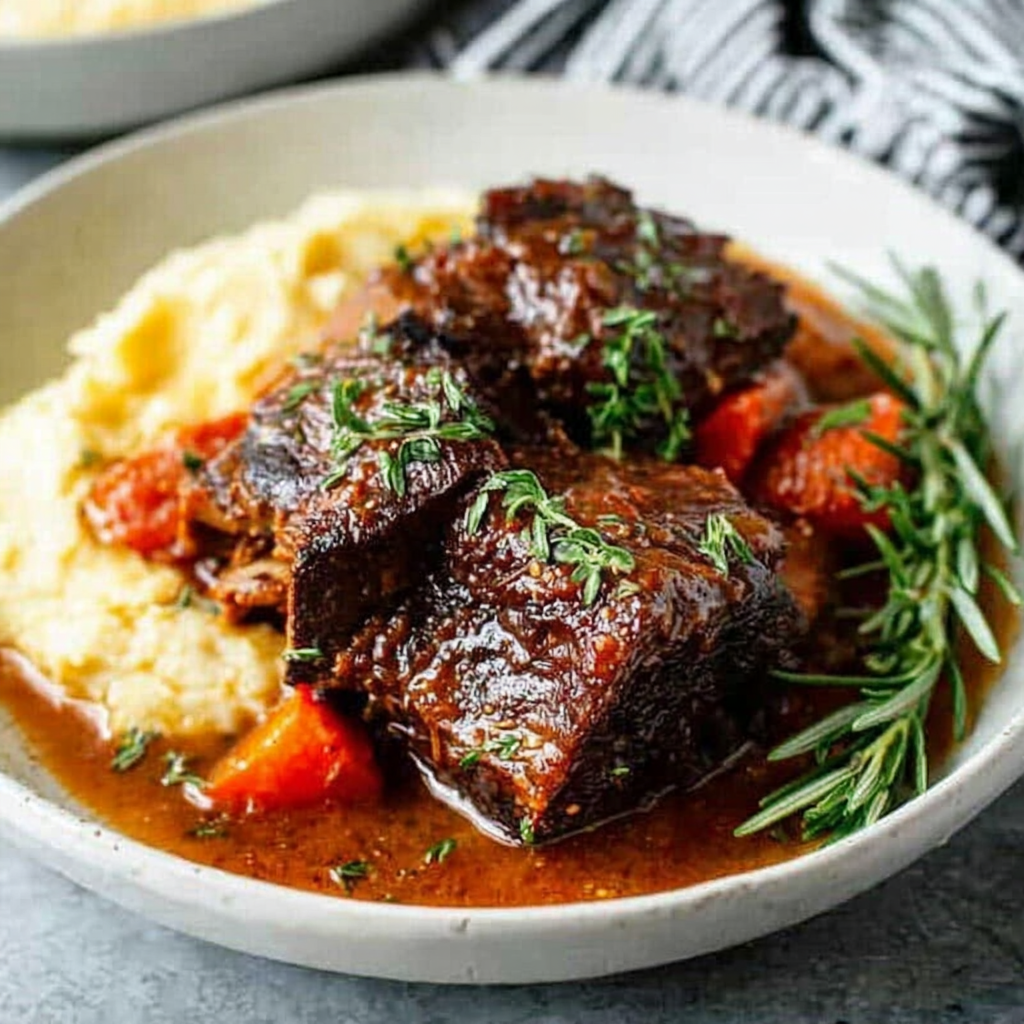
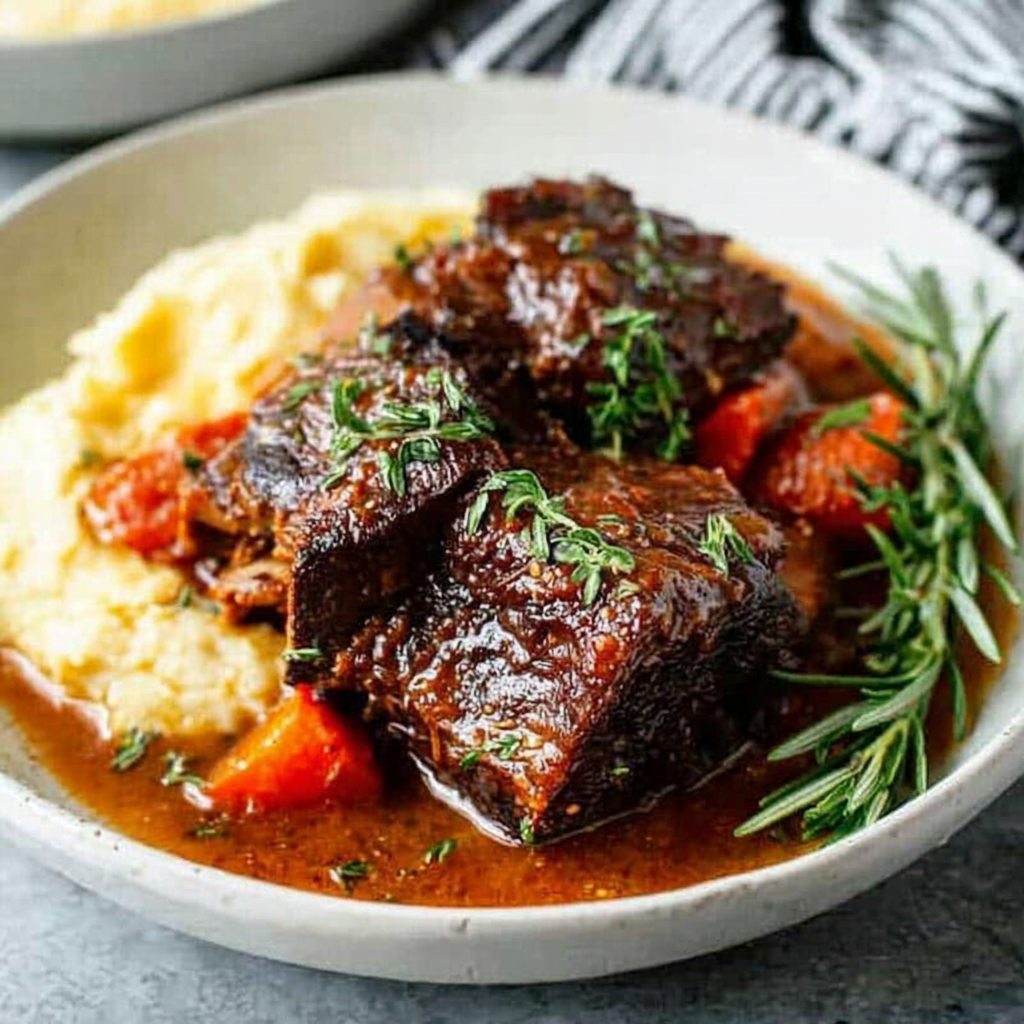
Braised short ribs pair beautifully with a variety of sides that can soak up their rich sauce. Creamy mashed potatoes or polenta make excellent choices, providing a comforting balance to the robust flavors. Alternatively, serve with roasted vegetables or a light salad for a fresh contrast.
FAQs
What if the braising liquid is too thick?
If the liquid becomes too thick, you can simply add a splash of beef broth or water to thin it out. Stir and warm it gently until it reaches the desired consistency.
How do I adjust the recipe for a smaller serving size?
To scale the recipe down, reduce the quantity of short ribs and corresponding ingredients by half. Maintain the same cooking time, but check for tenderness sooner.
Why are my short ribs tough after cooking?
If the short ribs are tough, they may not have been cooked long enough. Braising requires patience, as the low and slow method is essential for breaking down tough fibers.
Can I use other types of wine besides red?
While red wine is preferred for its richness, you can experiment with white wine, although it will result in a different flavor profile. Ensure that it complements the dish.
What can I do if I'm out of thyme?
If you don’t have fresh thyme, you can substitute with dried thyme. Use about a third of the amount since dried herbs are more potent.
Is it necessary to strain the braising liquid before serving?
Straining the liquid is not required, but doing so can yield a smoother sauce. If preferred, strain out the solids for a refined sauce presentation.
Conclusion
Braised short ribs are a culinary celebration of flavor and comfort, making them an impressive dish for any occasion. With the right techniques and patience, you'll create a meal that reflects your dedication and skills in the kitchen.
Each bite of tender meat combined with a rich sauce invites everyone to the table, creating shared moments and delightful memories. Embrace the process, enjoy the aroma, and savor the wonderful flavors of this timeless dish.
Recipe Card
Mastering the Flavor of Braised Short Ribs
Ingredients
Method
- Preheat your oven to 325°F (163°C).
- Season the short ribs generously with salt and pepper.
- In a large Dutch oven, heat olive oil over medium-high heat.
- Sear the short ribs on all sides until browned, about 3-4 minutes per side.
- Remove the short ribs and set them aside on a plate.
- In the same pot, add the chopped onion, carrots, and celery.
- Sauté for about 5 minutes until the vegetables begin to soften.
- Add the minced garlic and cook for 1 more minute.
- Pour in the red wine to deglaze the pan, scraping up browned bits.
- Bring the wine to a simmer and let it reduce by half, about 5-7 minutes.
- Add the beef broth, thyme, bay leaves, and return the short ribs to the pot.
- Cover the pot and transfer it to the preheated oven.
- Braise for 2.5 to 3 hours or until the ribs are fork-tender.
- Remove the pot from the oven and let the short ribs rest for 10 minutes before serving.
Notes
Additional serving suggestions: pair with a crisp salad, garlic bread, or roasted seasonal vegetables for balance.
For make-ahead, prep components separately and assemble just before heating to preserve texture.
Taste and adjust with acid (lemon/vinegar) and salt right at the end to wake up flavors.