Introduction
Pork tenderloin is a versatile cut of meat that's not only flavorful but also quick to cook, making it a favorite among home cooks. When paired with an apple cider glaze, the dish takes on a delightful balance of savory and sweet that can please any palate.
This recipe highlights the tender juiciness of pork while the glaze enhances its natural flavors with a touch of autumn warmth. Ideal for both weeknight dinners and special occasions, this dish creates a comforting environment that leaves guests asking for more.
Ingredients
- 1.5 pounds pork tenderloin
Pork tenderloin is the star of this dish. Its lean yet tender texture allows it to absorb the flavors of the glaze beautifully, ensuring each bite is juicy and satisfying. - 1 cup apple cider
The apple cider serves as a sweet and tangy base for the glaze, enhancing the pork with fruity notes. Its acidity also helps to tenderize the meat, adding depth and character. - 1 tablespoon Dijon mustard
Dijon mustard provides a mild spiciness that complements the sweetness of the apple cider. It adds complexity and helps to emulsify the glaze, creating a smooth consistency. - 2 tablespoons brown sugar
Brown sugar adds sweetness and a rich caramel flavor to the glaze, helping to create a beautiful crust on the pork. It also balances the acidity of the cider. - 1 teaspoon fresh thyme
Fresh thyme elevates the dish with its aromatic qualities. This herb lends an earthy depth that pairs perfectly with the flavors of the pork and apple cider. - Salt and pepper to taste
Salt and pepper are essential for enhancing flavors. They help bring out the natural taste of the pork and balance the sweetness of the glaze. - 1 tablespoon olive oil
Olive oil is used for searing the pork, creating a flavorful crust and locking in moisture. It also prevents sticking and promotes even browning.
Directions & Preparation
Step 1: Preheat your oven to 400°F (200°C).
Preheating the oven is crucial for ensuring your pork tenderloin cooks evenly and achieves a nice crust. Proper temperature allows the glaze to caramelize without overcooking the meat.
Step 2: Season the pork tenderloin with salt and pepper.
Seasoning the pork before cooking is essential for flavor. It penetrates the meat, enhancing every bite. Don't be shy with the seasoning; it builds the foundation of taste.
Step 3: Heat olive oil in an oven-safe skillet over medium-high heat.
Using medium-high heat helps develop a beautiful sear on the pork, creating a flavorful crust. The oil also prevents the meat from sticking and allows for even cooking.
Step 4: Sear the pork tenderloin on all sides until golden brown, about 3-4 minutes per side.
Searing the pork for a few minutes on each side locks in juices and flavor. Aim for a deep golden brown to enhance the dish’s overall presentation and taste.
Step 5: In a separate bowl, whisk together apple cider, Dijon mustard, brown sugar, and thyme.
Mixing the glaze ingredients beforehand allows their flavors to meld together. This step ensures an even coating on the pork, creating a harmonious blend of sweet and savory.
Step 6: Pour the apple cider mixture over the seared pork.
Adding the glaze at this stage allows it to infuse flavor into the pork during baking. As the pork cooks, the liquids will reduce and concentrate, creating a luscious sauce.
Step 7: Transfer the skillet to the preheated oven and bake for 20-25 minutes, or until the internal temperature reaches 145°F (63°C).
Baking the pork allows it to cook through gently. The goal is juicy, tender meat; use an instant-read thermometer to check for doneness without cutting into the meat.
Step 8: Remove the skillet from the oven, and let the pork rest for 5-10 minutes before slicing.
Resting the pork after cooking helps retain its juices, resulting in a more succulent dish. This is the opportune time to prepare any sides while flavors settle.
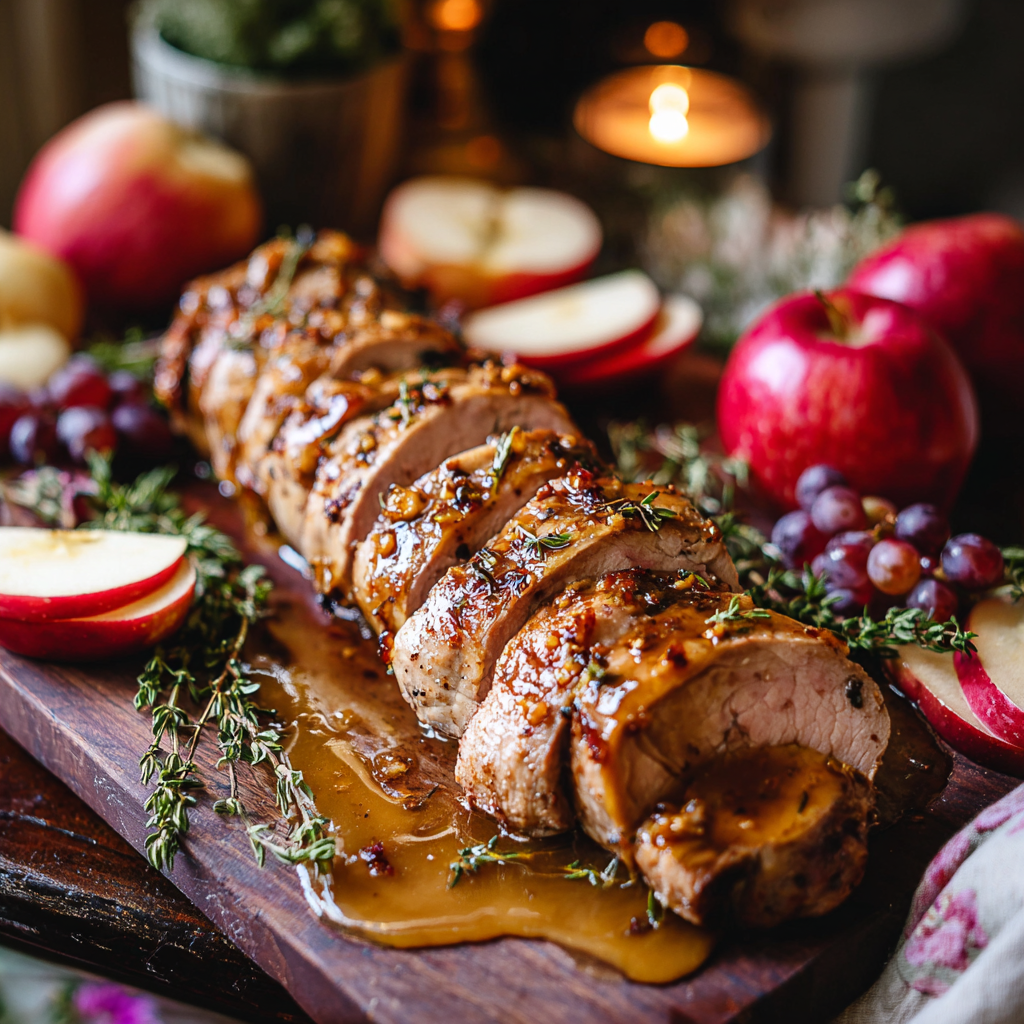
Step 9: Slice the pork and drizzle with the remaining apple cider glaze from the skillet.
Slicing the pork against the grain ensures tenderness in each piece. Drizzling the glaze over the sliced meat enhances flavor and presentation, making it visually appealing.

Choosing the Right Pork Tenderloin
When selecting pork tenderloin, look for a piece that is pink and firm. Avoid any that have discoloration or excessive liquid in the packaging. The meat should have a creamy white fat cap for flavor without being overly fatty. This cut benefits from a quick cooking method, ensuring you get tender results.
Enhancing the Apple Cider Glaze
To elevate the flavor of your apple cider glaze, consider adding a splash of apple cider vinegar for added acidity or a sprinkle of cayenne for a hint of spice. These adjustments can introduce layers of flavor to your dish, deepening the profile without straying too far from the original recipe.
Serving Suggestions for Pork Tenderloin
Pork tenderloin pairs beautifully with hearty sides such as roasted root vegetables, creamy mashed potatoes, or a fresh salad. For a seasonal touch, add sautéed greens or warm apple slices to the plate for contrast. This combination creates a delightful assortment of textures and flavors.
FAQs
How do I know when the pork is cooked through?
The best way to ensure the pork is cooked is by using a meat thermometer to check the internal temperature, which should reach 145°F (63°C). Let it rest, and it should have a slight blush in the center.
What if my glaze is too thick?
If your glaze turns out too thick during cooking, you can thin it by adding a splash of water or extra apple cider. This adjustment will help maintain the desired consistency for drizzling.
Can I use other types of cider for the glaze?
Absolutely! While apple cider is traditional, you can experiment with other fruit ciders such as pear or even spiced ciders to create unique flavor profiles.
How do I prevent overcooking the pork?
Monitoring the internal temperature closely is key. Remove the pork from the oven as soon as it reaches 145°F (63°C), then let it rest. This prevents it from becoming dry and tough.
What if I want to use a different cut of pork?
If you prefer to use pork loin or pork chops, adjust the cooking time accordingly, as these cuts may take longer to reach the correct internal temperature.
How can I make the dish more savory?
Incorporating ingredients such as balsamic vinegar or soy sauce into the glaze can lend additional savory notes, balancing the sweetness of the cider.
Conclusion
Pork tenderloin with apple cider glaze is a wonderful way to bring together fall flavors in a simple yet impressive dish. The balance of sweet and savory makes it a versatile meal for any occasion.
With just a few ingredients and a little attention, you can create a flavorful centerpiece that will leave your diners raving. Enjoy this comforting recipe all season long, and don’t hesitate to make it your own.
Recipe Card

Savor the Flavor: Pork Tenderloin with Apple Cider Glaze
Ingredients
Method
- Preheat your oven to 400°F (200°C).
- Season the pork tenderloin with salt and pepper.
- Heat olive oil in an oven-safe skillet over medium-high heat.
- Sear the pork tenderloin on all sides until golden brown, about 3-4 minutes per side.
- In a separate bowl, whisk together apple cider, Dijon mustard, brown sugar, and thyme.
- Pour the apple cider mixture over the seared pork.
- Transfer the skillet to the preheated oven and bake for 20-25 minutes, or until the internal temperature reaches 145°F (63°C).
- Remove the skillet from the oven, and let the pork rest for 5-10 minutes before slicing.
- Slice the pork and drizzle with the remaining apple cider glaze from the skillet.
Notes
Additional serving suggestions: pair with a crisp salad, garlic bread, or roasted seasonal vegetables for balance.
For make-ahead, prep components separately and assemble just before heating to preserve texture.
Taste and adjust with acid (lemon/vinegar) and salt right at the end to wake up flavors.