Introduction
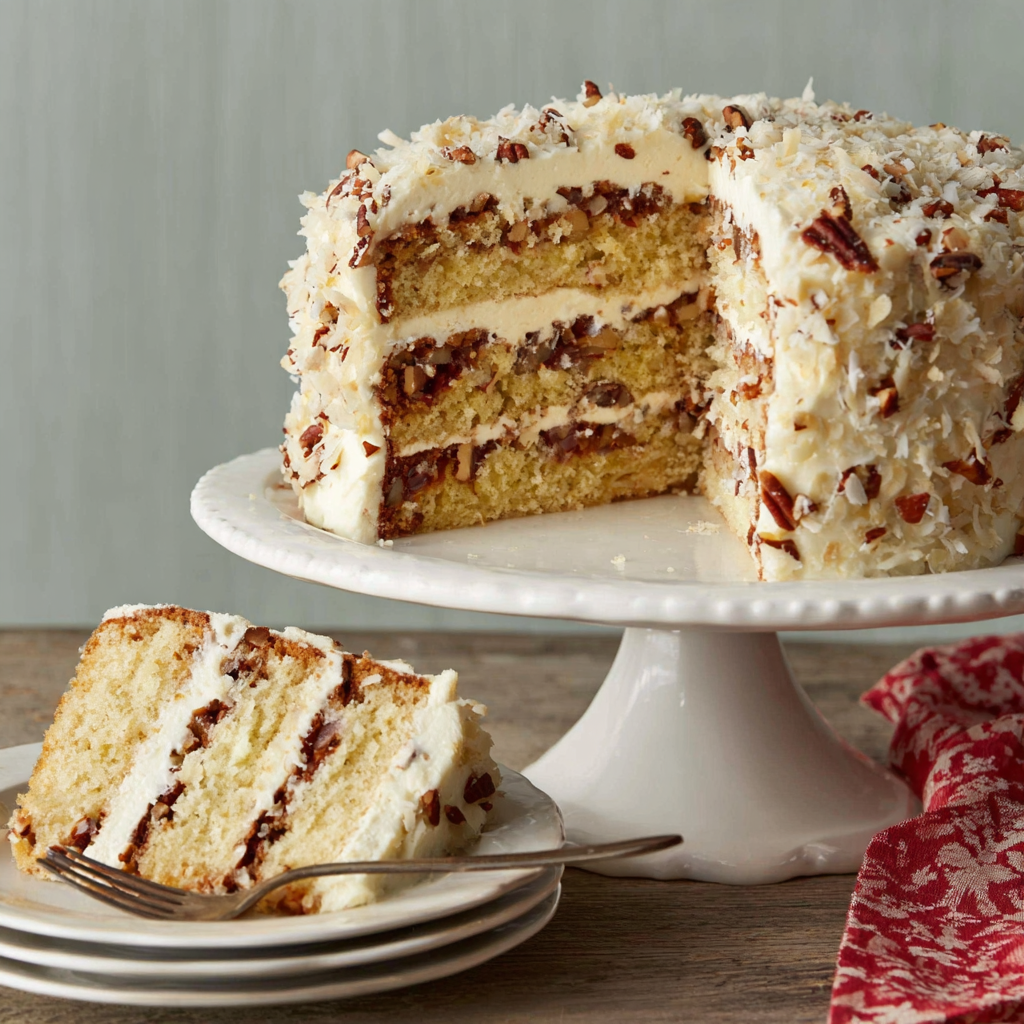
Italian Cream Cake is a delightful dessert that carries a rich heritage from the southern United States, where Italian immigrants brought their culinary traditions. With its moist layers filled with coconut and pecans, it's a celebration of texture and flavor that's perfect for any occasion.
This cake is indulgent yet approachable, making it a favorite among both seasoned bakers and those just starting to explore the world of cakes. The combination of cream cheese frosting and the cake's distinctive flavors creates a dessert experience that feels both elegant and comforting.
Ingredients
- 2 cups all-purpose flour
The foundation of the cake, all-purpose flour provides structure and stability. It allows the cake to rise while giving it a soft crumb. - 1 teaspoon baking powder
This leavening agent helps the cake rise, ensuring a light and airy texture. It reacts with acidic components in the batter for optimal results. - 1 teaspoon baking soda
Baking soda adds to the cake's rise and is crucial for balancing the acidity of buttermilk and cream cheese in the recipe. - 1/2 teaspoon salt
Salt enhances the flavors of the other ingredients and balances the sweetness of the cake. - 1 cup unsalted butter, softened
Butter adds flavor, moisture, and richness to the cake, while also helping to create a tender crumb. - 2 cups granulated sugar
Sugar sweetens the cake and contributes to its moisture, allowing it to stay fresh for longer. - 4 large eggs
Eggs bind the ingredients together and add richness and moisture, contributing to the cake’s structure. - 1 cup buttermilk, room temperature
Buttermilk adds tanginess and moisture, enhancing the cake's texture and flavor. Its acidity also interacts with baking soda for a better rise. - 1 teaspoon vanilla extract
Vanilla extract enriches the flavor profile, adding delightful aromatic notes that complement the cake’s richness. - 1 cup shredded coconut, sweetened or unsweetened
Coconut adds a chewy texture and tropical flavor, making it a hallmark of this Italian-inspired dessert. - 1/2 cup chopped pecans, toasted
Pecans provide a nutty crunch that contrasts beautifully with the cake's soft layers. Toasting them enhances their flavor. - 8 ounces cream cheese, softened
The key component of the frosting, cream cheese adds a rich tanginess that balances the sweetness and provides a smooth texture. - 4 cups powdered sugar
Powdered sugar is used to create the frosting’s sweetness and silky consistency, making it easy to spread. - 1/2 cup unsalted butter, softened
Like in the cake, butter in the frosting adds richness and helps achieve a creamy texture.
Directions & Preparation
Step 1: Preheat the oven to 350°F (175°C).
Preheating the oven ensures the cake bakes evenly and rises properly. An adequately heated oven is crucial for developing the cake’s structure right from the start.
Step 2: Grease and flour three 9-inch round cake pans.
Preparing the pans prevents the cake layers from sticking, making it easier to remove them after baking. Ensure the pans are well coated to maintain the integrity of the cake.
Step 3: In a medium bowl, whisk together the flour, baking powder, baking soda, and salt. Set aside.
Whisking the dry ingredients together allows for an even distribution of leavening agents and ensures that they work effectively during baking.
Step 4: In a large mixing bowl, cream the butter and sugar until light and fluffy.
Creaming incorporates air into the mixture, helping to leaven the cake. This also dissolves the sugar, leading to a smoother batter.
Step 5: Add the eggs one at a time, mixing well after each addition, then mix in the buttermilk and vanilla extract.
Adding eggs gradually helps to maintain emulsion, resulting in a uniform batter. Mixing in buttermilk and vanilla further deepens the flavor and enhances moisture.
Step 6: Gradually add the dry ingredients to the wet ingredients, mixing until just combined.
Overmixing can develop gluten, leading to a dense cake. It’s important to stop mixing once you see the last streaks of flour to keep the cake tender.
Step 7: Fold in the coconut and pecans gently until evenly distributed.
Folding helps incorporate the coconut and nuts without deflating the batter. This step is vital for achieving an even texture in the finished cake.
Step 8: Divide the batter evenly among the prepared cake pans and smooth the tops.
Evenly dividing the batter ensures that all layers bake uniformly. Smoothing the tops aids in achieving a level baking surface.
Step 9: Bake for 25-30 minutes or until a toothpick inserted into the center comes out clean.
Baking time can vary, so checking with a toothpick is essential to prevent overbaking. It ensures the cake remains moist and has a delightful crumb.
Step 10: Remove the cake layers from the oven and let them cool in the pans for 10 minutes before transferring to wire racks.
Cooling in the pans allows the cakes to set, making them easier to handle. Transferring them to wire racks lets air circulate, preventing sogginess.
Step 11: While the cake layers cool, prepare the frosting by beating the cream cheese and butter until smooth.
Beating the cream cheese and butter until smooth creates a creamy texture for the frosting, avoiding lumps that could detract from the overall presentation.
Step 12: Gradually add the powdered sugar, mixing until fully combined and fluffy.
Incorporating the powdered sugar gradually prevents a mess and allows you to control the sweetness and consistency of the frosting, achieving a perfect balance.
Step 13: Once the cake layers are completely cool, place one layer on a serving plate, add frosting, and repeat with the remaining layers.
Layering the cake with frosting between each layer not only adds flavor but also helps hold the cake together and enhances its overall appearance.
Step 14: Use the remaining frosting to cover the top and sides of the cake.
A final layer of frosting gives the cake a polished look and seals in moisture, creating a delicious barrier that enhances each slice.
Step 15: Garnish with additional toasted pecans or coconut, if desired, before serving.
Garnishing with pecans or coconut provides a visual appeal and enhances texture, making every slice even more inviting.

The Coconut Connection
Coconut is a defining feature of Italian Cream Cake. It not only infuses the cake with a subtle sweetness but also contributes a delightful chewiness that contrasts with the tender layers. Selecting high-quality coconut, whether sweetened or unsweetened, can significantly impact the final flavor and texture, making this ingredient worth a little extra consideration.
Pecan Perfection
Pecans provide a nutty crunch that elevates the cake’s flavor profile. Toasting the pecans enhances their oils, resulting in a deeper, richer taste that complements the cake beautifully. It's an easy step that maximizes the nuttiness and brings out the best in this often-overlooked ingredient.
Frosting Finesse
The cream cheese frosting on this Italian Cream Cake is more than just a sweet topping; it plays an essential role in balancing the cake’s flavor. The tanginess of the cream cheese cuts through the sweetness of the cake, creating a harmonious blend that’s utterly irresistible. Properly mixing the frosting until it’s smooth is key to achieving that creamy, luxurious finish.
FAQs
Why did my cake come out too dry?
A common reason for a dry cake is overbaking. Make sure to check for doneness 5 minutes before the recommended time.
Can I use different nuts in this recipe?
Yes, you can substitute walnuts or hazelnuts for pecans, but keep in mind that it will change the flavor profile slightly.
What if my frosting is too thick?
If the frosting is too thick, add a tablespoon of milk or cream at a time and beat until you reach the desired consistency.
Why is my cake not rising?
If your cake didn’t rise, check if your baking powder and baking soda are fresh, as old leavening agents may not provide the necessary lift.
Can I reduce the sugar in the cake?
You can reduce the sugar slightly, but be cautious as it may affect the cake's moisture and overall structure.
What should I do if my frosting is too sweet?
To reduce the sweetness of your frosting, mix in a pinch of salt or additional cream cheese to achieve a more balanced flavor.
Conclusion
Italian Cream Cake is a true crowd-pleaser, boasting layers of flavor that invite you to indulge. Whether serving it at a special occasion or enjoying it as an everyday treat, its unique combination of coconut and pecans makes it a standout dessert.
By following these steps and tips, you can create a cake that not only tastes incredible but also showcases your baking skills. Dive into the experience and savor every slice of this delightful creation.
Recipe Card
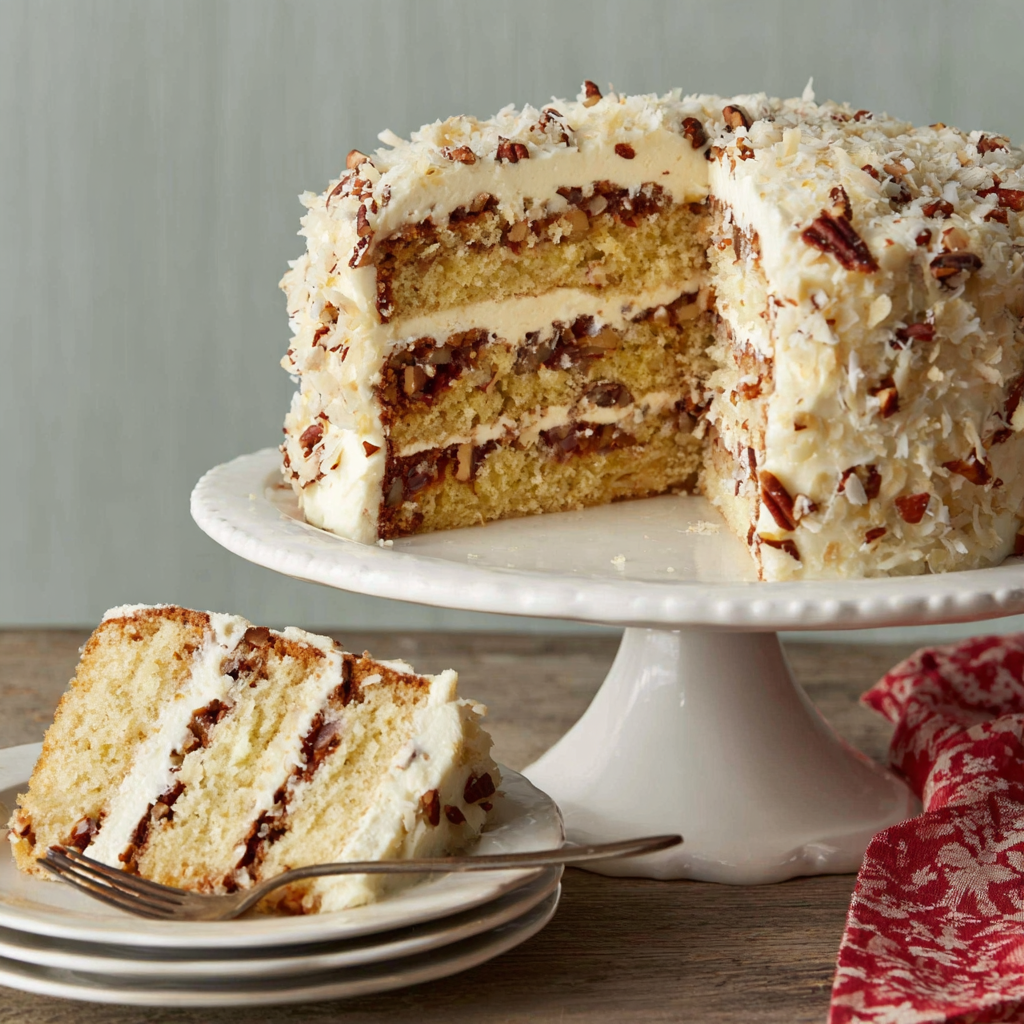
Savoring the Layers of Italian Cream Cake
Ingredients
Method
- Preheat the oven to 350°F (175°C).
- Grease and flour three 9-inch round cake pans.
- In a medium bowl, whisk together the flour, baking powder, baking soda, and salt. Set aside.
- In a large mixing bowl, cream the butter and sugar until light and fluffy.
- Add the eggs one at a time, mixing well after each addition, then mix in the buttermilk and vanilla extract.
- Gradually add the dry ingredients to the wet ingredients, mixing until just combined.
- Fold in the coconut and pecans gently until evenly distributed.
- Divide the batter evenly among the prepared cake pans and smooth the tops.
- Bake for 25-30 minutes or until a toothpick inserted into the center comes out clean.
- Remove the cake layers from the oven and let them cool in the pans for 10 minutes before transferring to wire racks.
- While the cake layers cool, prepare the frosting by beating the cream cheese and butter until smooth.
- Gradually add the powdered sugar, mixing until fully combined and fluffy.
- Once the cake layers are completely cool, place one layer on a serving plate, add frosting, and repeat with the remaining layers.
- Use the remaining frosting to cover the top and sides of the cake.
- Garnish with additional toasted pecans or coconut, if desired, before serving.
Notes
Additional serving suggestions: pair with a crisp salad, garlic bread, or roasted seasonal vegetables for balance.
For make-ahead, prep components separately and assemble just before heating to preserve texture.
Taste and adjust with acid (lemon/vinegar) and salt right at the end to wake up flavors.