Introduction
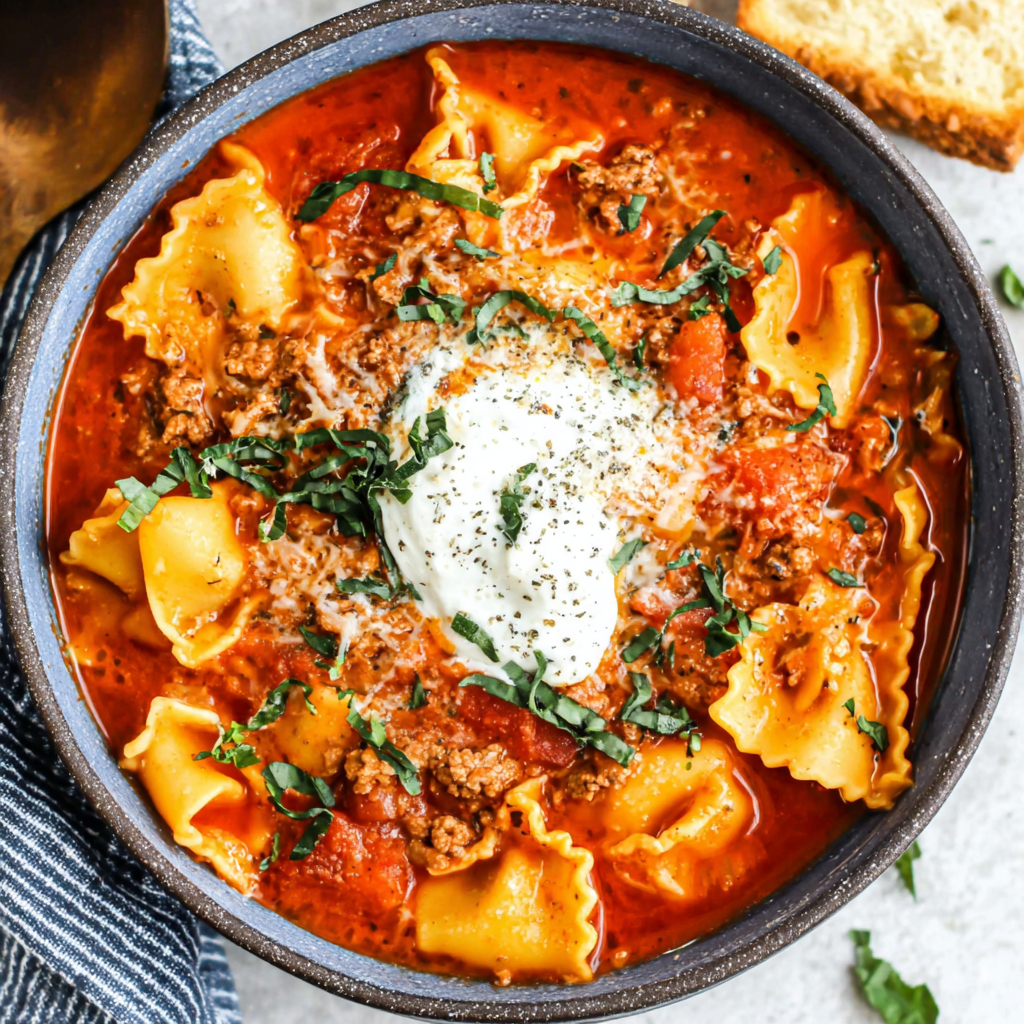
Lasagna soup brings together the beloved flavors of traditional lasagna in a comforting bowl of broth, making it a delightful dish for any occasion. Perfect for chilly evenings or simple family dinners, its aromatic profile is sure to please everyone at the table.
Using ingredients typically found in lasagna, this soup delivers layers of flavor in every spoonful. Plus, it’s flexible enough to accommodate your preferences, transforming the way you think about lasagna—no noodles required!
Ingredients
- 1 pound ground beef
Ground beef adds a rich, savory foundation to the soup, creating a hearty base while also offering protein. Choosing lean ground beef helps manage the overall fat content within the dish. - 1 medium onion, diced
The onion provides a sweet and aromatic flavor once sautéed, building the soup's flavor profile. It also contributes to the overall texture, making the broth more cohesive. - 2 cloves garlic, minced
Garlic introduces a fragrant, zesty punch to the soup, enhancing all other flavors. It's essential to add it after the onion to prevent burning, allowing its aromatic qualities to shine. - 28 oz can crushed tomatoes
Crushed tomatoes serve as the soup's primary liquid base, offering acidity and sweetness. Their texture contributes to the comforting quality of the dish, reminiscent of a traditional lasagna. - 4 cups chicken or vegetable broth
Broth adds depth and complements the crushed tomatoes, enriching the soup's overall flavor. Opting for low-sodium broth gives you better control over the saltiness of the dish. - 1 tsp dried Italian seasoning
Italian seasoning combines herbs like basil, oregano, and thyme, infusing the soup with the classic flavor associated with Italian cuisine. This blend simplifies flavoring with a single ingredient. - 2 cups uncooked pasta (like elbow or shells)
The pasta absorbs flavors while cooking, making it an important element for texture. Choosing a small shape ensures it will cook evenly and blend well with the other ingredients. - 1 cup ricotta cheese
Ricotta adds creaminess and a touch of richness, reminiscent of the traditional cheese filling used in lasagna. Stirring it in towards the end gives the soup a luxurious, comforting finish. - 1 cup shredded mozzarella cheese
Mozzarella acts as the gooey, melty topping of the soup, elevating the entire dish. It brings a nostalgia factor and makes each bowl feel decadently indulgent. - Fresh basil leaves, for garnish
Basil provides a burst of freshness that contrasts beautifully with the rich flavors in the soup. Fresh herbs can brighten up any dish, making it visually appealing and flavorful.
Directions & Preparation
Step 1: In a large pot, brown the ground beef over medium heat until fully cooked, about 5-7 minutes.
Browning the beef develops rich flavors through the Maillard reaction, which enhances the overall taste of the soup. Breaking up the meat ensures it cooks evenly and mixes well with other ingredients.
Step 2: Add the diced onion and garlic to the pot, sautéing until the onion becomes translucent, about 3-4 minutes.
Sautéing the onion and garlic releases their oils and aromas, forming the aromatic base of the soup. The translucent onion signals that it's ready to proceed, creating a well-rounded flavor.
Step 3: Stir in the crushed tomatoes, broth, and Italian seasoning, bringing the mixture to a simmer.
Combining these ingredients creates a robust sauce that will flavor the pasta and enrich the broth. Bringing it to a simmer allows flavors to meld together beautifully.
Step 4: Add the uncooked pasta to the simmering pot and cook according to package directions, usually about 8-10 minutes.
Cooking the pasta directly in the soup allows it to absorb the flavors from the broth. Be careful not to overcook it; you want it al dente, even as it continues to soften naturally off the heat.
Step 5: Once the pasta is cooked, stir in the ricotta cheese until it is well incorporated.
Incorporating ricotta adds a creamy texture to the soup, enriching it further. This step ensures each bowl carries that classic lasagna filling without needing layering.
Step 6: Remove the pot from heat and stir in the shredded mozzarella until it is melted and creamy.
The melted mozzarella adds that gooey, comforting quality that’s reminiscent of lasagna's cheesy layers. This step turns a simple soup into a rich, indulgent dish.
Step 7: Serve hot, garnished with fresh basil leaves.
Garnishing with basil enhances the visual appeal and adds a fresh contrast to the creamy richness of the cheese. The aroma of fresh herbs completes the sensory experience of the meal.

Layering Flavors for Depth
Building flavors gradually is a crucial aspect of cooking. By starting with browning the beef and sautéing the onion and garlic, you’re laying a foundation that enhances the overall taste. The subsequent addition of tomatoes and broth further layers the flavor, allowing each component to shine without overpowering one another.
Choosing the Right Pasta
Selecting the right pasta shape can significantly impact the experience of your lasagna soup. Smaller shapes like shells or elbows cook quickly and integrate seamlessly into the broth. Ensure you monitor cooking times closely to achieve that perfect al dente texture, providing little bursts of pasta in each spoonful.
Variations to Explore
Feel free to make this soup your own. Consider incorporating vegetables such as spinach or zucchini for added nutrition. Alternatively, experimenting with different cheeses like Parmesan or provolone can introduce new flavors, allowing you to enjoy lasagna soup in many variations without straying from its comforting roots.
FAQs
What can I do if the soup is too thick?
If the soup turns out too thick, gradually add more broth or water to reach your desired consistency. Stir well and allow it to heat through, adjusting seasonings afterward if needed.
How can I adjust the flavor if the soup turns out bland?
A splash of balsamic vinegar or a sprinkle of salt can enhance flavors. Additionally, consider adding more herbs or spices to increase the depth, carefully tasting as you adjust.
What if I prefer a vegetarian version of this soup?
You can replace the ground beef with lentils or plant-based meat substitutes. Use vegetable broth and add a variety of vegetables to maintain the heartiness of the dish.
Can I make this dish gluten-free?
Yes, you can substitute traditional pasta with gluten-free pasta options. Make sure to check that all other ingredients, like broth and Worcestershire sauce, are gluten-free.
Is there a good alternative for ricotta cheese?
Mascarpone or cottage cheese can work as effective substitutes for ricotta, lending creaminess while maintaining that comforting texture.
How can I scale this recipe for a larger crowd?
Simply multiply the quantities of each ingredient accordingly. Ensure your pot size is sufficient to accommodate the additional ingredients to ensure even cooking.
Conclusion
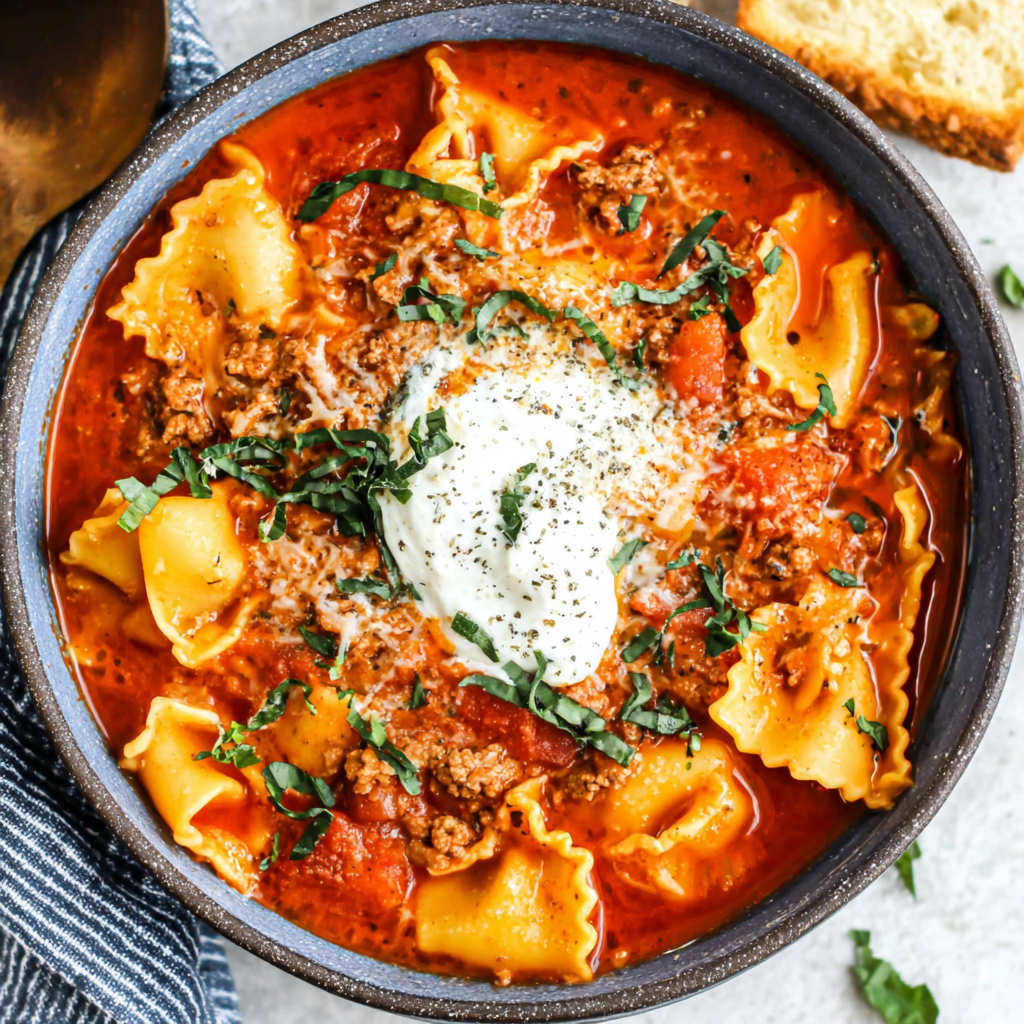
Lasagna soup transforms the traditional aspects of lasagna into a cozy dish that’s perfect for sharing. Each bowl offers comfort and satisfaction, ideal for both busy weeknights and laid-back weekends.
With a handful of familiar ingredients and a few simple steps, you’re set to create a memorable meal that warms the heart. Embrace the versatility of this dish and feel encouraged to experiment with new ingredients on your culinary journey.
Recipe Card
Comfort in a Bowl: The Charm of Lasagna Soup
Ingredients
Method
- In a large pot, brown the ground beef over medium heat until fully cooked, about 5-7 minutes.
- Add the diced onion and garlic to the pot, sautéing until the onion becomes translucent, about 3-4 minutes.
- Stir in the crushed tomatoes, broth, and Italian seasoning, bringing the mixture to a simmer.
- Add the uncooked pasta to the simmering pot and cook according to package directions, usually about 8-10 minutes.
- Once the pasta is cooked, stir in the ricotta cheese until it is well incorporated.
- Remove the pot from heat and stir in the shredded mozzarella until it is melted and creamy.
- Serve hot, garnished with fresh basil leaves.
Notes
Additional serving suggestions: pair with a crisp salad, garlic bread, or roasted seasonal vegetables for balance.
For make-ahead, prep components separately and assemble just before heating to preserve texture.
Taste and adjust with acid (lemon/vinegar) and salt right at the end to wake up flavors.