Introduction
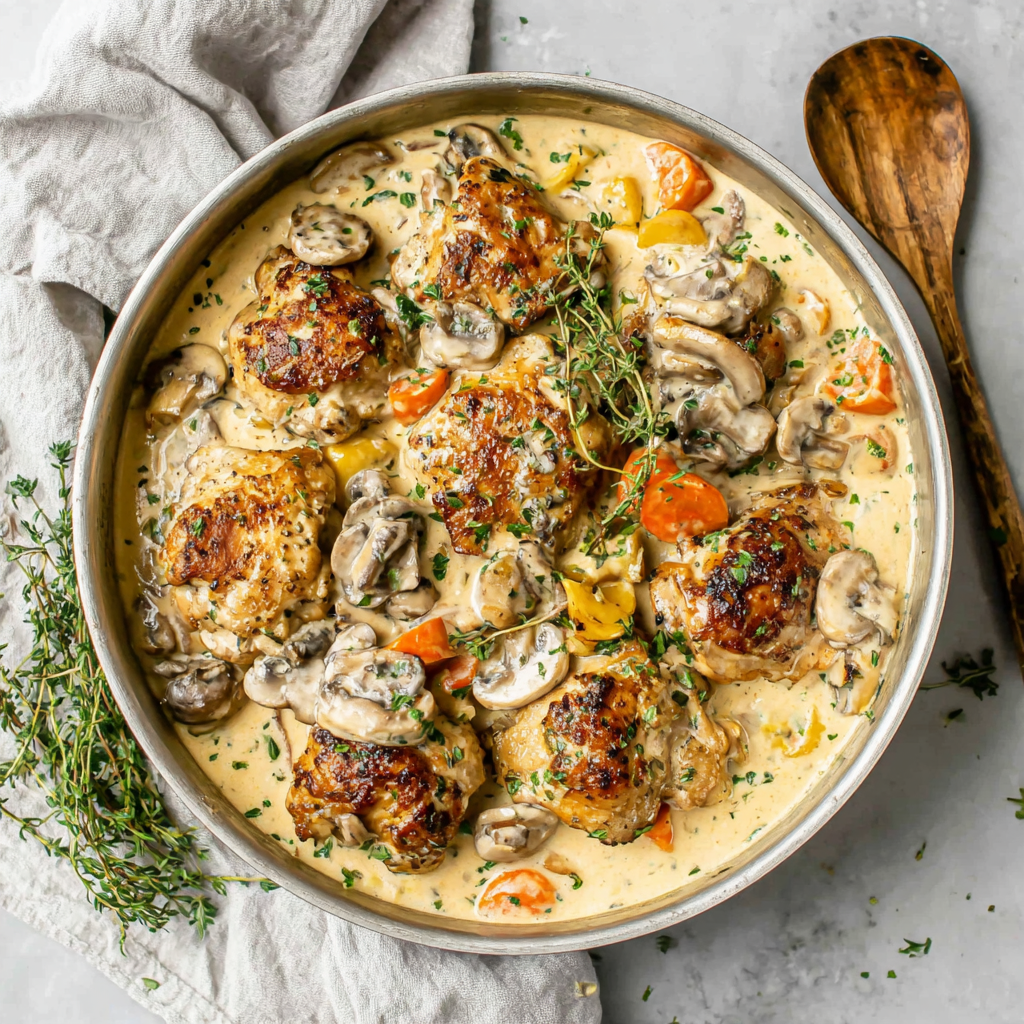
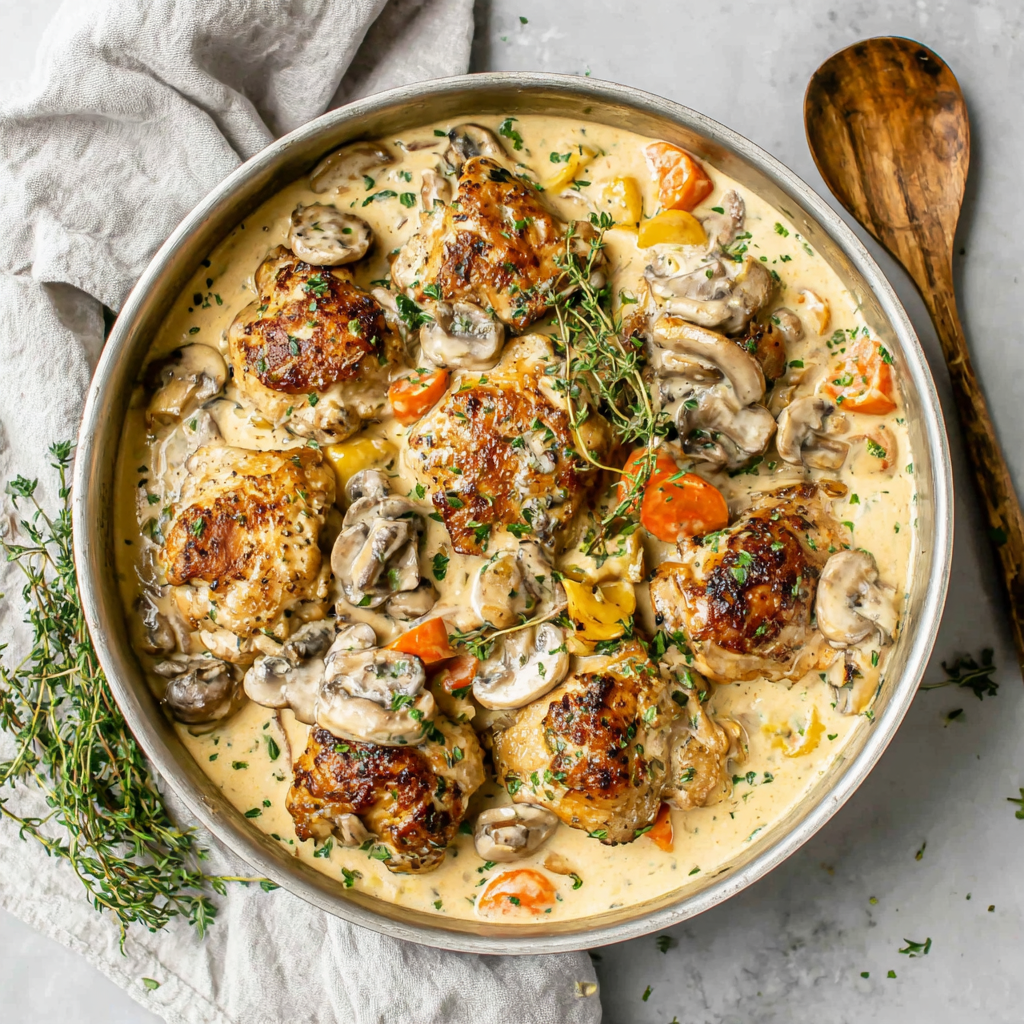
Chicken fricassee is a classic dish that brings warmth and comfort to any dining table. It hails from French cuisine and features tender chicken simmered in a rich sauce, often with mushrooms and a touch of cream.
This rustic meal is perfect for home cooks looking to create something special without excessive fuss. The combination of tender chicken and a velvety sauce makes it a delightful centerpiece for gatherings or family dinners.
Ingredients
- 4 chicken thighs, bone-in
Bone-in chicken thighs provide moistness and flavor, cooking to perfection with the sauce while ensuring the meat is tender and juicy. - 2 tablespoons olive oil
Olive oil adds richness and allows for proper searing of the chicken, which enhances the flavor through browning and caramelization. - 1 cup sliced mushrooms
Mushrooms introduce earthiness and depth to the fricassee, absorbing the sauce and adding a wonderful texture. - 1 onion, finely chopped
Onions contribute aromatic sweetness that develops as they sauté, forming the basis for a savory sauce. - 2 garlic cloves, minced
Garlic infuses the dish with a pungent, yet savory flavor, complementing the other ingredients and elevating the overall taste. - 1 cup chicken broth
Chicken broth serves as the liquid foundation of the sauce, imparting a rich flavor and simmering the chicken to tenderness. - 1 cup heavy cream
Heavy cream creates the dish's signature silky texture and richness, balancing the flavors and making the sauce luscious. - 2 tablespoons flour
Flour thickens the sauce, creating a creamy consistency that clings to the chicken and enhances the overall indulgence. - Salt and pepper to taste
Seasoning is crucial for balancing flavors; proper seasoning enhances the dish, ensuring that each ingredient speaks on its own. - Fresh parsley for garnish
Parsley not only adds a pop of color to the dish but also offers a fresh, herbal note that brightens the richness of the fricassee.
Directions & Preparation
Step 1: Heat olive oil in a large skillet over medium heat.
Starting with a hot skillet is essential for achieving a good sear on the chicken. This step creates a flavorful crust that locks in moisture. Olive oil is ideal because it can withstand higher temperatures without burning.
Step 2: Season chicken thighs with salt and pepper, then add them to the skillet, skin side down.
By seasoning the chicken, you're enhancing its natural flavors. Cooking skin side down first crisp up the skin, making it deliciously golden and providing a base for the sauce later.
Step 3: Sear the chicken for about 6-7 minutes until golden brown, then flip and cook for another 5 minutes.
Searing develops a rich flavor through the Maillard reaction, which caramelizes the chicken's surface. This step is key to achieving depth of flavor in the final dish.
Step 4: Remove the chicken from the skillet and set aside.
Taking the chicken out allows you to retain the fond, or browned bits, in the skillet. This is essential as it forms the flavor base for the sauce.
Step 5: Add onions and cook until soft, about 3-4 minutes, then add garlic and mushrooms; sauté until mushrooms are tender.
Cooked onions create a sweet aroma, while garlic intensifies flavors. Adding mushrooms at this stage allows them to release their moisture and develop deeper flavors.
Step 6: Sprinkle flour over the vegetables and stir, cooking for 1-2 minutes.
Cooking the flour briefly removes its raw taste and enhances the sauce's body. This step ensures a more palatable final result.
Step 7: Gradually stir in the chicken broth, scraping up any fond from the skillet.
Deglazing the pan with chicken broth captures all the delicious flavor stuck to the bottom, creating a rich base for your sauce.
Step 8: Add the seared chicken back to the skillet, skin side up, and bring to a simmer.
This reintroduces the chicken as it continues to cook through and absorb flavors from the broth and vegetables, ensuring a tender, juicy outcome.
Step 9: Cover the skillet, reduce heat, and simmer for 20-25 minutes until the chicken is cooked through.
Covering helps retain moisture and cook the chicken gently. This step is crucial to achieving juicy, tender meat without overcooking.
Step 10: Remove the chicken again, then stir in the heavy cream and return to a gentle simmer.
Incorporating cream transforms the sauce into a luxurious, thickened coating for the chicken, enhancing the dish's richness.
Step 11: Return the chicken once more, simmer for an additional 5-10 minutes; adjust seasoning if necessary.
Final simmering melds all the flavors beautifully and allows the chicken to soak up the creamy sauce. Tasting and adjusting the seasoning ensures the dish is balanced.
Step 12: Garnish with fresh parsley before serving.
Fresh parsley adds a visual appeal, and its bright flavor contrasts nicely with the rich sauce, enhancing the overall presentation and enjoyment.

The Importance of Searing
Searing the chicken thighs is a crucial step in making chicken fricassee. It not only imparts a rich, golden-brown color that’s visually appealing but also develops intricate flavors through caramelization. This flavor base will elevate the overall dish, creating a more satisfying culinary experience. Skipping this step could mean missing out on layers of flavor that are vital to a traditional fricassee.
Balancing the Sauce
Achieving a well-balanced sauce is key to a successful chicken fricassee. The interplay of adding broth and cream creates a nuanced flavor profile while ensuring the consistency is just right. Pay close attention to seasoning, as it brings all elements of the dish together. A bland sauce can overshadow the effort put into preparing the chicken, so take the time to adjust your seasonings thoughtfully.
Variations on a Classic
While the traditional chicken fricassee is delightful in its own right, there are numerous ways to add your personal twist. Consider including different vegetables or herbs such as thyme for an earthy note, or substituting chicken stock with white wine for a touch of acidity. Each variation can enhance the dish in unique ways, allowing you to tailor it to your taste preferences and the ingredients available.
FAQs
What is the best way to ensure my chicken is juicy?
Cooking the chicken at medium heat and not overcooking is key. Use a meat thermometer to check for doneness; 165°F is ideal for chicken.
What if my sauce is too thin after adding cream?
If the sauce seems too thin, allow it to simmer a bit longer uncovered, which will reduce the liquid and thicken the sauce. Alternatively, mix a teaspoon of flour with water and stir it in, cooking it briefly.
How can I add more vegetables to my fricassee?
Consider adding carrots or bell peppers along with the mushrooms. Sauté them until they are tender, allowing their flavors to meld into the sauce.
Can I use boneless chicken for this recipe?
Yes, boneless chicken can be used, but it will cook faster. Adjust the cooking time and monitor for doneness to avoid overcooking.
What should I do if my sauce tastes bland?
If your sauce lacks flavor, try adding a splash of white wine for acidity or some additional salt and pepper. Fresh herbs can also liven up the flavor profile.
Is there a way to lighten the recipe without sacrificing flavor?
You can substitute half of the heavy cream with chicken broth or use coconut milk for a lighter yet flavorful sauce.
Conclusion
Chicken fricassee is a dish that invites creativity while honoring tradition. With its comforting flavors and versatile nature, it holds a special place in home cooking.
As you experiment with your take on this classic dish, remember the importance of each ingredient and step. Happy cooking!
Recipe Card
Delicious Chicken Fricassee for Cozy Nights
Ingredients
Method
- Heat olive oil in a large skillet over medium heat.
- Season chicken thighs with salt and pepper, then add them to the skillet, skin side down.
- Sear the chicken for about 6-7 minutes until golden brown, then flip and cook for another 5 minutes.
- Remove the chicken from the skillet and set aside.
- Add onions and cook until soft, about 3-4 minutes, then add garlic and mushrooms; sauté until mushrooms are tender.
- Sprinkle flour over the vegetables and stir, cooking for 1-2 minutes.
- Gradually stir in the chicken broth, scraping up any fond from the skillet.
- Add the seared chicken back to the skillet, skin side up, and bring to a simmer.
- Cover the skillet, reduce heat, and simmer for 20-25 minutes until the chicken is cooked through.
- Remove the chicken again, then stir in the heavy cream and return to a gentle simmer.
- Return the chicken once more, simmer for an additional 5-10 minutes; adjust seasoning if necessary.
- Garnish with fresh parsley before serving.
Notes
Additional serving suggestions: pair with a crisp salad, garlic bread, or roasted seasonal vegetables for balance.
For make-ahead, prep components separately and assemble just before heating to preserve texture.
Taste and adjust with acid (lemon/vinegar) and salt right at the end to wake up flavors.