Introduction
Nothing warms the soul quite like a hearty meal slowly cooked to perfection. This Slow Cooker Korean Beef recipe encapsulates the essence of comforting flavors while allowing you to enjoy your day without spending too much time in the kitchen. With just a few simple ingredients, you can create a dish that's rich, tender, and packed with umami goodness.
Korean cuisine often emphasizes the balance of flavors, and this recipe is no exception. The combination of savory soy sauce, sweet mirin, and a touch of spice creates a symphony of tastes that infuse the tender beef. Plus, the slow cooker does all the work, ensuring every bite is delectably flavorful and incredibly tender.
Ingredients
- 2 lbs beef chuck roast
Beef chuck roast is perfect for slow cooking because it has a good amount of marbling, which helps keep the meat juicy and tender throughout the cooking process. As it cooks slowly, the collagen in the meat breaks down, resulting in a melt-in-your-mouth texture. - 1/3 cup soy sauce
Soy sauce adds a salty, umami depth to the dish. It not only serves to enhance the flavor of the beef but also contributes to the overall reddish-brown color that makes this dish visually appealing. - 1/4 cup brown sugar
Brown sugar introduces a deep sweetness that balances the savory notes of the soy sauce. It's crucial for creating that classic Korean flavor profile and helps caramelize the beef as it cooks. - 1/4 cup rice vinegar
Rice vinegar adds a tangy brightness that cuts through the richness of the beef. This acidity enhances the overall flavor and prevents the dish from feeling too heavy. - 3 cloves garlic, minced
Garlic brings its aromatic quality and a level of pungency that complements the other ingredients beautifully. It deepens the flavor base as it cooks. - 1 tablespoon ginger, minced
Fresh ginger provides a warming spice and a hint of freshness, crucial for achieving balance in the flavor profile. It also enhances the overall aroma of the dish. - 1 tablespoon sesame oil
Sesame oil introduces a nutty aroma and flavor that is quintessential in Korean cuisine. It enriches the sauce and adds another layer of complexity to the dish. - 2 green onions, chopped (for garnish)
Green onions bring a fresh bite that brightens the dish when sprinkled on top just before serving. They also add a pop of color, making the meal visually appealing. - 1 tablespoon cornstarch (optional, for thickening)
Cornstarch is useful if you prefer a thicker sauce. Mixing it with water and adding it towards the end of cooking can enhance the texture of the sauce.
Directions & Preparation
Step 1: Prepare the beef roast by trimming excess fat and cutting into large chunks.
Trimming the fat ensures that the dish won’t become overly greasy during cooking, allowing the flavors of the marinade to shine through. Cutting the beef into large chunks helps it maintain its shape and texture throughout the slow cooking process.
Step 2: In a bowl, mix together soy sauce, brown sugar, rice vinegar, minced garlic, ginger, and sesame oil.
This mixture serves as the marinade for the beef, creating a delectable sauce that permeates the meat. Mixing these ingredients together beforehand ensures an even distribution of flavors, making every bite rich and satisfying.
Step 3: Place the beef chunks in the slow cooker and pour the marinade over them.
Beef needs time to absorb the marinade, and pouring it over the chunks ensures every piece is well-coated. This step is crucial for developing layers of flavor as the beef slowly cooks.
Step 4: Cover the slow cooker and set it to low for 8 hours or high for 4 hours.
Cooking on low allows the beef to become tender as it breaks down slowly. If you’re short on time, you can opt for high heat; however, low and slow yields the best texture and flavor.
Step 5: Towards the end of cooking, check the sauce consistency and add cornstarch if preferred.
This optional step can help achieve the desired thickness for the sauce. If you like a richer texture, mix cornstarch with a small amount of water to create a slurry before stirring it into the sauce.
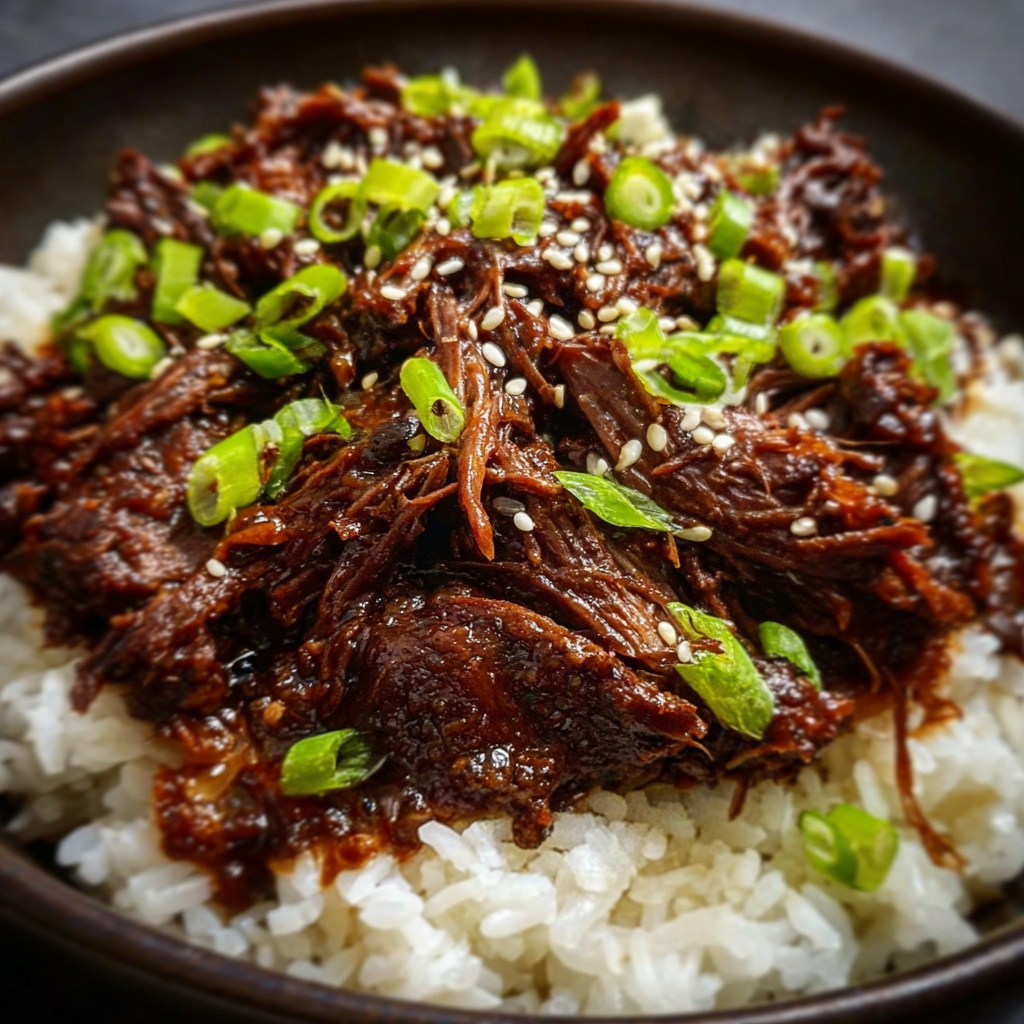
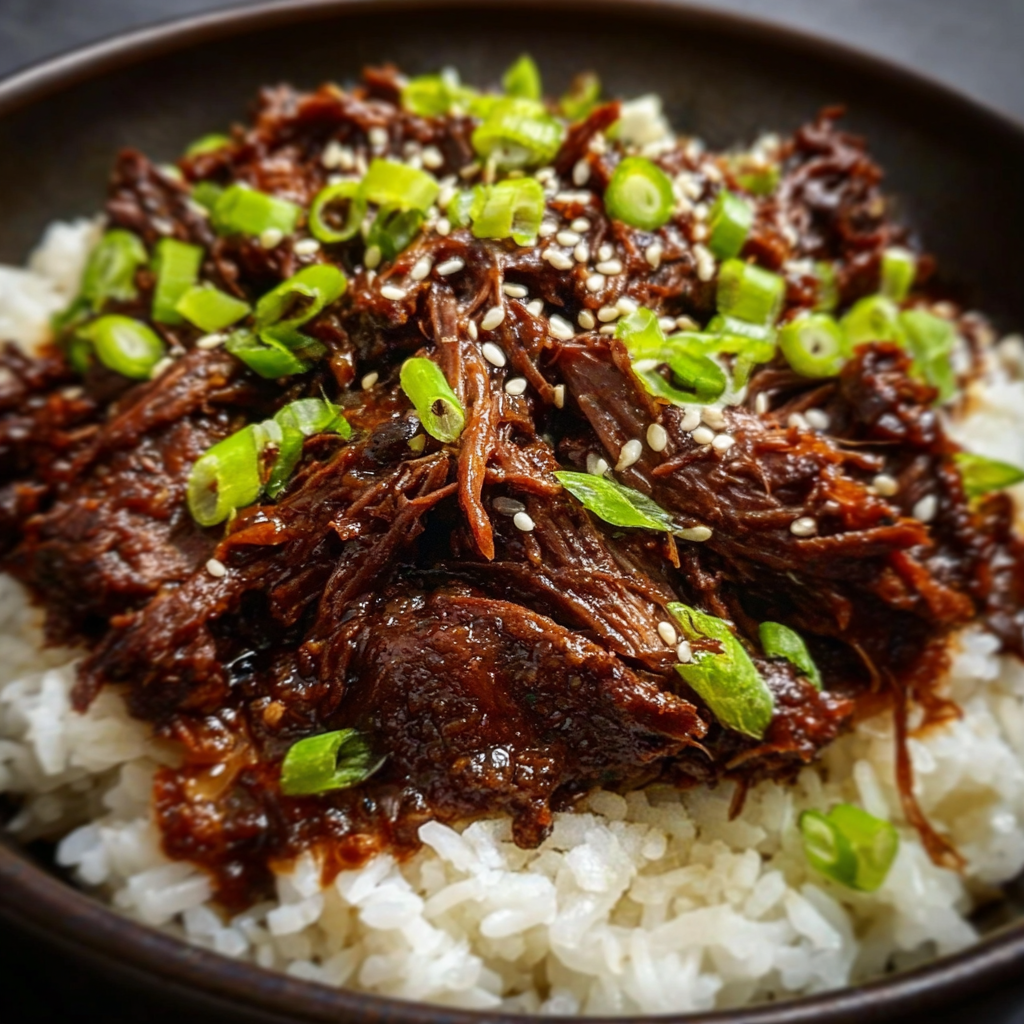
Step 6: Once cooked, shred the beef with two forks and stir it back into the sauce.
Shredding the beef allows it to soak up even more of the sauce, enhancing the overall flavor. This step also makes it easier to serve and eat.
Step 7: Serve hot, garnished with chopped green onions.
Garnishing with green onions not only adds freshness but also provides a lovely visual contrast against the rich sauce. Serve it over rice or noodles to absorb the delicious flavors.

Marinade Magic: Elevating Flavor
The marinade is where the real magic happens, combining sweet, salty, and savory elements to deeply flavor the beef. A balance of ingredients like soy sauce and brown sugar creates the signature Korean flavor profile. Allowing the beef to soak in this marinade for the duration of cooking saturates it with flavor, ensuring that each bite bursts with that distinct Korean taste.
Choosing the Right Beef Cut
Selecting the right meat is crucial for a successful dish. Beef chuck roast is ideal due to its rich marbling and tenderness after slow cooking. Avoid lean cuts, which can become tough and chewy, as they lack the necessary fat to keep the meat juicy. Chuck roast transforms beautifully, becoming flavorful and fork-tender after hours of slow cooking.
Serving Suggestions for a Complete Meal
While this Slow Cooker Korean Beef is delicious on its own, considering your serving options can elevate the meal. Pair it with steamed white rice or fluffy jasmine rice to soak up the rich sauce. Adding a side of pickled vegetables or a simple salad can introduce a refreshing crunch that balances the dish. Don’t forget to serve a few Korean-style sides for an authentic experience.
FAQs
What if the sauce is too thick?
If the sauce is too thick, you can thin it out by stirring in a little beef broth or water until reaching your desired consistency. Start with just a tablespoon and add more if needed.
Is the flavor strong enough if I use low-sodium soy sauce?
Yes, using low-sodium soy sauce can still produce a flavorful dish. You might want to adjust the amount used, maybe add a little more brown sugar or a pinch of salt.
What can I do if the beef turns out tough?
If the beef is tough, it likely needs more time in the slow cooker. If this happens, you can return it to the cooker with added liquid for another hour or two on low.
Can I add vegetables to the slow cooker?
Yes, adding hearty vegetables like carrots or potatoes can enhance the dish. Just be mindful to add them halfway through the cooking time to prevent them from becoming overly soft.
How can I adjust this recipe for fewer servings?
To reduce servings, simply halve the ingredient quantities. The cooking time remains the same, as the slow cooker will take care of that regardless of the amount.
What side dishes go best with this Korean Beef?
Serving it with steamed rice, kimchi, or sautéed bok choy complements the beef well. You could also consider a light cucumber salad for a refreshing contrast.
Conclusion
This Slow Cooker Korean Beef is a fantastic choice for anyone seeking a hearty, flavorful meal with minimal effort. The slow cooker not only simplifies preparation but also ensures that flavors meld beautifully over time.
As you pull the tender beef from the pot and serve it to family and friends, you'll see the joy it brings. Embrace the rich tastes of Korean cuisine right in your home, and let this recipe become a beloved staple in your culinary repertoire.
Recipe Card
Savory Slow Cooker Korean Beef for Cozy Nights
Ingredients
Method
- Prepare the beef roast by trimming excess fat and cutting into large chunks.
- In a bowl, mix together soy sauce, brown sugar, rice vinegar, minced garlic, ginger, and sesame oil.
- Place the beef chunks in the slow cooker and pour the marinade over them.
- Cover the slow cooker and set it to low for 8 hours or high for 4 hours.
- Towards the end of cooking, check the sauce consistency and add cornstarch if preferred.
- Once cooked, shred the beef with two forks and stir it back into the sauce.
- Serve hot, garnished with chopped green onions.
Notes
Additional serving suggestions: pair with a crisp salad, garlic bread, or roasted seasonal vegetables for balance.
For make-ahead, prep components separately and assemble just before heating to preserve texture.
Taste and adjust with acid (lemon/vinegar) and salt right at the end to wake up flavors.