Introduction
The comforting embrace of Old-Fashioned Swiss Steak is a beloved memory for many home cooks. This dish is not just a meal; it's a nostalgic experience that brings warmth and satisfaction. Originating from the heart of meat-centered kitchens, Swiss steak features a beautifully braised beef flank that becomes incredibly tender and flavorful.
Cooking Swiss steak allows the rich flavors of beef to meld with fresh vegetables and savory broth, resulting in a hearty entree that fills the home with enticing aromas. With each bite, you taste a blend of tradition, care, and culinary history, making it a must-try for anyone looking to revisit or discover classic comfort foods.
Ingredients
- 2 lbs beef flank steak
Flank steak is chosen for its balance between tenderness and flavor. When braised, it breaks down beautifully, becoming melt-in-your-mouth tender while absorbing the sauce. - 1/4 cup all-purpose flour
The flour is essential for dusting the steak, creating a light crust that helps to seal in juices during the browning process. It also aids in thickening the eventual sauce. - 2 tablespoons cooking oil
Cooking oil is critical for browning the steak. A good sear locks in flavors and contributes a depth of taste to the overall dish. - 1 medium onion, chopped
Onions add sweetness and depth to the dish. They soften during cooking and enhance the broth's flavor. - 2 cloves garlic, minced
Garlic infuses the steak with rich, aromatic flavors. Its pungency mellows when cooked, transforming into a subtle earthiness that complements the beef. - 2 cups beef broth
Beef broth is the base of the cooking liquid, providing moisture and flavor. A high-quality broth ensures that the dish is rich and savory. - 1 can (14.5 oz) diced tomatoes
Diced tomatoes offer acidity and sweetness, balancing the richness of the beef. Their natural juices help create a succulent sauce that clings to the steak. - 1 cup carrots, sliced
Carrots add a natural sweetness and texture to the dish. They soften as they cook and absorb the flavors of the broth. - 1 cup celery, sliced
Celery contributes a refreshing crunch and earthy taste that balances the meal. It also enhances the aroma, rounding out the flavor profile. - 1 teaspoon Worcestershire sauce
This sauce adds a complex umami flavor, enriching the dish. It complements the beef beautifully and ties the ingredients together. - Salt and pepper to taste
Seasoning is crucial for bringing out the natural flavors of all ingredients. Adjusting salt and pepper enhances the overall taste profile.
Directions & Preparation
Step 1: Prepare the beef by cutting it into large pieces and dusting with flour.
Cutting the flank steak into manageable pieces helps it cook more evenly. Dusting with flour not only adds a layer for browning but also aids in thickening the sauce, setting the stage for a rich mouthfeel.
Step 2: Heat oil in a large skillet over medium-high heat.
Heating the oil properly before adding the meat is crucial to achieving a great sear. The right temperature helps develop that desirable crust on the steak while locking in juices.
Step 3: Sear the beef pieces on all sides until browned, about 4-5 minutes per side.
Browning the meat creates a complex flavor base through the Maillard reaction, deepening the dish's overall taste. This step also builds a color that will appeal visually.
Step 4: Remove the beef from the skillet and set aside; add chopped onions, garlic, carrots, and celery.
Sautéing the aromatic vegetables in the drippings left from the beef infuses them with the meat’s flavor. This enriches the dish, making every bite more layered and satisfying.
Step 5: Cook the vegetables for about 5 minutes until softened.
Softening the vegetables develops their sweetness and flavors. This step forms the aromatic foundation of the sauce that will complement the meat.
Step 6: Stir in the diced tomatoes and Worcestershire sauce.
Adding these ingredients enhances the sauce with acidity from the tomatoes and umami depth from the Worcestershire. This combination elevates the overall flavor complexity.
Step 7: Return the beef to the skillet and add the beef broth.
By reintroducing the beef to the skillet, it begins to absorb the flavors of the broth and vegetables. The added moisture is essential for tenderizing the meat during the braising process.
Step 8: Bring to a simmer, cover, and reduce heat to low; cook for 1.5 to 2 hours.
Simmering lets the flavors develop and allows the tough connective tissues in the beef to break down, transforming the steak into meltingly tender pieces.
Step 9: Check the seasoning, adding salt and pepper as needed before serving.
Final seasoning adjustments ensure the dish is perfectly balanced. Taste before serving is essential for achieving that home-cooked, tailored flavor.
Step 10: Serve the Swiss steak hot, paired with mashed potatoes or rice.
Serving suggestions like mashed potatoes or rice allow you to enjoy the delicious sauce in every bite. Ensure your plating is visually appealing to enhance the experience.

Unlocking Tenderness: The Secrets of Braising
Braising is a cooking technique that combines moist and dry heat, resulting in incredibly tender meat dishes. For Old-Fashioned Swiss Steak, the slow cooking allows the connective tissue in the beef to break down, creating a melt-in-your-mouth texture. It's the key to ensuring that your steak will not only be flavorful but also extraordinarily tender, effectively transforming a tougher cut of meat into a culinary delight.
The Role of Vegetables in Flavor Development
In Old-Fashioned Swiss Steak, vegetables aren't just side players; they are essential for building flavor. Onions, carrots, and celery create a mirepoix that forms a rich base for the dish. As they cook down, their natural sugars caramelize, deepening the flavor profile. This contributes not only to the dish's taste but also adds nutrients and texture, making Swiss steak a complete meal.
Customization: Making Swiss Steak Your Own
Swiss steak is a versatile dish open to adaptation. Feel free to incorporate other vegetables like bell peppers or mushrooms, or add herbs like thyme or rosemary for extra aroma. You can also adjust the sauce's thickness by varying the amount of broth or flour used, creating a dish that fits perfectly within your culinary preferences while still honoring its classic roots.
FAQs
What can I do if my Swiss steak sauce is too thick?
If your sauce is too thick, simply stir in a little beef broth or water gradually until it reaches your desired consistency. Heat gently to ensure the flavors meld.
How can I avoid overcooking the beef?
To prevent overcooking, keep an eye on the cooking time. Start checking the beef for tenderness after about 1 hour to ensure it doesn't become dry.
Can I scale this recipe for a larger group?
Yes, you can easily scale up the ingredients while maintaining the same proportions. Ensure your pot is large enough for the increased quantity.
What if my steak turns out bland?
If your dish lacks flavor, try adding more salt, pepper, or a splash of Worcestershire sauce right at the end to boost the flavor profile.
What can I use instead of flank steak?
You could use chuck roast or round steak, which also become tender when braised. Just remember that cooking times might vary.
Can I add more sauce to my Swiss steak?
Definitely! You can add more beef broth or diced tomatoes to increase the sauce volume. Just adjust the seasoning to prevent it from becoming diluted.
Conclusion
Old-Fashioned Swiss Steak is a nostalgic dish that reminds us of the hearty meals of our past. Each step in its preparation is an act of love, bringing wholesome, richly flavored comfort to the table.
With its tender beef and savory sauce, it's perfect for family gatherings or a cozy evening at home. So gather your ingredients and revive this classic dish that has warmed hearts and homes for generations.
Recipe Card
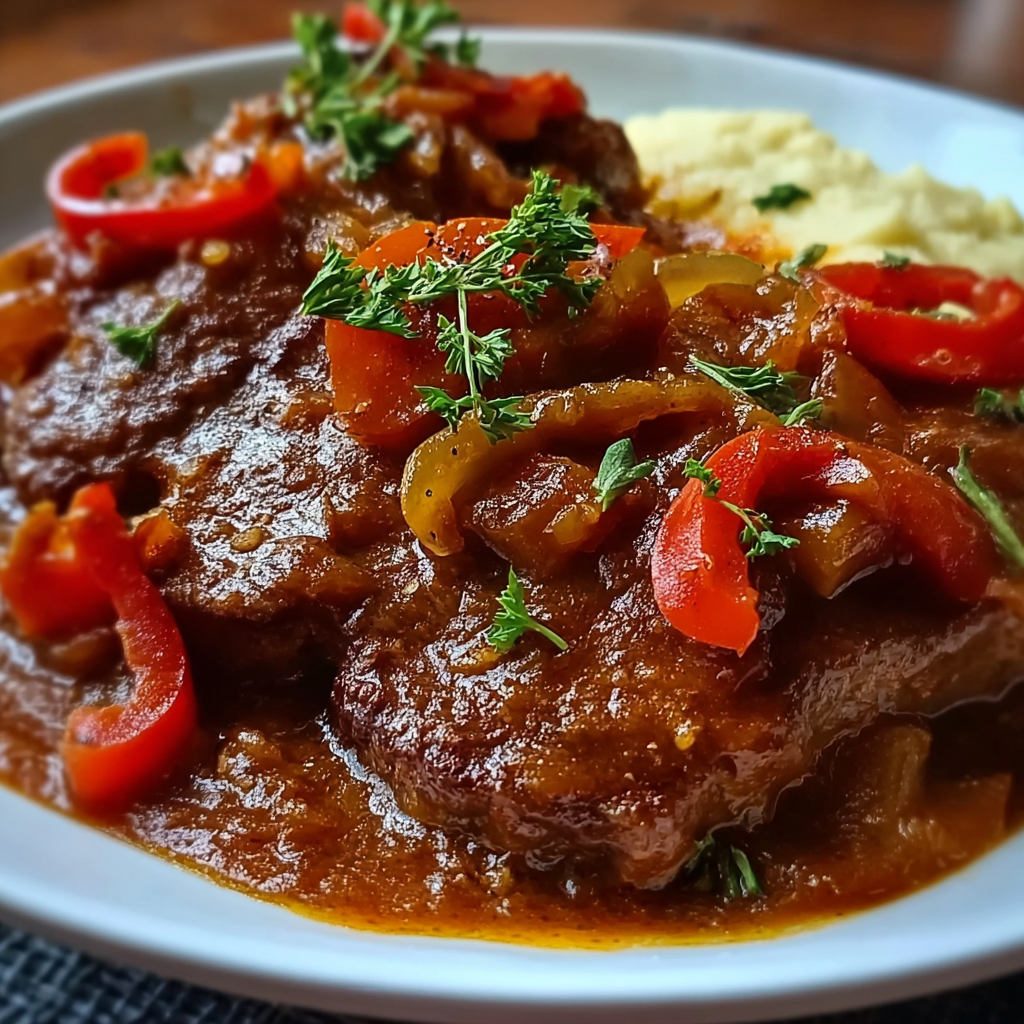
Old-Fashioned Swiss Steak: A Tender, Flavorful Classic
Ingredients
Method
- Prepare the beef by cutting it into large pieces and dusting with flour.
- Heat oil in a large skillet over medium-high heat.
- Sear the beef pieces on all sides until browned, about 4-5 minutes per side.
- Remove the beef from the skillet and set aside; add chopped onions, garlic, carrots, and celery.
- Cook the vegetables for about 5 minutes until softened.
- Stir in the diced tomatoes and Worcestershire sauce.
- Return the beef to the skillet and add the beef broth.
- Bring to a simmer, cover, and reduce heat to low; cook for 1.5 to 2 hours.
- Check the seasoning, adding salt and pepper as needed before serving.
- Serve the Swiss steak hot, paired with mashed potatoes or rice.
Notes
Additional serving suggestions: pair with a crisp salad, garlic bread, or roasted seasonal vegetables for balance.
For make-ahead, prep components separately and assemble just before heating to preserve texture.
Taste and adjust with acid (lemon/vinegar) and salt right at the end to wake up flavors.