Introduction
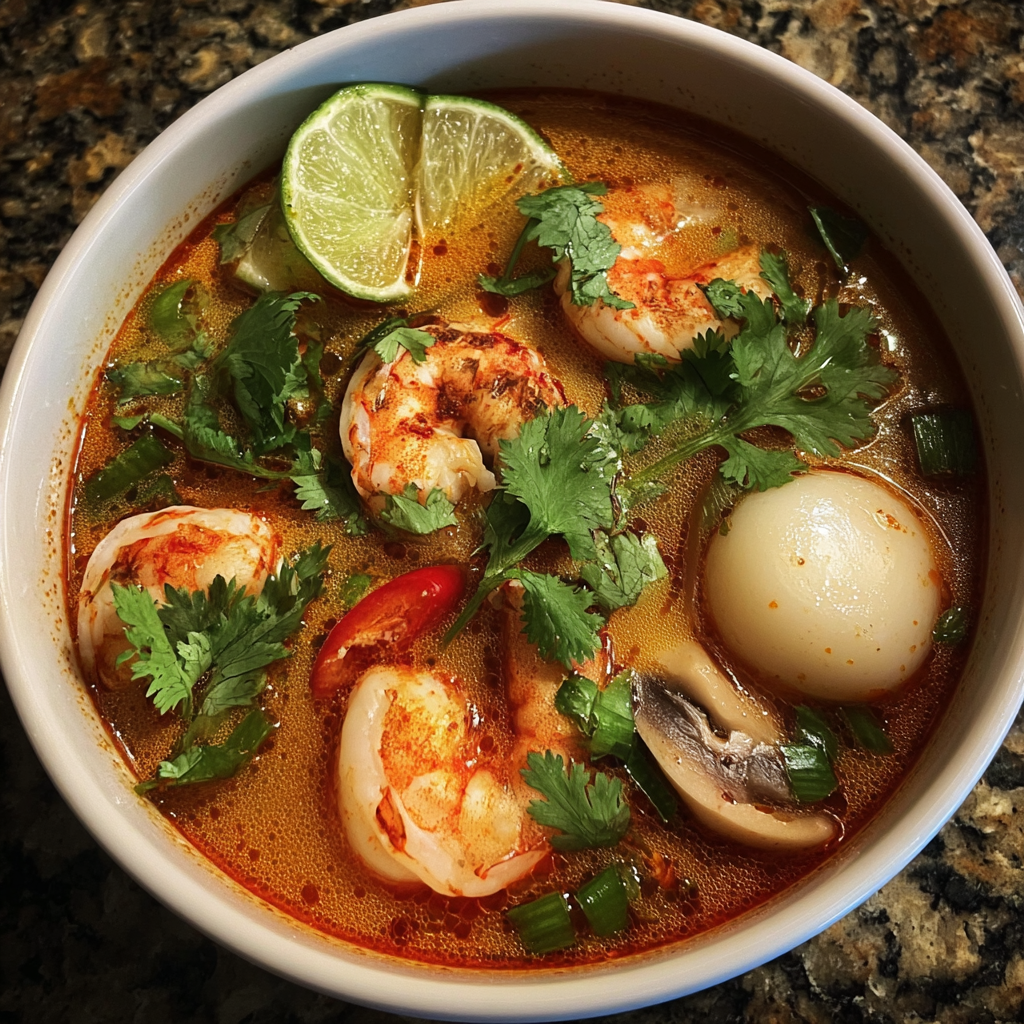
Tom Yum Soup is a vibrant and aromatic Thai dish that encapsulates the essence of Thai cuisine. This soup thrives on its balance of sour, spicy, and savory flavors, making it a beloved staple. Each ingredient plays a crucial role in creating an explosion of taste that transports you straight to the streets of Thailand.
The joy of crafting this dish comes from using fresh ingredients, traditional techniques, and a dash of creativity. Whether you're an experienced cook or just starting in the kitchen, making Tom Yum Soup can be both exciting and rewarding. Let’s dive into the world of flavors and aromas as we prepare this iconic soup.
Ingredients
- 4 cups chicken or vegetable broth
The base of the soup, broth adds depth and richness, enhancing the overall flavor profile. Using high-quality broth ensures the soup is flavorful and nourishing. - 1 stalk lemongrass, cut into 2-inch pieces, smashed
Lemongrass imparts a bright, citrusy aroma and flavor, crucial for that signature Tom Yum taste. Smashing releases its essential oils, enhancing its effect. - 4–5 kaffir lime leaves, torn
These leaves lend a unique, fragrant aroma that is characteristic of Thai cuisine. They contribute a refreshing, citrusy essence that elevates the soup's flavor. - 3–4 Thai bird’s eye chilies, smashed
These small yet potent chilies provide the signature heat to the soup. Adjusting the quantity allows for control over spiciness, suiting individual preferences. - 200 grams fresh shrimp, peeled and deveined
Shrimp adds protein and a subtle sweetness, balancing the bold flavors of the soup. Fresh shrimp enhance the dish’s appeal and texture. - 200 grams mushrooms, sliced
Mushrooms introduce an earthy flavor and chewy texture, contributing to the overall heartiness of the soup. Varieties like straw or oyster mushrooms work perfectly. - 2–3 tablespoons fish sauce
This fermented sauce enriches the soup with umami and saltiness, rounding out the flavor. It's important to choose a good-quality fish sauce for the best results. - 1–2 tablespoons lime juice
Adding lime juice at the end brightens the dish with acidity, balancing out the richness. It's essential to use fresh lime juice for optimal flavor. - Coriander leaves, for garnish
Fresh coriander adds a hint of herbal freshness and a pop of color, enhancing both the presentation and flavor profile of the soup.
Directions & Preparation
Step 1: Prepare the broth by bringing it to a simmer in a pot.
Starting with a base of chicken or vegetable broth sets the stage for your soup. Bring it to a gentle simmer to begin extracting flavors from the ingredients. This step is fundamental, as it allows the base to meld harmoniously with the upcoming flavors.
Step 2: Add the lemongrass, kaffir lime leaves, and chilies to the broth.
Incorporating these aromatic ingredients immediately transforms the broth, infusing it with an invigorating fragrance. The harshness of heat and tang are balanced against the aromatic backdrop, creating a rich tapestry of flavors right from the start.
Step 3: Let the broth simmer with aromatics for about 10 minutes.
Simmering the broth allows the essential oils from the lemongrass and lime leaves to fully release, transforming the soup into a bold and aromatic mixture. This stage is crucial as it builds the complexity in flavor, giving the soup its character.
Step 4: Add the mushrooms and shrimp to the pot.
Adding mushrooms and shrimp at this stage allows them to cook just enough to soften and absorb the flavors without becoming tough. The mushrooms bring earthiness, and shrimp adds a sweetness that enhances the overall depth of the dish.
Step 5: Season the soup with fish sauce and lime juice.
Incorporating fish sauce introduces umami, while lime juice adds acidity, essential for a balanced flavor profile. Taste before serving; the seasoning should dance between salty, sour, and spicy, embodying the essence of Tom Yum.
Step 6: Remove the pot from heat and garnish with fresh coriander leaves.
Immediately before serving, adding coriander contributes a fresh herby flavor and brightens the soup’s flavor. The herbage adds vibrancy to the appearance and enhances the aromatic experience.
Step 7: Serve hot and enjoy your homemade Tom Yum Soup.
Presentation is as important as flavor, so serve the soup in bowls while it’s still steaming. Pairing it with jasmine rice or enjoying it on its own allows the flavorful depths of this iconic soup to shine.

Capturing Freshness: The Importance of Quality Ingredients
The key to an authentic Tom Yum Soup is the quality of its ingredients. Fresh shrimp, vibrant herbs, and aromatic spices work in unison to create a symphony of flavors. Utilizing local markets or specialty Asian grocery stores can yield fresher produce, enhancing the overall taste of your soup. When each ingredient is at its peak, the result is a dish that’s not only flavorful but also captures the essence of Thai cuisine.
The Role of Acidity in Flavors
Acidity is a hallmark of Thai cooking, and in Tom Yum Soup, lime juice serves as a crucial element. It brightens the broth and balances the richness from shrimp and mushrooms. The interplay of spicy, sour, and savory creates a complex but harmonious flavor profile that defines this dish. To control the level of acidity, taste the broth before serving; you can always add more lime juice for brightness or adjust seasoning to suit your palate.
Spice Control: Adjusting Heat Levels
The heat in Tom Yum comes primarily from bird's eye chilies, but not everyone has the same tolerance for spiciness. While authentic recipes call for a robust heat, you can control the intensity by adjusting the number of chilies used. For a milder version, reduce the quantity and consider tasting as you go, ensuring the soup remains enjoyable for everyone at the table while still respecting traditional flavors.
FAQs
What can I use instead of shrimp?
You can substitute shrimp with tofu, chicken, or even fish for a different protein while maintaining the soup's flavor profile.
My Tom Yum Soup turned out too thick. What should I do?
If your soup is too thick, simply add more broth or water to reach your desired consistency. Stir well and adjust flavors as needed.
How can I enhance the flavor if it's too bland?
If your soup lacks flavor, gradually add more fish sauce or a splash of soy sauce for umami. Fresh lime juice can also help brighten it.
Is there a vegetarian version of Tom Yum Soup?
Yes, replace shrimp with tofu and use vegetable broth instead of chicken for a vegetarian-friendly option.
Can I add other vegetables? What works well?
Absolutely! You can include vegetables like bell peppers, carrots, or bok choy for added nutrition and color.
What if I want to make a bigger batch of soup?
You can easily scale the recipe by multiplying the ingredients while maintaining the same ratios to create a larger pot of soup.
Conclusion
Creating authentic Thai Tom Yum Soup at home is a rewarding culinary journey that bridges flavors and traditions. Every step enriches your appreciation for Thai cuisine, while each ingredient plays a critical role in achieving the signature taste.
With this delicious recipe, you can impress family and friends or simply treat yourself to an aromatic bowl of comfort. Happy cooking, and enjoy the vibrant flavors of Thailand in your home kitchen!
Recipe Card
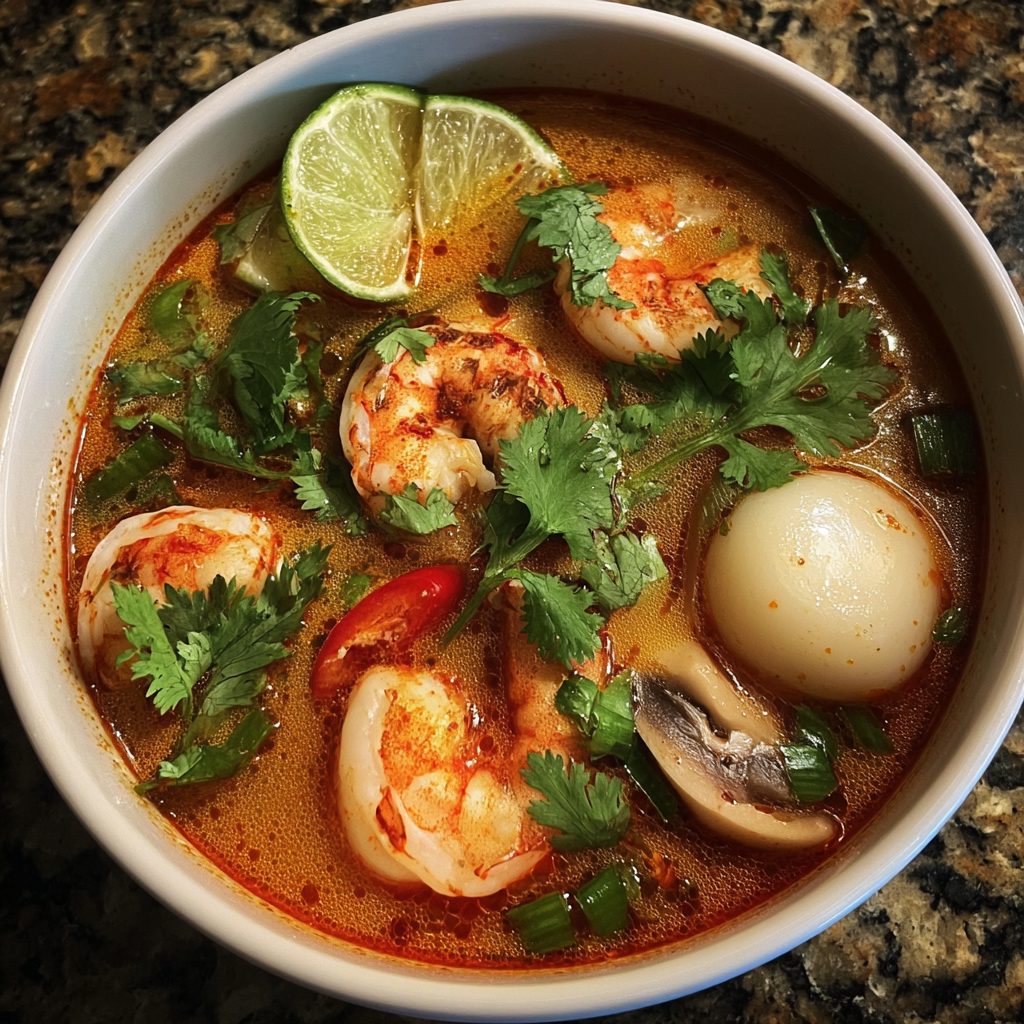
Savoring Authentic Thai Tom Yum Soup at Home
Ingredients
Method
- Prepare the broth by bringing it to a simmer in a pot.
- Add the lemongrass, kaffir lime leaves, and chilies to the broth.
- Let the broth simmer with aromatics for about 10 minutes.
- Add the mushrooms and shrimp to the pot.
- Season the soup with fish sauce and lime juice.
- Remove the pot from heat and garnish with fresh coriander leaves.
- Serve hot and enjoy your homemade Tom Yum Soup.
Notes
Additional serving suggestions: pair with a crisp salad, garlic bread, or roasted seasonal vegetables for balance.
For make-ahead, prep components separately and assemble just before heating to preserve texture.
Taste and adjust with acid (lemon/vinegar) and salt right at the end to wake up flavors.