Introduction
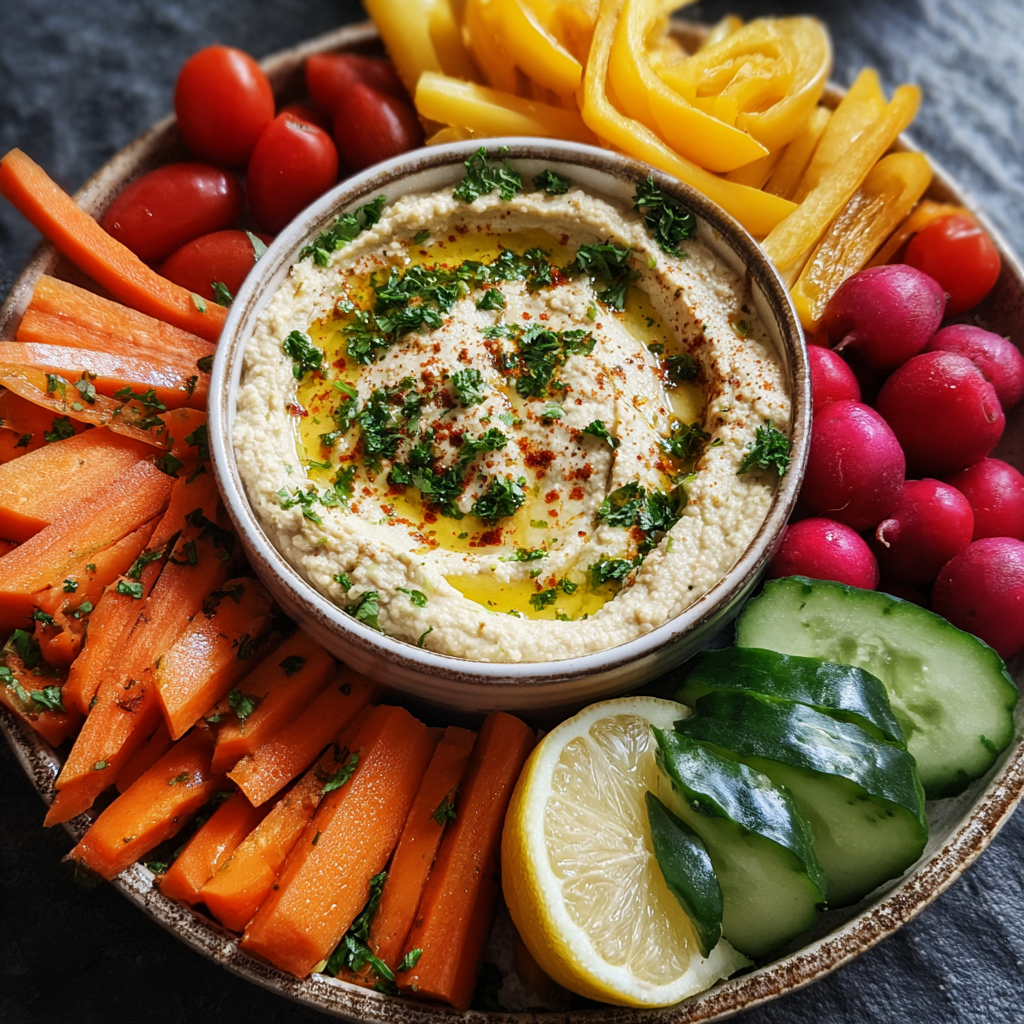
A hummus and veggie platter is the perfect addition to any gathering or a wholesome snack for yourself. Not only does this dish offer a refreshing and colorful array of vegetables, but it also serves as an incredibly satisfying dip. With minimal preparation, it brings a world of flavors and textures to your table.
Hummus, which originated in Middle Eastern cuisine, consists of chickpeas blended into a creamy consistency, typically enhanced with tahini, garlic, lemon juice, and olive oil. This nutritious dip pairs beautifully with crunchy veggies, making it a healthy choice for any occasion.
Whether you're hosting a party, enjoying a casual meal, or simply aiming to incorporate more healthy foods into your diet, a hummus and veggie platter can deliver on taste and visual appeal. Let's dive into creating this vibrant dish!
Ingredients
- 1 can (15 oz) chickpeas, drained and rinsed
Chickpeas are the foundation of hummus, providing creaminess while being a great source of protein and fiber. - 1/4 cup tahini
Tahini adds a rich, nutty flavor to the hummus, enhancing its creamy texture and contributing healthy fats. - 2 cloves garlic, minced
Garlic infuses the hummus with a pungent flavor that balances the creaminess of tahini and chickpeas. - 1/4 cup freshly squeezed lemon juice
Lemon juice gives hummus a bright acidity that brings the flavors to life and balances richness. - 2 tablespoons olive oil
Olive oil enriches the hummus, adding smoothness and depth of flavor while offering heart-healthy fats. - 1/2 teaspoon cumin
Cumin lends a warm, earthy aroma that complements the other ingredients and elevates the overall flavor. - Salt to taste
Salt enhances all the flavors in hummus, making it more appealing and bold. - 1 medium cucumber, sliced
Cucumbers provide a refreshing crunch that contrasts nicely with the smooth hummus. - 1 cup cherry tomatoes, halved
Cherry tomatoes add a burst of sweetness and acidity, balancing the richness of the dip. - 1 bell pepper, sliced
Bell peppers add a sweet, juicy crunch and vibrant color to the platter. - 1 cup baby carrots
Baby carrots are easy to handle and offer a satisfying snap, making them perfect for dipping. - 1 radish, thinly sliced
Radishes add a peppery bite and a crisp texture, providing variety on the platter.
Directions & Preparation
Step 1: Prepare the hummus by blending the ingredients
Begin by combining the chickpeas, tahini, garlic, lemon juice, olive oil, cumin, and salt in a food processor. Blend until smooth, pausing to scrape down the sides if necessary. This step is crucial as it ensures a creamy texture; you want to let the blades do their work until all the ingredients are well integrated.
Step 2: Taste and adjust the seasoning
Once blended, taste the hummus and adjust salt or lemon juice as needed. This step allows you to tailor the flavor to your liking, creating a balance that satisfies your palate and intensifies the overall taste.
Step 3: Transfer hummus to a serving bowl
Scoop the hummus out of the processor into a bowl, creating a slight indentation in the center. This not only makes it visually appealing but also provides a place for drizzling olive oil or adding toppings, enhancing both looks and flavor.
Step 4: Prep the veggies for serving
Wash and cut the vegetables into bite-sized pieces. Aim for a variety of colors and shapes for visual appeal. This step is essential for creating an inviting platter that encourages everyone to dig in.
Step 5: Arrange the veggies around the hummus
On a large serving platter, artistically arrange the prepared vegetables around the bowl of hummus. This presentation turns your dip into a centerpiece, showcasing the vibrant colors and enticing flavors.
Step 6: Drizzle additional olive oil on top of hummus
Finish by drizzling a bit of extra virgin olive oil over the hummus and sprinkle it with a dash of paprika or cumin for an extra burst of flavor. This step adds richness and elevates the overall look of your dish.

Enhancing Hummus with Additions
To elevate your hummus, consider incorporating unique ingredients like roasted red peppers, sun-dried tomatoes, or herbs like cilantro or dill. These additions add depth and exciting new flavors to the classic hummus base, making it distinct and tailored to your tastes. Experiment with toppings like toasted pine nuts or a sprinkle of za'atar for an exotic twist.
Choosing the Right Vegetables
Select a rainbow of vegetables for your platter, ensuring a mix of textures and flavors. Crunchy cucumbers, sweet cherry tomatoes, and vibrant bell peppers not only provide a delightful contrast to the creamy hummus but also create a visually engaging spread. Seasonal vegetables can also change the vibe, making it adaptable to any time of the year.
Serving Suggestions Beyond the Plate
While a platter is a fantastic presentation, consider pairing your hummus and veggies with whole grain pita, tortilla chips, or even spread on sandwiches and wraps. These options provide diversity to how the meal can be enjoyed, appealing to a broader audience and creating more opportunities for your platter to shine.
FAQs
What if my hummus is too thick?
If your hummus is too thick, add a small amount of water or extra olive oil gradually while blending until it reaches your desired consistency.
How can I make my hummus spicier?
To add heat, try incorporating a pinch of cayenne pepper, a splash of hot sauce, or even blending in jalapeños or chili flakes for a spicy kick.
What can I use as a substitute for tahini?
You can use peanut butter, almond butter, or sunflower seed butter as substitutes for tahini, though they will impart different flavors.
How do I make my hummus less bland?
If your hummus tastes bland, try adding more salt, lemon juice, or garlic. Taste as you go to find the right balance.
What vegetables pair well with hummus?
In addition to cucumbers, bell peppers, and carrots, other great options include celery, zucchini, and radishes, which all complement hummus beautifully.
Can I use dried chickpeas instead of canned?
Yes, you can use dried chickpeas, but be sure to soak and cook them properly before blending into hummus.
Conclusion
Creating a hummus and veggie platter is not just about the culinary preparations; it's an expression of creativity and enjoyment in healthy eating. The vibrant colors and textures invite people to gather and explore flavors together.
This dish is versatile and can be customized to suit personal preferences, making it an ideal star for any occasion. Enjoy the process, and relish the satisfaction of sharing this delightful platter with friends and family.
Recipe Card
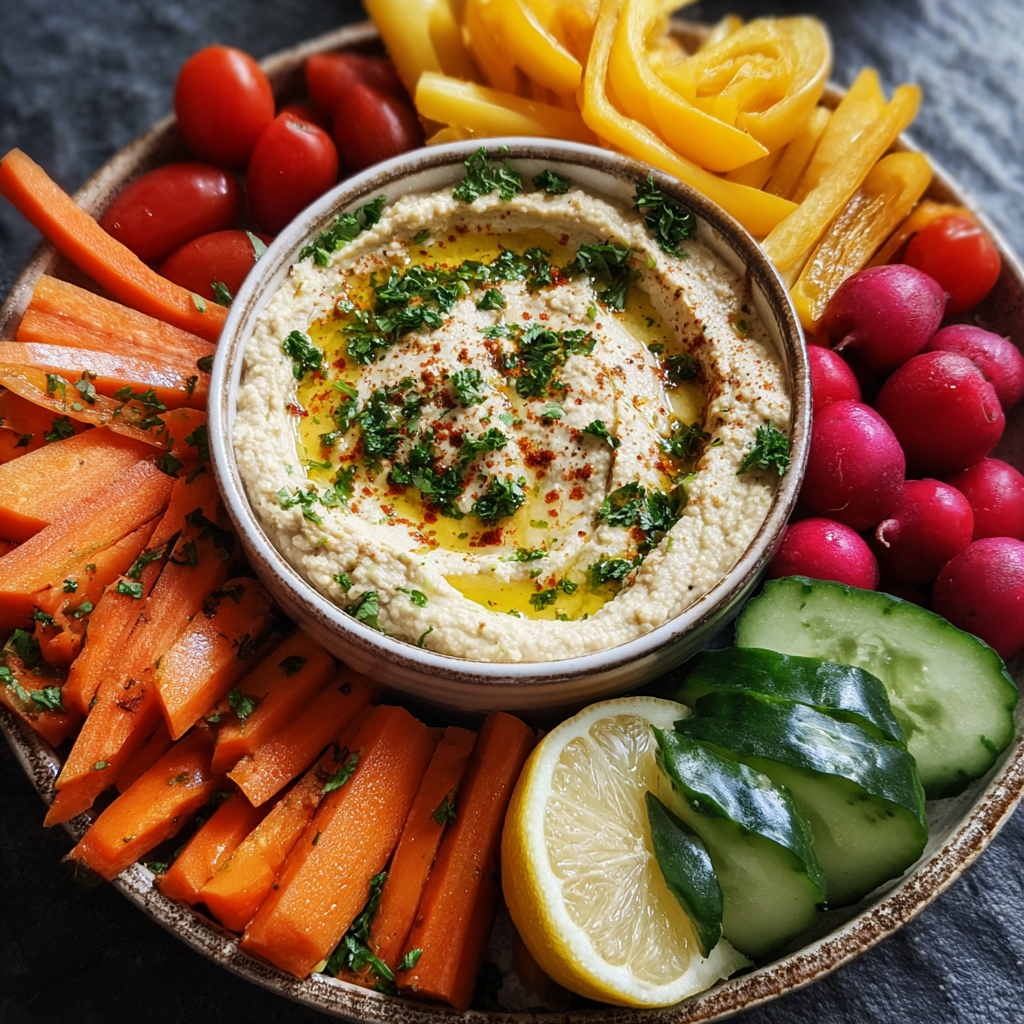
A Flavorful Hummus and Veggie Platter Experience
Ingredients
Method
- Prepare the hummus by blending the ingredients
- Taste and adjust the seasoning
- Transfer hummus to a serving bowl
- Prep the veggies for serving
- Arrange the veggies around the hummus
- Drizzle additional olive oil on top of hummus
Notes
Additional serving suggestions: pair with a crisp salad, garlic bread, or roasted seasonal vegetables for balance.
For make-ahead, prep components separately and assemble just before heating to preserve texture.
Taste and adjust with acid (lemon/vinegar) and salt right at the end to wake up flavors.