Introduction
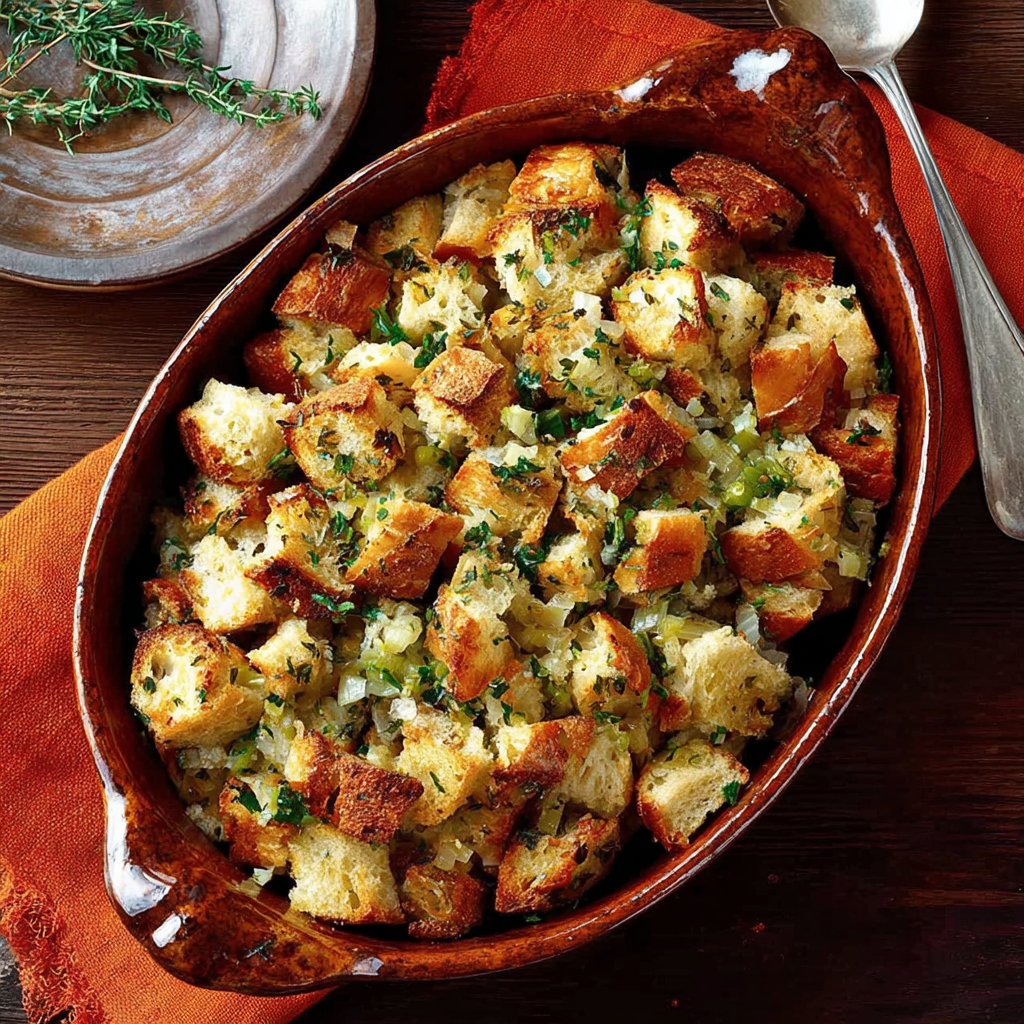
As the leaves begin to change and the scent of autumn fills the air, it’s time to bring out that cherished family recipe for bread stuffing. This timeless dish is more than just a side; it embodies warmth, nostalgia, and the essence of togetherness.
While many modern recipes have adopted a variety of trends and flavors, nothing can replace the simple, hearty goodness of an old-fashioned bread stuffing. With a few basic ingredients, you can create a stuffing that’s both satisfying and rich with tradition.
Whether you're preparing a festive feast or a cozy Sunday dinner, this recipe for old-fashioned bread stuffing will elevate any meal, bringing a taste of home to the table.
Ingredients
- 1 loaf of day-old bread, cubed (12-14 cups)
Using day-old bread helps to create the perfect texture, allowing it to absorb the flavors without becoming too soggy. Choose a rustic or artisan loaf for added depth. - 1 cup unsalted butter
Butter provides richness and moisture to the stuffing, helping to bind the ingredients together. Its creamy flavor enhances the overall taste. - 2 cups onion, chopped
Onions add a savory depth to the stuffing, infusing it with aromatic flavor as they cook down. They contribute to the overall moisture and texture. - 1 cup celery, chopped
Celery contributes a satisfying crunch and a subtle earthiness, balancing the richness of the butter and bread. - 2 teaspoons dried sage
Sage gives traditional stuffing its distinct flavor. This herb’s warm, earthy tones pair beautifully with the bread and other ingredients. - 1 teaspoon dried thyme
Thyme adds a fragrant layer of flavor, enhancing the herbal notes. It complements the sage and brings a delightful complexity. - 1 tablespoon fresh parsley, chopped
Parsley adds a fresh, bright note that cuts through the richness, balancing the overall flavor profile. - 4 cups chicken or vegetable broth
Broth brings moisture and enhances the overall flavor of the stuffing. Homemade broth is ideal, but store-bought works just as well. - Salt and pepper to taste
Seasoning is crucial for accentuating all the flavors in the stuffing. Adjust according to your taste or the saltiness of the broth used. - 2 large eggs, beaten
Eggs act as a binder, helping to hold the stuffing together while providing a rich, satisfying texture.
Directions & Preparation
Step 1: Preheat the oven to 350°F (175°C).
Preheating the oven is vital to ensure that the stuffing cooks evenly and achieves a nice golden-brown crust. Make sure the oven is fully heated before placing the stuffing inside.
Step 2: Prepare the bread cubes by placing them in a large bowl.
Stale bread cubes are essential for optimal texture. If you’re starting with fresh bread, toast the cubes lightly in the oven to dry them out, ensuring they’ll absorb the broth without becoming mushy.
Step 3: In a large skillet, melt the butter over medium heat and add the chopped onions and celery.
Sautéing the onions and celery in butter softens their texture and enhances their flavor, creating a base that infuses the stuffing with savory goodness. Be patient; allow them to become translucent and fragrant.
Step 4: Stir in the dried herbs and cook for another minute.
This step is crucial for releasing the aromatic oils from the dried herbs, which deepens their flavor. It also allows the herbs to blend seamlessly with the vegetables.
Step 5: Combine the sautéed mixture with the bread cubes in the bowl.
Gently folding the warm mixture into the bread cubes helps to evenly distribute the flavors and ensures each bite is packed with deliciousness. Be careful not to crush the bread.
Step 6: Gradually add the broth, stirring until the bread is moistened but not soggy.
This step is key to achieving the perfect stuffing texture. The bread should be dampened enough to hold together but still maintain its integrity. Adjust the broth as needed.
Step 7: Add the beaten eggs and mix until combined.
Incorporating the eggs helps bind all the ingredients while adding richness. This step is vital for ensuring that the stuffing holds together when baked.
Step 8: Season with salt and pepper to taste before transferring to a baking dish.
Tasting before baking is crucial for adjusting seasoning. Since flavors can amplify during cooking, ensure that the stuffing is well-seasoned for the best final result.
Step 9: Cover the dish with foil and bake for 30 minutes, then uncover and bake for another 15-20 minutes until golden.
Covering the dish initially helps trap steam, keeping the stuffing moist. Removing the foil later allows the top to crisp up beautifully, creating a delightful contrast in texture.
Step 10: Let it rest for 10 minutes before serving.
Allowing the stuffing to rest gives it time to set, making it easier to serve. This final step lets the flavors meld together beautifully, enhancing your dining experience.

Choosing the Right Bread for Depth and Flavor
When it comes to old-fashioned bread stuffing, the type of bread you choose can significantly impact the overall flavor and texture. Opt for sturdier, drier varieties like a rustic country loaf, sourdough, or even cornbread for an added twist. These breads not only absorb the broth well but also contribute their unique taste, enriching the stuffing and making each bite a celebration of complementary flavors.
The Importance of Fresh Herbs
Incorporating fresh herbs can elevate the traditional stuffing to new heights. While dried herbs are classic, fresh thyme and parsley add vibrancy and a fragrant aroma that dried herbs often miss. When using fresh, be sure to chop them finely to release their oils and flavors, giving your stuffing that irresistible homemade taste that invites guests back for seconds.
Variations to Suit Your Palate
While this recipe is a celebration of classic flavors, don't hesitate to customize it to suit your family’s tastes. Consider adding sautéed mushrooms for an earthy richness, or dried cranberries for a touch of sweetness. Nuts, such as walnuts or pecans, can introduce a delightful crunch. Each addition can personalize your stuffing, making it uniquely yours while still honoring the time-honored tradition it represents.
FAQs
What should I do if my stuffing is too dry?
If your stuffing turns out dry, you can add more broth gradually while baking, stirring gently until the desired moisture is achieved.
Can I use fresh breadcrumbs instead of stale?
Yes, but if using fresh breadcrumbs, lightly toast them in the oven first to help them better absorb moisture and flavor without becoming mushy.
What’s the best way to reheat leftover stuffing?
Reheat leftover stuffing in the oven at 350°F (175°C) covered with foil until warmed through. This ensures a crisp texture rather than a soggy result.
How can I make my stuffing more flavorful?
To enhance flavor, try adding more fresh herbs, or sauté some garlic with the onions and celery. Additionally, using homemade broth will significantly amplify the taste.
What happens if my stuffing is too thick?
If the stuffing is too thick, gently fold in additional broth to loosen it up until it reaches your preferred consistency.
Can I make this stuffing gluten-free?
Absolutely! Substitute with gluten-free bread, ensuring it’s dried out to achieve the proper texture. Adjust seasoning based on the flavor of the gluten-free bread.
Conclusion
Old-fashioned bread stuffing is more than just a dish; it’s a comforting reminder of family and tradition. With each bite, you not only savor the flavors but also celebrate the memories attached to them.
This stuffing recipe invites creativity, so don’t hesitate to tweak it according to your taste. Whether you keep it traditional or add a personal twist, your version will surely become a favorite at the table.
Recipe Card
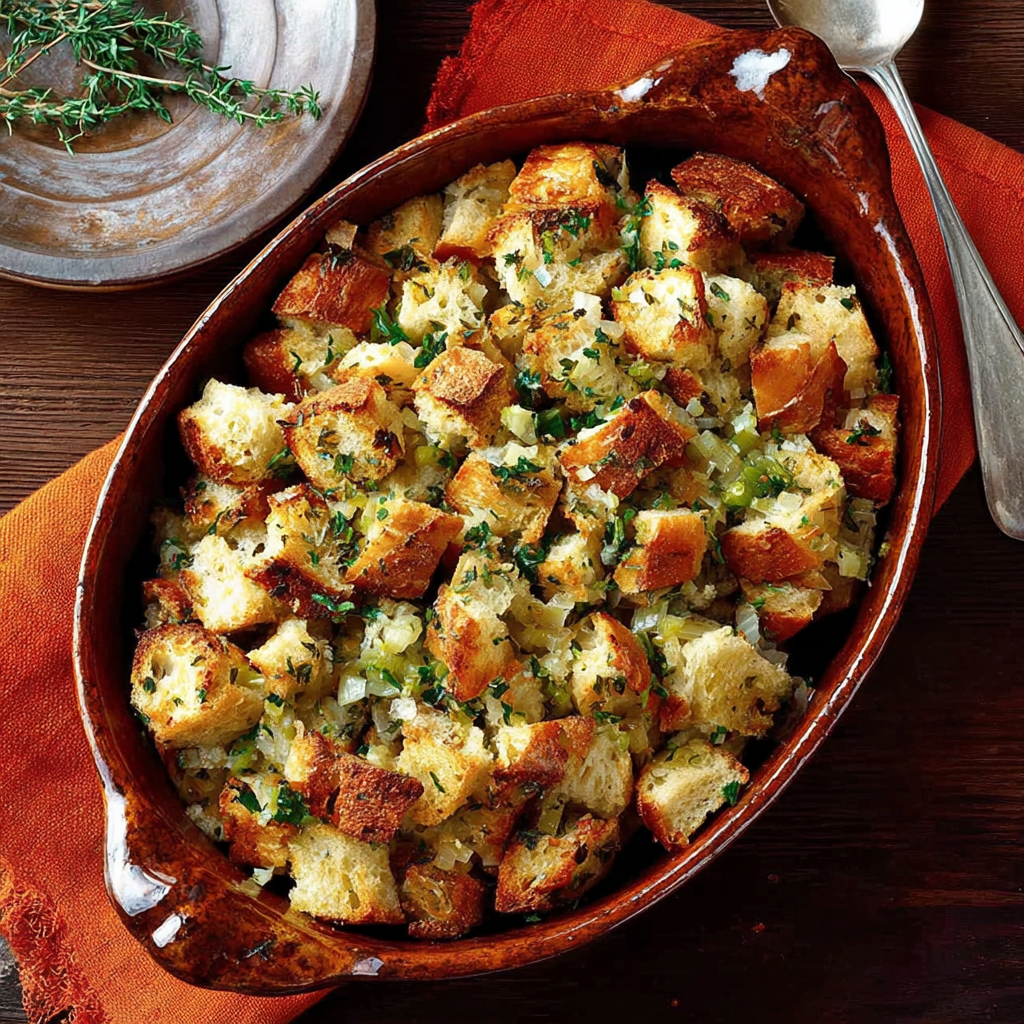
Homemade Old-Fashioned Bread Stuffing Recipe
Ingredients
Method
- Preheat the oven to 350°F (175°C).
- Prepare the bread cubes by placing them in a large bowl.
- In a large skillet, melt the butter over medium heat and add the chopped onions and celery.
- Stir in the dried herbs and cook for another minute.
- Combine the sautéed mixture with the bread cubes in the bowl.
- Gradually add the broth, stirring until the bread is moistened but not soggy.
- Add the beaten eggs and mix until combined.
- Season with salt and pepper to taste before transferring to a baking dish.
- Cover the dish with foil and bake for 30 minutes, then uncover and bake for another 15-20 minutes until golden.
- Let it rest for 10 minutes before serving.
Notes
Additional serving suggestions: pair with a crisp salad, garlic bread, or roasted seasonal vegetables for balance.
For make-ahead, prep components separately and assemble just before heating to preserve texture.
Taste and adjust with acid (lemon/vinegar) and salt right at the end to wake up flavors.