Introduction
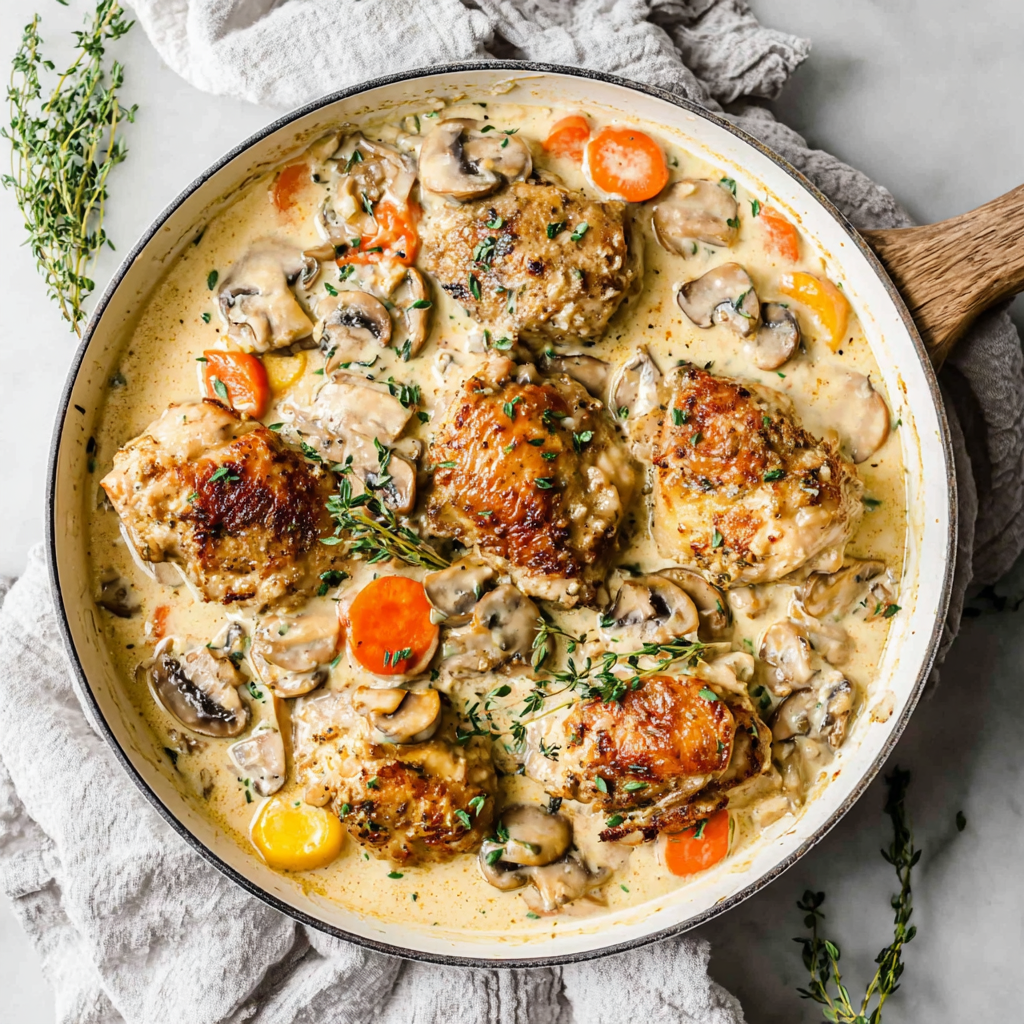
Chicken fricassee is a delightful dish that encapsulates the essence of home cooking. With its rich, creamy sauce and tender chicken, it brings warmth to the dinner table, evoking memories of family gatherings and cherished moments. This classic French dish, embodying rustic charm, is perfect for both weeknight dinners and special occasions.
At its core, fricassee is a method of cooking that involves sautéing meat and then simmering it in a sauce. The combination of chicken, vegetables, and a luscious gravy creates a symphony of flavors that is both comforting and satisfying. Whether served over rice, pasta, or with crusty bread, chicken fricassee offers a hearty meal that everyone will love.
Ingredients
- 4 chicken thighs, bone-in, skin-on
Chicken thighs are ideal for fricassee due to their richer flavor and juiciness compared to chicken breasts. The bones contribute depth to the sauce, while the skin adds a layer of crispy texture when seared. - 1 tablespoon olive oil
Using olive oil allows for a healthy fat choice that enhances the flavor of the chicken. It helps achieve a beautiful golden brown crust during searing, which adds complexity to the dish. - 1 medium onion, diced
Onions form the flavor base of many dishes. Their natural sweetness caramelizes when sautéed, adding a depth of flavor to the sauce that complements the chicken. - 2 cloves garlic, minced
Garlic adds a fragrant aroma and savory warmth to the dish. It pairs beautifully with the chicken and intensifies the overall flavor of the sauce. - 2 carrots, sliced
Carrots provide color, sweetness, and nutrition. They soften during cooking, releasing their natural sugars, which balance the richness of the sauce. - 1 cup mushrooms, sliced
Mushrooms contribute an earthy flavor and meaty texture to the fricassee. They absorb the sauce beautifully, enhancing the overall umami profile. - 1 teaspoon dried thyme
Thyme is an aromatic herb that brings a refreshing note to the dish. It complements the chicken and vegetables, tying the flavors together. - 1/2 cup white wine
White wine deglazes the pan, lifting the caramelized bits left from searing the chicken. It adds acidity and depth to the sauce, enhancing the dish's overall complexity. - 2 cups chicken broth
Chicken broth serves as the base of the fricassee sauce, providing moisture and flavor. It helps in creating a rich and satisfying consistency. - 1 cup heavy cream
Heavy cream enriches the sauce, adding a velvety texture and a touch of indulgence. This creaminess balances the savory elements and rounds out the flavor profile. - Salt and pepper, to taste
Seasoning is crucial for enhancing the natural flavors of the ingredients. Proper seasoning with salt and pepper ensures that each element shines through in the final dish. - Fresh parsley, chopped (for garnish)
Garnishing with fresh parsley adds a pop of color and a burst of freshness at the end, brightening the dish and presenting it beautifully.
Directions & Preparation
Step 1: Heat olive oil in a large skillet over medium-high heat.
Starting with a hot pan is key to achieving a good sear on the chicken. It creates a flavorful crust, locking in the juices. Ensure the oil is shimmering but not smoking before adding the chicken.
Step 2: Season the chicken thighs with salt and pepper, then add them skin-side down to the skillet.
Seasoning not only enhances the flavor but also helps form a delicious crust. Placing the chicken skin-side down allows the skin to crisp up, adding texture and richness to the dish.
Step 3: Sear the chicken for about 5-7 minutes, until golden brown, then flip and cook for an additional 5 minutes.
Searing develops deep flavor through the Maillard reaction, which is critical for a satisfying fricassee. Flip the chicken once it's golden for even cooking and to prevent it from burning.
Step 4: Remove chicken from the skillet and set aside.
Taking the chicken out of the skillet allows the fat to render properly and clears the way for sautéing the vegetables. This step is essential for building layers of flavor.
Step 5: Add diced onion, carrots, garlic, and mushrooms to the skillet.
Introducing the vegetables at this stage allows them to soak in the flavorful drippings from the chicken. Their natural sweetness and moisture will enhance the base of the sauce.
Step 6: Sauté the vegetables for about 5 minutes until softened.
Sautéing brings out the natural sugars in the vegetables, helping develop a sweeter, more caramelized flavor that contributes to the overall depth of the dish.
Step 7: Sprinkle the thyme over the vegetables and stir in the white wine, scraping the bottom of the pan.
Adding thyme infuses an aromatic note, while the white wine deglazes the pan, incorporating all the brown bits for a more robust sauce. This step is crucial for enhancing the flavor profile.
Step 8: Let the wine reduce for about 2 minutes before adding chicken broth.
Allowing the wine to reduce concentrates its flavors, making the sauce less acidic and more harmonious. This creates a well-balanced base before adding the broth.
Step 9: Return the chicken to the skillet and bring the mixture to a simmer.
Bringing the mixture to a simmer allows the chicken to absorb the flavors from the sauce, whilst also cooking it through without drying it out. This is where the magic of melding flavors begins.
Step 10: Cover the skillet and let simmer for 30 minutes, turning chicken halfway.
Simmering with a cover traps moisture and keeps the chicken tender. Turning the chicken aids even cooking, ensuring all pieces are evenly infused with flavor.
Step 11: Remove the chicken and whisk in the heavy cream, simmering until the sauce thickens.
Incorporating heavy cream adds richness and a velvety texture to the sauce. Simmering it gently allows the sauce to thicken without boiling, which preserves its creamy nature.
Step 12: Return the chicken to the skillet and let it warm through for a few minutes.
Warming the chicken after thickening the sauce allows it to regain moisture and ensures that every bite is filled with the delicious, fortified flavors of the fricassee.
Step 13: Garnish with fresh parsley and adjust seasoning if necessary.
Garnishing not only enhances presentation but also adds a touch of freshness to the rich dish. Adjusting the seasoning at the end ensures that the flavors are balanced and satisfying.
Step 14: Serve warm over rice or pasta, or with crusty bread.
Serving the fricassee with a starch helps absorb the luscious sauce, making each bite delightful. Choosing the right accompaniment showcases the dish while enhancing the overall experience.

The Art of Searing Chicken
Searing chicken before stewing is a culinary technique that develops flavor through caramelization. The golden crust formed during this process adds complexity to the dish, while the rendered fat contributes to the sauce. It's essential to not overcrowd the pan, as this can lead to steaming rather than searing, detracting from the desired texture and taste.
Embracing Seasonal Vegetables
Incorporating seasonal vegetables into chicken fricassee not only enhances the dish's freshness but also allows for creative variations. Using ingredients that are in season ensures optimal flavor and nutrition. For instance, adding peas in spring or butternut squash in fall can personalize the dish and highlight the seasons' bounty.
Garnishing for Presentation
A well-placed garnish can elevate the overall presentation and enhance the dining experience. Fresh parsley not only adds color but also introduces a light, herbaceous note that balances the dish's richness. Taking the time to garnish shows attention to detail and can transform a simple meal into a visually appealing centerpiece.
FAQs
What can I use instead of white wine?
If you prefer not to use white wine, replace it with chicken broth or a splash of apple cider vinegar mixed with water to maintain acidity without the alcohol.
What if my sauce is too thick?
To thin out a thick sauce, gradually add more chicken broth or cream until you reach the desired consistency, whisking it in to maintain a smooth texture.
How can I make it spicier?
Incorporate red pepper flakes or a dash of hot sauce to add heat without overpowering the dish. Adjust according to your taste preferences.
What should I do if the chicken is overcooked?
If the chicken is overcooked, consider shredding it into smaller pieces and mixing it back into the sauce. This can help incorporate it with creamy elements, making it more palatable.
Do I have to use heavy cream?
While heavy cream is traditional for richness, you can use half-and-half or a thick plant-based cream for a lighter option, though the texture will differ.
Can I add other proteins, like shrimp or pork?
Yes, you can experiment by adding shrimp or thin pork slices, but adjust cooking times accordingly, as they vary from chicken.
Conclusion
Chicken fricassee is more than just a meal—it's a comforting retreat that brings together loved ones around the table. Its rich flavors and hearty ingredients invite you to savor each bite. This dish not only fulfills hunger but also offers a nurturing experience that echoes the essence of home cooking.
As you explore making chicken fricassee, remember that cooking is about personal expression. Feel free to adjust flavors and ingredients to match your preferences. Embrace the process and the result will surely be a dish that warms the heart and satisfies the spirit.
Recipe Card
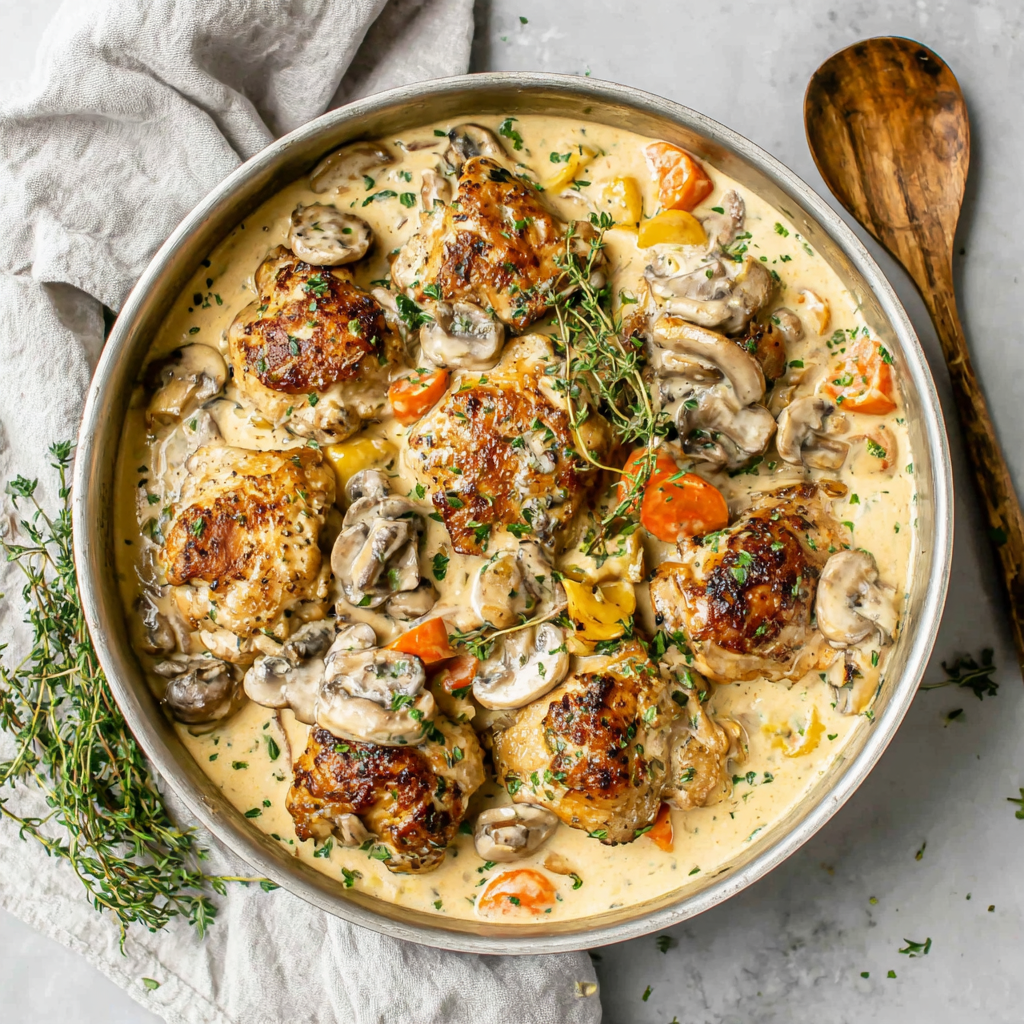
Delicious Chicken Fricassee for Cozy Nights
Ingredients
Method
- Heat olive oil in a large skillet over medium heat.
- Season chicken thighs with salt and pepper, then add them to the skillet, skin side down.
- Sear the chicken for about 6-7 minutes until golden brown, then flip and cook for another 5 minutes.
- Remove the chicken from the skillet and set aside.
- Add onions and cook until soft, about 3-4 minutes, then add garlic and mushrooms; sauté until mushrooms are tender.
- Sprinkle flour over the vegetables and stir, cooking for 1-2 minutes.
- Gradually stir in the chicken broth, scraping up any fond from the skillet.
- Add the seared chicken back to the skillet, skin side up, and bring to a simmer.
- Cover the skillet, reduce heat, and simmer for 20-25 minutes until the chicken is cooked through.
- Remove the chicken again, then stir in the heavy cream and return to a gentle simmer.
- Return the chicken once more, simmer for an additional 5-10 minutes; adjust seasoning if necessary.
- Garnish with fresh parsley before serving.
Notes
Additional serving suggestions: pair with a crisp salad, garlic bread, or roasted seasonal vegetables for balance.
For make-ahead, prep components separately and assemble just before heating to preserve texture.
Taste and adjust with acid (lemon/vinegar) and salt right at the end to wake up flavors.